
Your Centennial roofing contractor and exterior restoration team
Precision Exteriors Restoration is a licensed roofing and exterior restoration contractor serving Centennial, Colorado, with Arapahoe County storm experience, manufacturer-credentialed crews, and a free, documented Centennial roof inspection with no obligation.
Book your free Centennial inspection
Pick a time and a licensed inspector documents your Centennial roof and exterior with photos and plain-language findings.
A licensed roofing contractor built for Centennial
Direct answer: Precision Exteriors Restoration is a licensed roofing and exterior restoration contractor serving Centennial, Colorado (Colorado License #0248041). We are Centennial's Owens Corning Preferred roofing contractor and CertainTeed credentialed installer, with 20+ years of combined experience and more than 3,000 completed projects across the Denver Metro.
Nearby service areas: Highlands Ranch, Littleton, Englewood and Aurora.
Our Centennial services cover every exterior system: roof inspections, roof repair, roof replacement, emergency roofing, siding repair and replacement, gutter repair and replacement, window repair and replacement, and comprehensive storm damage restoration. All work is backed by a 10-year workmanship warranty. All inspections and estimates are free with no obligation.
Centennial is a planned city in Arapahoe County, one of the largest and most densely residential communities in the Denver Metro, positioned directly in the Front Range hail corridor between Denver and the Douglas County line. The majority of Centennial's housing stock was built between the 1980s and early 2000s, placing a significant portion of the city's roofing systems at or past their practical service life in Colorado's UV and hail environment. That fact, combined with the consistent Hail Alley storm frequency that tracks directly through Arapahoe County, means that significant hail events in Centennial regularly produce legitimate insurance-supported replacement scope on homes that were already due. We understand the specific dynamics of Centennial's housing market, storm exposure, and insurance landscape.
Need the broader picture first? See our Colorado service area overview, or jump straight to the four exterior systems we restore: roofing, siding, gutters, and windows.
Every exterior system, one licensed Centennial team
Direct answer: In Centennial, Precision Exteriors Restoration handles roof inspections, roof repair, roof replacement, emergency roofing, siding, gutters, windows, and full storm damage restoration. Every Centennial project begins with a free, documented inspection.
Roof inspection Centennial
Free, documented inspection of every roofing component, with photos and plain-language findings.
Roof repair Centennial
Targeted fixes for verified issues. We tell you when repair is the right answer.
Roof replacement Centennial
Full system installation from tear-off through final inspection, with a Class 4 option.
Emergency roofing Centennial
Tarping and immediate stabilization for active leaks and storm-created openings.
Hail damage Centennial
Hail damage assessment documented for Arapahoe County insurance claims.
Siding Centennial
Vinyl and James Hardie fiber cement siding repair and replacement.
Gutters Centennial
Repair, replacement, seamless gutters, and gutter guards for treed neighborhoods.
Windows Centennial
Window repair and replacement after hail and wind-driven debris strikes.
Licensed, local, and permanently here
Direct answer: Centennial's size and affluence make it one of the most competitive roofing contractor markets in the Denver Metro, and one of the most heavily targeted by out-of-state storm chasers after significant hail events. A licensed, permanently operating local contractor is what separates a reliable Centennial roofing contractor from those operations.
- Licensed and verifiable: Colorado License #0248041, confirmable through the Colorado Division of Professions and Occupations
- Owens Corning Preferred Contractor and CertainTeed credentialed installer
- Locally owned, permanently here with a Denver Metro office and team. We are not storm chasers
- Inspections first, no pressure: we tell you when repair is the right answer instead of replacement
- 10-year workmanship warranty on all completed work, every project, every time
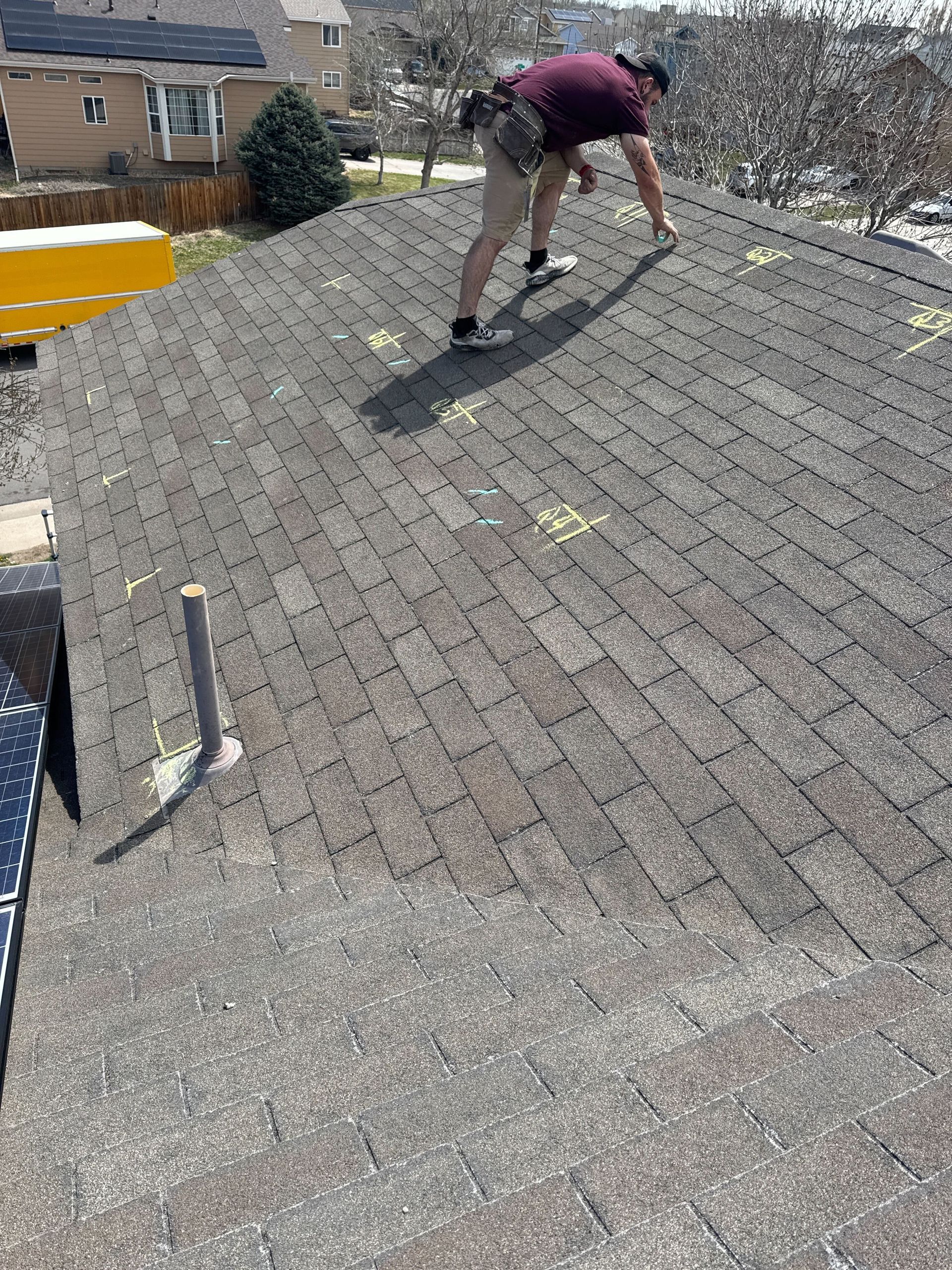 On-site inspection, Centennial area
What drives exterior damage in Centennial
Direct answer: Centennial sits in the core of the Front Range hail corridor, the storm track that produces the Denver Metro's most significant and frequent hail events. Aging 1980s to 2000s housing stock, open planned layouts, mature tree canopy in older areas, and UV at roughly 5,600 feet all shape the city's damage profile.
Arapahoe County sits in one of the most consistently hail-active portions of the Denver Metro storm track. Hailstones of 1 inch and above are a recurring maintenance reality for Centennial, not a rare-event risk.
Centennial's 1980s through early 2000s housing stock means asphalt shingle systems with a 20 to 22 year practical service life are now at or past the point where a significant hail event produces replacement scope.
Centennial's elevation of approximately 5,600 feet means UV intensity roughly 22 to 24% higher than at sea level, driving meaningfully faster material degradation than manufacturer ratings assume.
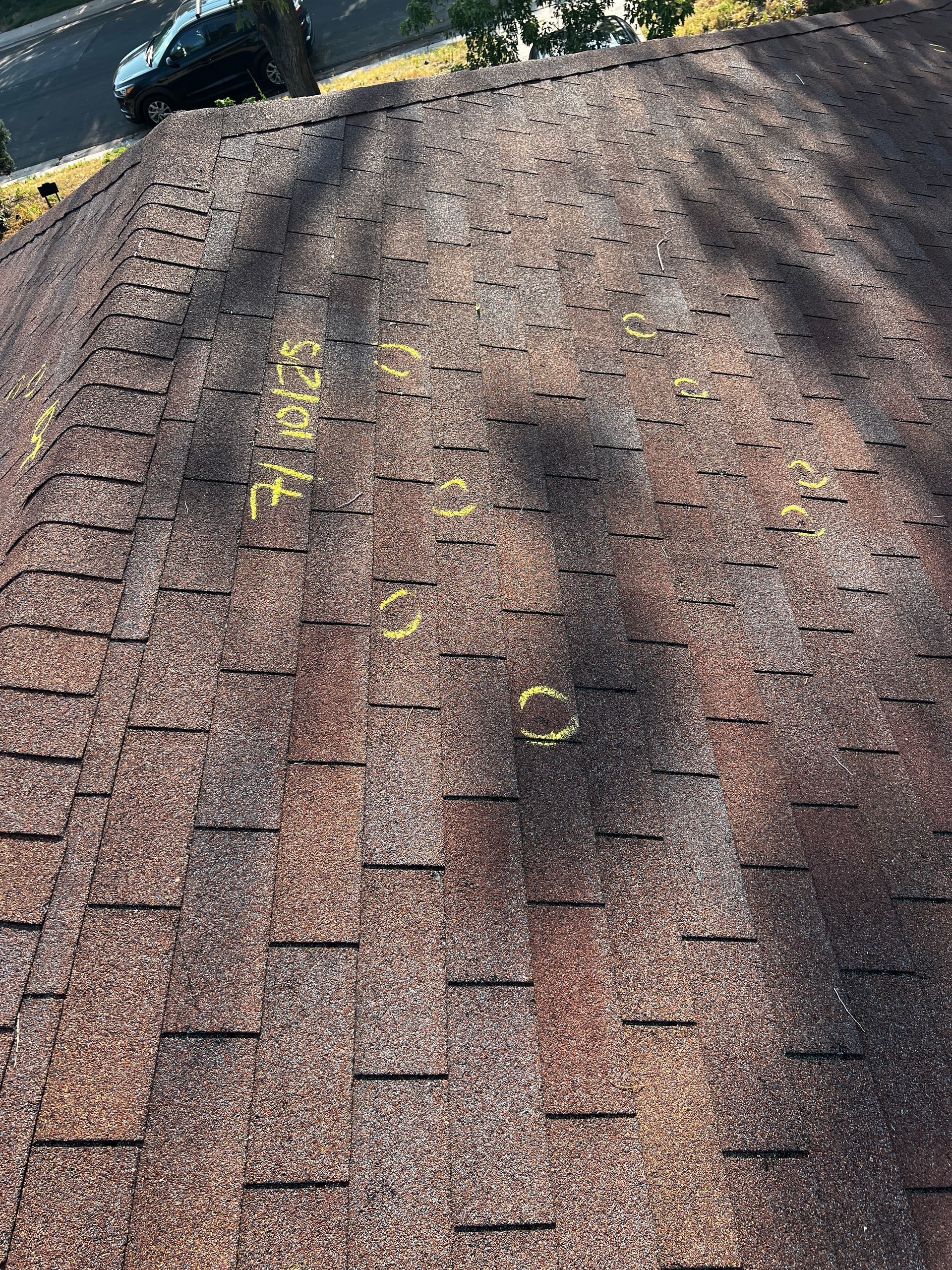 Hail damage, Arapahoe County
Centennial's master-planned communities, with wider lot spacing, fewer mature trees on many streets, and open suburban layouts, provide less natural hail interception than older, more densely treed neighborhoods. Conversely, Centennial's older, more established neighborhoods, particularly near Highlands Ranch Boulevard, South Suburban corridors, and the Littleton border, have significant mature tree canopy that creates debris impact risk after wind events. Branches and limbs on roofing and siding are a regular post-storm finding in these areas. After any significant Centennial storm, see our storm damage restoration hub, or go directly to hail damage, wind damage, and debris and tree damage.
Centennial roof facts every homeowner should know
Centennial sits in the core of the Front Range hail corridor, where storm frequency and high-altitude conditions put roofs under more stress than newer-construction communities to the south.
Centennial roofing service pages: roofing contractor, roof replacement, roof repair, roof inspection, and hail damage repair in Centennial, CO.
Centennial roofing, inspection to replacement
Direct answer: Centennial roofing systems face the full Front Range combination of Hail Alley storm frequency, elevated UV at 5,600 feet, 150+ annual freeze-thaw cycles, and consistent wind exposure across open suburban layouts. As Centennial's Owens Corning Preferred roofing contractor, every project begins with a free inspection covering shingles, underlayment, flashings, pipe boots, ridge caps, gutters, fascia, soffit, and ventilation.
For any significant Centennial hail or wind event, an inspection is warranted even when no damage is visible from the ground. The most consequential hail damage, fiberglass mat fracture, broken sealant bonds, and pipe boot cracking, produces no visible change from the driveway. Roof inspections.
Flashing, pipe boot, missing and lifted shingle, ridge cap, and roof leak repair where full replacement is not warranted. Centennial's aging housing stock means we regularly recommend and perform repairs on systems that have remaining life. Roof repair.
Full system installation from tear-off through final inspection. Given Centennial's Hail Alley positioning and the reality that many homes are on their second roofing cycle, Class 4 impact-resistant shingles are the right material conversation at every Centennial replacement. Roof replacement.
Storm exposure by Centennial area
Direct answer: Centennial's neighborhoods have distinct exterior maintenance profiles based on construction era, tree canopy density, lot layout, and position within the city's storm exposure pattern. We serve all Centennial neighborhoods for residential and multi-family exterior restoration.
Willow Creek, Fox Hill, Homestead Farm
Among Centennial's oldest neighborhoods, with homes from the 1970s and 1980s, many already through one or more roofing cycles. Mature tree canopy creates debris risk, and these systems are the strongest candidates for replacement scope after a significant Arapahoe County hail event.
Piney Creek, Walnut Hills, Heritage Greens
The core of Centennial's 1990s housing stock, now 25 to 35 years old in Colorado's UV and hail environment. A large portion of the roofing inventory here is at or past practical service life, and post-storm inspections frequently confirm replacement scope on systems that were already due.
Smoky Hill, Trails at Smoky Hill
Late 1990s to early 2000s construction in the Smoky Hill corridor. Roofing systems here are approaching mid-life. Targeted repair is still appropriate for isolated issues, but these homes are entering the inspection-and-monitor phase where Class 4 replacement planning should begin.
Highlands Ranch-adjacent southern Centennial
The southern portions of Centennial bordering Highlands Ranch include newer development. Roofing systems here are mid-lifecycle, more likely to see repair scope after storm events than immediate replacement, though Class 4 is the right conversation at eventual replacement time.
Brittany, Chapparal, Cherry Knolls
Heavily treed neighborhoods in the central Centennial corridor. Debris impact from branches and limbs is a consistent storm damage pattern here beyond hail alone. Post-storm inspections should evaluate both hail-pattern damage and direct debris impact.
All Centennial neighborhoods
We serve every Centennial neighborhood for residential and multi-family exterior restoration, from modest ranches in older areas to larger two-story homes in newer sections. Start with a free, documented inspection of your specific property.
Storm damage restoration in Centennial
Direct answer: Storm damage restoration is among the most common exterior project drivers in Centennial. The hail corridor positioning combined with aging housing stock means significant storms in Arapahoe County regularly produce widespread legitimate replacement scope across entire Centennial neighborhoods at once. A comprehensive assessment evaluates all affected systems together, not just the most visible one.
Document, then inspect
Photograph all four sides of your home from the ground after a storm, but do not climb on the roof. Schedule a free inspection promptly so conditions are documented with a clear date relationship to the storm event.
Do not commit under pressure
Centennial is heavily targeted by storm chasers after every significant hail event. Legitimate licensed contractors do not require same-day decisions. Verify the Colorado license before you sign anything.
Understand ACV vs. RCV
ACV vs. RCV coverage determines whether your insurer pays depreciated or full replacement value. On RCV policies, depreciation holdback is released after work is completed, a step many Centennial homeowners miss.
What drives the cost of a roof replacement in Centennial
Direct answer: The accurate answer to how much a roof replacement costs in Centennial requires a free inspection of your specific property. Roof size and pitch, complexity, material selection, deck repairs found after tear-off, and insurance coverage all determine the actual number.
- Roof size and pitch. Centennial's suburban housing stock spans modest ranches to larger two-story homes. Steeper pitches add to installation cost.
- Complexity. Chimneys, valleys, skylights, and dormers add flashing work. Centennial's established neighborhoods tend toward more complex roofline configurations.
- Material selection. Standard architectural shingles vs. Class 4 impact-resistant shingles is typically a 10 to 20% cost difference. For Centennial's hail corridor position, Class 4 is the right discussion at every replacement.
- Deck repairs. Identified after tear-off and priced on actual area. Older Centennial homes with prior roofing work may have layered shingles or questionable deck repairs.
- Insurance coverage. ACV vs. RCV policy terms, the deductible, and recoverable depreciation collection all affect out-of-pocket cost. Many Centennial homeowners qualify for full replacement cost rather than depreciated value.
Your Centennial inspection-first process
Direct answer: Every Centennial project follows five clear steps, from a free documented inspection through final walkthrough and warranty coverage, with direct insurance support at every storm-related stage.
Free documented inspection
Plain-language findings
Repair or replace recommendation
Insurance and adjuster support
Installation and walkthrough
What your free Centennial inspection includes
No cost, no pressure. Here is exactly what you receive.
- Shingle surface and fiberglass mat integrity check
- Flashing condition at all transitions and penetrations
- Pipe boot, ridge, and hip cap condition
- Gutter, fascia, soffit, and ventilation assessment
- Photo documentation for insurance and your records
- Honest repair-versus-replacement recommendation
We take the risk off your shoulders
Choosing a Centennial roofer should feel safe. Between manufacturer warranties, hands-on insurance help, and a 10-year workmanship warranty, the path forward is low risk from the first inspection.
10-year workmanship warranty
The Precision Warranty covers the quality of our installation on every completed Centennial project, in writing, every time.
Certified-installer material warranties
As an Owens Corning Preferred Contractor and CertainTeed credentialed installer, we register manufacturer-backed warranties, including Owens Corning Platinum Protection on qualifying installations.
We handle your insurance claim
We document the damage, meet your adjuster on-site, and close scope gaps with supplement documentation to reduce your stress.
Rated 4.6 stars by Front Range neighbors
Real, verified Google reviews from Denver metro homeowners. We are proud of an honest 4.6 stars rating built one roof at a time. Read our reviews.
"The Precision team was great and provided me with great customer service and results. Special thanks to Anthony for helping me through the insurance process in making sure the details were covered."
"Great quality work, friendly service. Fast and clean service."
"They showed up on time, they knew their stuff, they did the work, and they did it well."
"Could not give Precision Exteriors a higher recommendation. Professional, timely, and great to work with."
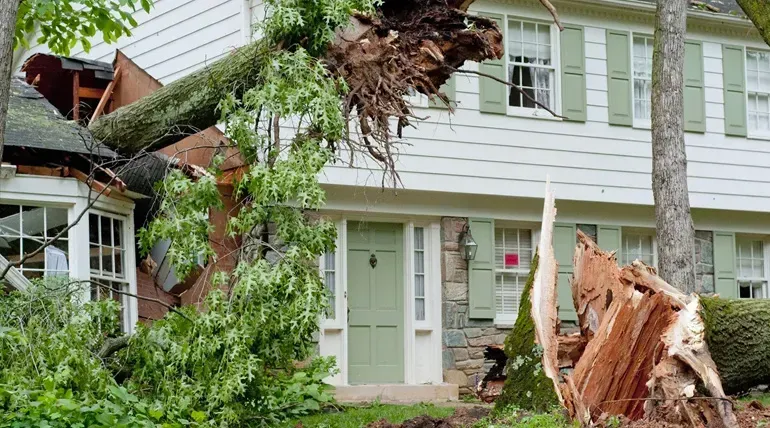 Storm response, Arapahoe County
Centennial and the surrounding Denver metro
Direct answer: Precision Exteriors Restoration serves Centennial and the surrounding Front Range, including Littleton, Englewood, Highlands Ranch, Aurora, and Castle Rock, from our downtown Denver office. Explore every market on our Colorado service area page.
The Precision Warranty
Protected in writing, for the long run
Every Precision Exteriors Restoration project in Centennial is backed in writing, so your roof and exterior stay protected long after our crew leaves.
10-Year Workmanship Warranty
The Precision Warranty covers the quality of our installation on every completed Centennial project, in writing.
Certified-Installer Manufacturer Warranty
As an Owens Corning Preferred Contractor and CertainTeed credentialed installer, we register manufacturer-backed material warranties most contractors cannot offer.
Licensed, Insured, Local Since 2016
Colorado License #0248041, BBB A+ accredited, with 3,000+ completed Front Range projects.
Centennial exterior restoration FAQs
My roof is about 20 years old and my neighbor just got a new roof after the last hail storm. Do I need one too?
Do I need a roof inspection if I don't see damage from the ground?
How long does a roof last in Centennial, CO?
Does homeowner's insurance cover roof replacement in Centennial?
Are Class 4 shingles worth it for Centennial homes?
How do I find a reputable roofing contractor in Centennial?
Are inspections and estimates free?
Start with a free Centennial inspection
Whether you need a post-storm inspection, a repair estimate, a replacement quote, or want to understand the condition of your Centennial home's exterior, start with a free inspection. No pressure. No obligation. All work backed by a 10-year warranty.