
Storm damage repair Denver: hail, wind, debris, and insurance claims
Denver storm restoration by Precision Exteriors Restoration. If your home was just hit by a storm, here is exactly what to do in the next 60 minutes. We provide free storm damage inspections, document roof, siding, gutter, and window damage with photos, and manage the insurance claim from inspection to final invoice.
Get a free storm damage inspection
Pick a time and we send a written report with photos. Inspections are usually scheduled within the same week.
Storm damage repair Denver, handled end to end
Direct answer: After a hailstorm or windstorm in Denver, Precision Exteriors Restoration provides free storm damage inspections, documents roof, siding, gutter, and window damage with photos, and manages the insurance claim from inspection to final invoice. A licensed Colorado contractor (License #0248041) since 2016 with 3,000+ projects, we restore the whole exterior with one crew and explain ACV vs RCV so you know what your policy pays. Inspections are usually scheduled within the same week.
Storm damage services: hail damage repair, wind damage repair, debris and tree damage cleanup, and storm insurance claim help.
Last updated June 2026. Reviewed by Precision Exteriors Restoration, a licensed Colorado contractor (License #0248041). We are an Owens Corning Preferred Contractor, a CertainTeed Shingle Master Installer, BBB A+ accredited, and an NRCA member, with 4.6 stars across our Google reviews.
What to do in the next 60 minutes
Direct answer: Photograph everything from the ground before touching anything, document any interior water intrusion, then call a licensed local contractor for a free pre-adjuster inspection before contacting your insurer. The pre-adjuster photo documentation is the most important element of your entire claim.
Photograph from the ground
Gutters, downspouts, window screens, AC units, siding, and visible roofline, with date and time stamps. What you document in the next hour is your first layer of claim evidence.
Document interior intrusion
Capture any interior water intrusion before any mitigation. Photograph everything before anyone touches the property.
Call for a free inspection
A licensed local contractor performs a close-range, pre-adjuster inspection so missing items do not get left out of the scope later.
Then call your insurer
The contractor who inspects first controls the documentation narrative. Make sure that contractor is working for you.
Signs of storm damage: what to look for
Direct answer: Storm damage does not always look dramatic from the driveway. Walk the perimeter of your property after any significant storm event and check the roof, siding, gutters, and windows. Consistent damage across multiple systems, gutters dented, screens torn, and granules in the downspout, establishes hail size and impact pattern before any contractor or adjuster arrives.
🏠 Roof damage from the ground
- ✓ Missing, lifted, or creased shingles visible along any slope
- ✓ Granule accumulation in gutters or at downspout exits, a concentrated deposit right after a storm indicates impact-caused granule loss above
- ✓ Consistent circular denting along gutter runs, dent diameter estimates hail size
- ✓ Exposed nail heads or visible underlayment where shingles have displaced
- ✓ Ridge cap gaps or displaced sections along the peak
- ✓ Soft metal denting on visible flashing, drip edge, or roof vent
🧱 Siding and exterior walls
- ✓ Circular impact marks, cracking, or punctures on vinyl, wood, or fiber cement panels
- ✓ Dents or deformation on aluminum or steel siding
- ✓ Loose panels, separated seams, or broken corner pieces
- ✓ Water intrusion pathways where panels meet window trim or door frames
- ✓ Chipping or fracture on stucco surfaces
💧 Gutters, downspouts, and drainage
- ✓ Bent gutter edges or consistent denting along gutter runs
- ✓ Pulled or missing gutter fasteners
- ✓ Downspouts separating at joints or pulling away from the wall
- ✓ Granule deposits at downspout exits
- ✓ Overflow staining or foundation erosion indicating drainage failure
🪟 Windows, screens, and trim
- ✓ Torn or punctured window screens, screen damage at a consistent hail size confirms impact across the property
- ✓ Dents or impact marks on wrapped metal window trim
- ✓ Cracked or broken glass
- ✓ Seal failure at window corners, fogging between panes indicates a seal breach
- ✓ Drafts or moisture at window frames after the storm has passed
Storm damage in Denver: hail, wind, debris, and freeze-thaw
Direct answer: Not all storm damage is the same. The cause of damage determines what is covered, how it is documented, how the claim is filed, and what the repair or replacement scope looks like. Front Range homes face hail, wind, debris and tree impacts, and freeze-thaw and ice damage, and the most severe hail events damage all four exterior systems at once.
⛈ Hail damage
Hail is the primary driver of storm damage claims in the Denver area. The Front Range produces hail events with stone sizes ranging from pea-sized to baseball-sized, and the damage profile changes significantly at each size threshold.
Hail damage that does not produce an immediate leak is still covered damage. The fiberglass mat fracture is a functional loss, covered under standard homeowner policies regardless of whether water has entered the home yet.
Learn more about hail damage🌬 Wind damage
Front Range wind events, Chinook downslope winds and thunderstorm outflows, generate gusts of 60 to 100 mph along the foothills communities and 40 to 70 mph across the Denver area. Wind damage is often not visible from the ground and does not produce an immediate leak.
Wind lifts shingle edges at the seal strip, loosens ridge cap fastening, displaces step flashing at wall transitions, stresses pipe boot collars, and in severe events removes entire shingle sections. Each condition creates an active water entry risk that materializes during the next rain.
Wind damage is covered under standard homeowner policies when wind speeds exceed the policy threshold, typically 40 to 50 mph. We support claims with local weather station data and NOAA records.
Learn more about wind damage🌲 Debris and tree damage
Fallen branches, downed trees, and wind-driven debris are the most visually obvious storm damage category, and frequently the most structurally significant. A fallen tree limb that penetrates the roofing system creates an immediate structural breach requiring emergency stabilization within hours, not days.
The structural load of a fallen branch or tree on the roof deck stresses framing members well beyond the direct impact zone. A thorough inspection assesses the full structural scope before any materials are installed over potentially compromised decking.
Debris and tree damage is covered under standard homeowner policies as a sudden and accidental event. Cleanup, structural repair, and full system replacement are all documentable claim components.
Learn more about debris and tree damage❄ Freeze-thaw and ice damage
Not all storm damage is impact-based. Colorado's rapid temperature cycling, swings of 40 degrees or more within a single day and 150-plus freeze-thaw cycles annually, creates a distinct damage mechanism that compounds every hail and wind event.
Water that has entered a micro-crack in a sealant joint or shingle edge expands when it freezes, widening the opening. By the third or fourth cycle, a hairline gap becomes an active leak pathway. This is why roofs that sustained hail damage in May often begin leaking in November.
Ice dams form when heat loss melts snow on upper slopes, the meltwater refreezes at the cold eave, and the buildup forces water under shingle edges. Freeze-thaw and UV damage are typically wear issues, but hail or wind events that accelerate them can be documented as part of a storm damage scope.
Why Front Range homes need storm-ready roofing
Denver sits in Hail Alley, where storm frequency and high-altitude conditions put exteriors under more stress than almost anywhere in the country. Storm season runs March through September.
Storm damage insurance claims: what every homeowner needs to know
Direct answer: Most Colorado homeowner policies are RCV, which pays full replacement cost in two installments, an initial ACV payment and a recoverable depreciation payment released after the work is completed. A homeowner who understands their own claim makes better decisions, collects more of what they are owed, and is not dependent on anyone else to protect their interests. We explain it rather than just handle it for you.
Insurance payout: ACV vs RCV
| ACV (Actual Cash Value) | RCV (Replacement Cost Value) | |
|---|---|---|
| What it pays | Depreciated value, with age and wear deducted | Full cost to replace with new materials |
| When you get it | Upfront, minus depreciation | Recoverable depreciation released after work is completed |
| Your out of pocket | Usually higher | Typically just your deductible |
| Better for the homeowner | Less favorable | More favorable |
Recoverable depreciation: the payment most homeowners miss
On RCV policies, the initial payment is ACV only, the depreciated value of the system. The recoverable depreciation, the difference between ACV and full replacement cost, is withheld until the work is completed and a completion package is submitted to the carrier.
On a full roof replacement with a 12-year-old standard architectural system, recoverable depreciation is typically $2,000 to $5,000. On a full exterior restoration including siding and gutters, it can reach $4,000 to $10,000. Homeowners who manage their own claims without contractor support frequently never collect this payment. Precision Exteriors prepares the completion package on every RCV claim specifically to trigger this release.
The claim filing deadline in Colorado
Colorado insurance policies generally require storm damage claims to be filed within one year of the date of the storm event, some policies specify two years. This deadline is stated in your policy's general conditions section, and missing it forfeits your right to file regardless of the condition of the damage.
If a storm hit your neighborhood and you have not had a close-range inspection, schedule one now. Knowing the condition of your roof does not obligate you to file a claim. Not knowing means you cannot make an informed decision before the deadline passes.
Will filing a storm damage claim raise my premium?
Filing a storm damage claim may affect your premium at renewal. Insurers in Colorado cannot non-renew or surcharge a policy solely because of a weather-related claim, but they can factor claims history into renewal pricing, and multiple claims within a short window do create elevated surcharge risk.
If the damage is at or near your deductible threshold, the financial case for filing is weak. If the damage is substantially above your deductible, a full replacement scenario on an RCV policy, the financial case is strong and the premium impact is typically modest relative to the claim value. A free inspection gives you the honest damage assessment you need to make this calculation before you file anything.
What adjusters commonly miss on storm damage claims
Initial adjuster scopes on hail claims routinely omit legitimate covered items. The most commonly missed line items:
- ✓ Pipe boot replacement: hail impact accelerates rubber boot degradation, and adjusters frequently omit pipe boots from hail scopes.
- ✓ Drip edge replacement: required at eave and rake by local building code on any replacement, frequently omitted from initial scopes.
- ✓ Ice and water shield: required at eave and in valleys by local building code, frequently omitted when the existing system lacked it.
- ✓ Ventilation corrections: required when existing ventilation does not meet current code, frequently omitted.
- ✓ Permit fees: required on every replacement, frequently omitted from initial scopes.
- ✓ Overhead and profit: required on multi-trade projects coordinating work across multiple systems, frequently challenged by adjusters.
Each missing item is submitted as a supplement with supporting photos, measurements, and local building code citations. The average storm damage claim increases 15 to 25% after full supplementing. See our full insurance claims guide for the complete walkthrough.
See storm damage become a finished roof
Drag the slider to compare a storm-damaged Denver roof with the completed Precision Exteriors Restoration result. Every project is documented this way for your records and your insurer.
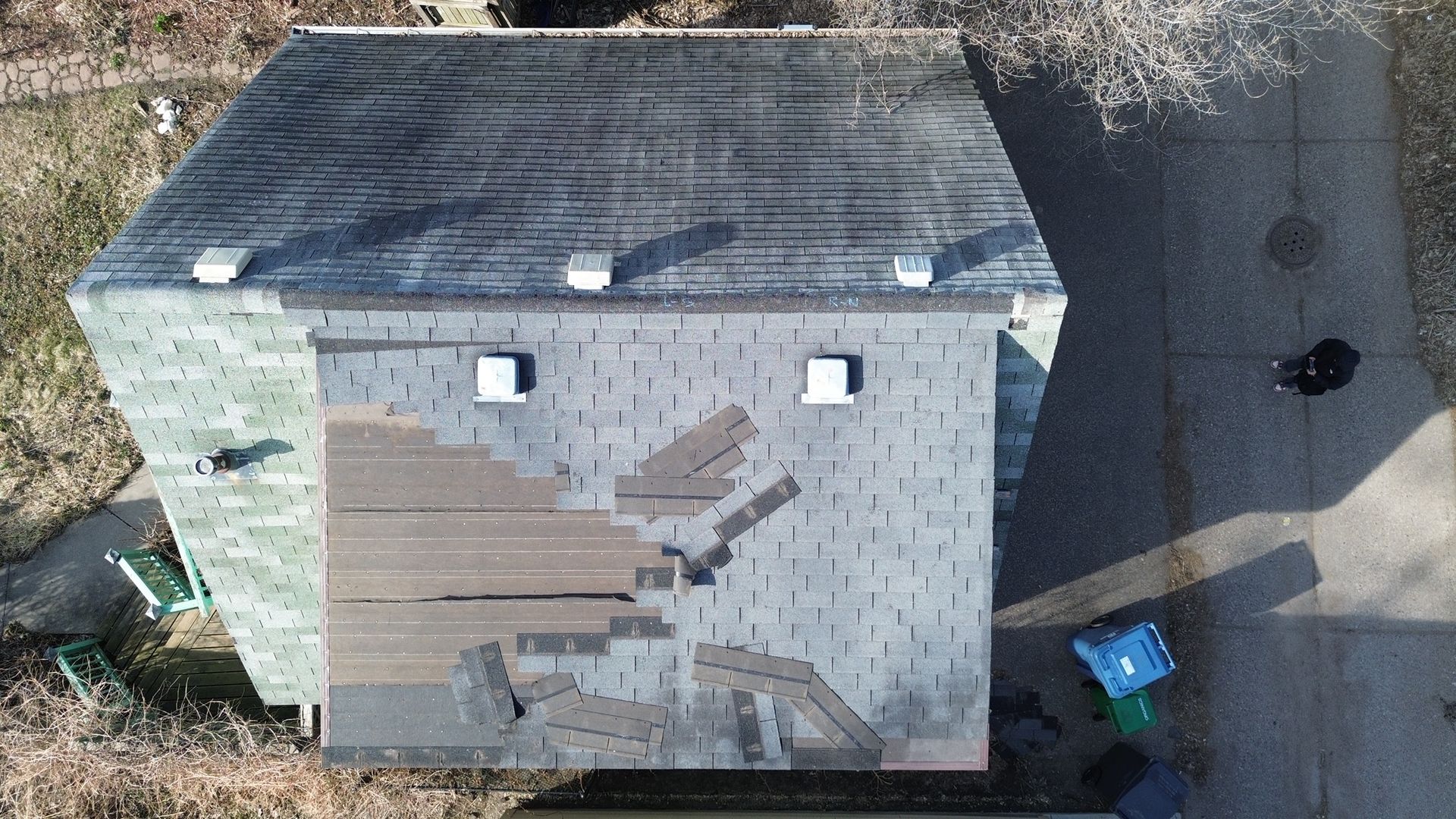
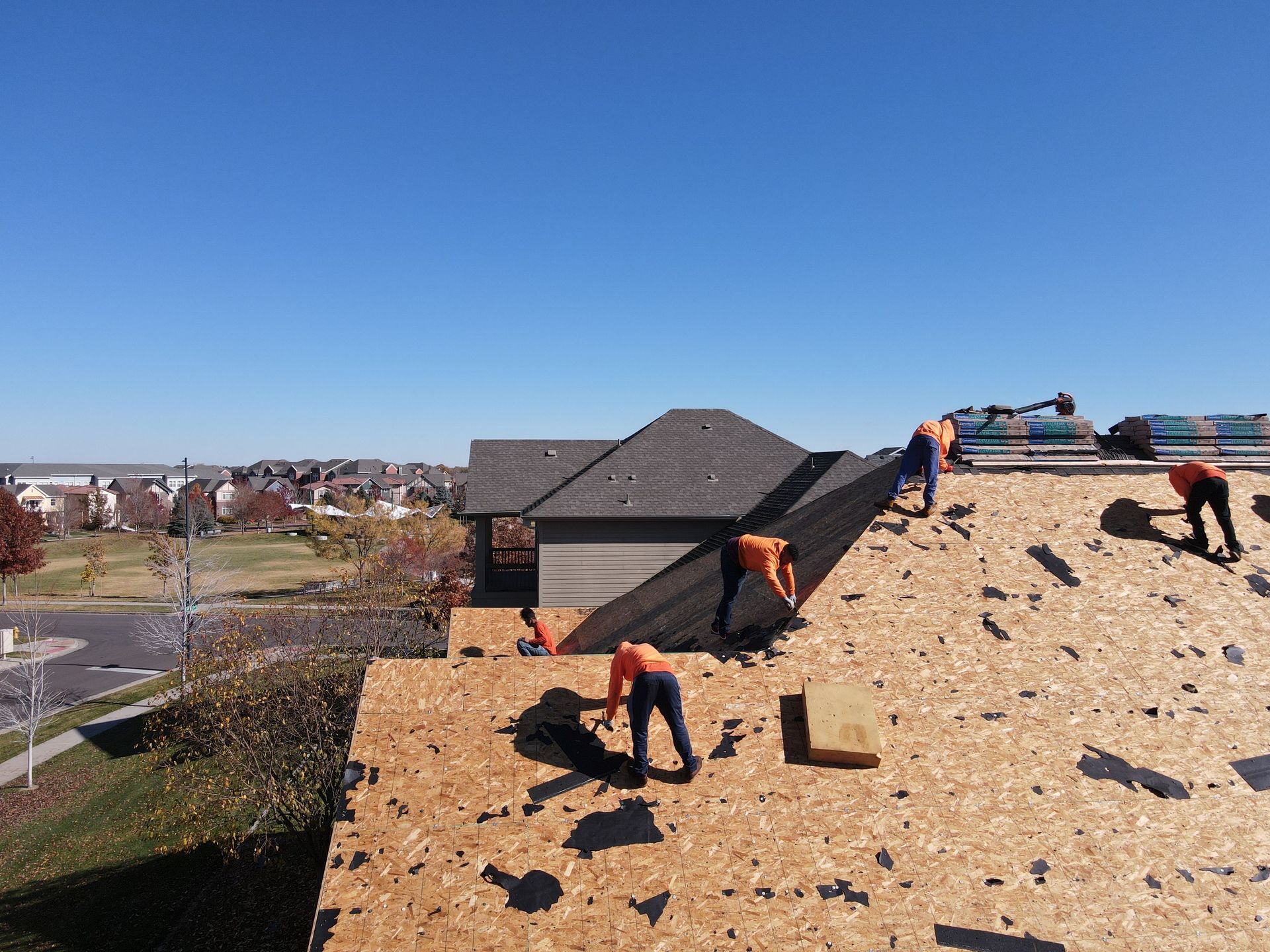
Drag to reveal the restoration. Real Colorado job, completed by Precision Exteriors Restoration.
Storm damage services in Denver
Direct answer: Precision Exteriors Restoration handles free storm damage roof inspection, hail damage repair and replacement, wind damage repair, debris and tree damage restoration, full insurance claim support, and complete exterior restoration across all four systems, roof, siding, gutters, and windows, under one scope.
Free storm damage roof inspection
Close-range, every slope, every component. Photo documentation organized by roof plane, damage classified functional vs cosmetic, written findings before you call your insurer.
Hail damage repair and replacement
Impact count per test square, component-level documentation, Xactimate estimates, adjuster meeting attendance, and Class 4 upgrade guidance with insurance discount analysis.
Wind damage repair
Documentation using local weather station data and NOAA records. Shingle displacement, ridge cap, flashing, and pipe boot failures all documented and scoped with wind speed verification.
Debris and tree damage restoration
Emergency stabilization for active structural breaches and a full structural assessment before any materials are installed over potentially compromised decking.
Insurance claim support, full service
Pre-adjuster inspection, adjuster meeting attendance, Xactimate-format estimates, supplement documentation, and recoverable depreciation collection from first inspection through final payment.
Full exterior restoration, all four systems
For multi-system storm events affecting roof, siding, gutters, and windows: one contractor, one scope, one Xactimate estimate, one adjuster meeting, one deductible.
How to avoid storm chasers after a major hail event
Direct answer: Every significant hail event brings out-of-state storm chasers who work without Colorado licenses, pull no permits, and disappear within six months. Verify the Colorado contractor license at dora.colorado.gov before signing anything, check Google and BBB for local Denver-specific reviews, and never sign a document with Assignment of Benefits language or deductible waiver offers.
- ✓ Verify the Colorado contractor license number at dora.colorado.gov: active, no disciplinary history. Precision Exteriors: Colorado License #0248041.
- ✓ Check Google and BBB for local reviews with specific project neighborhoods, not generic reviews that could have been written anywhere.
- ✓ Ask one question: how many projects have you completed in this area in the last two years? A local contractor answers specifically, a storm chaser cannot.
- ✓ Do not sign any document, including an inspection agreement or direction to pay, before reviewing it for Assignment of Benefits language, deductible waiver offers, and waived right of rescission.
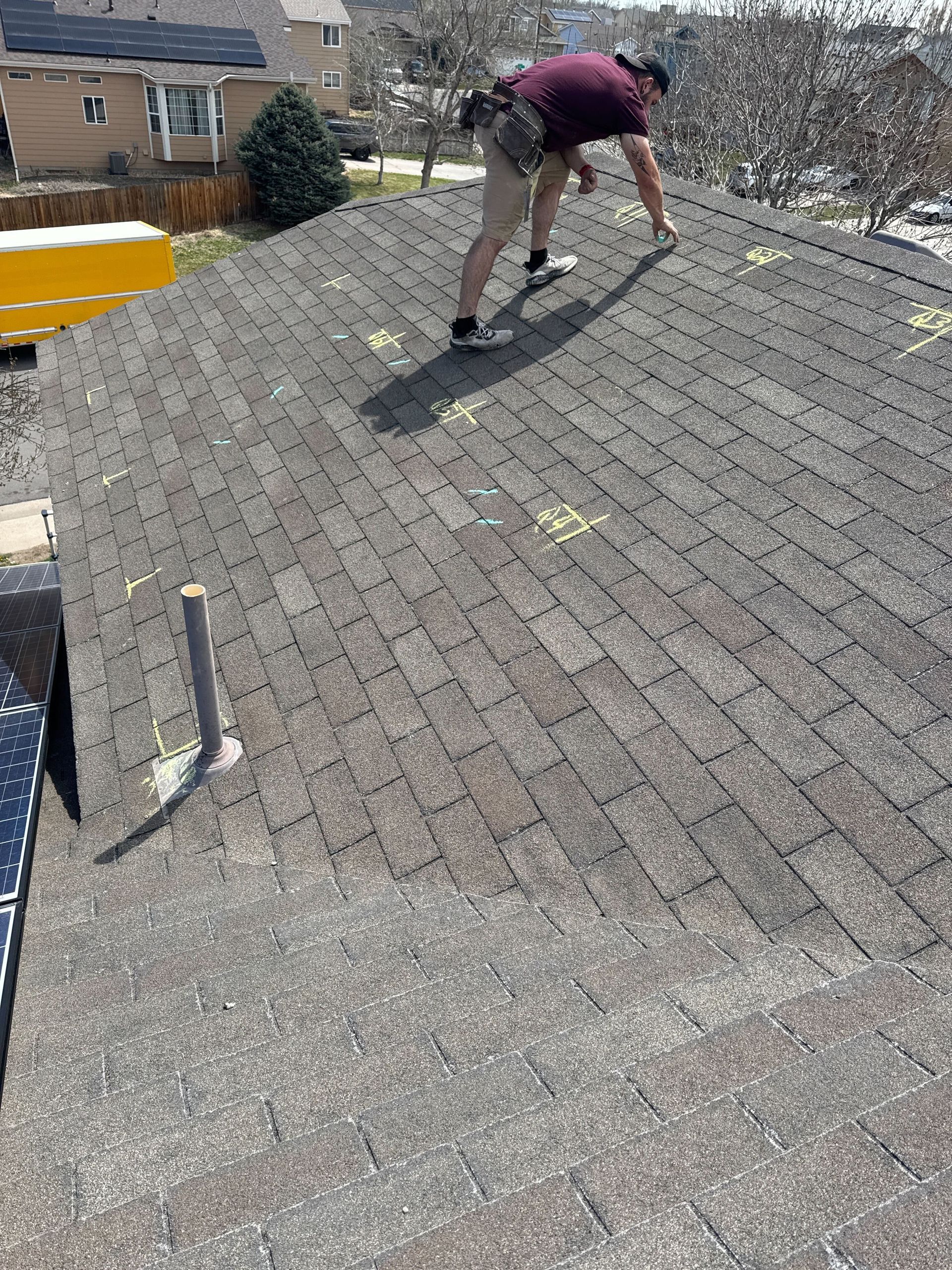 Pre-adjuster inspection, Denver metro
The Precision Warranty
Bumper-to-bumper coverage, in writing
Every qualifying installation is backed by the Precision Warranty, a 10-year workmanship warranty. Combined with the enhanced manufacturer warranty our Owens Corning Preferred and CertainTeed Shingle Master Installer certifications unlock, you get bumper-to-bumper protection on labor and materials.
10-Year Workmanship Warranty
Our installation quality is covered for a full decade, in writing.
Certified-Installer Manufacturer Warranty
As an Owens Corning Preferred Contractor and CertainTeed Shingle Master Installer, we register manufacturer-backed material warranties most contractors cannot offer.
Licensed, Insured, Local Since 2016
Colorado License #0248041, BBB A+ accredited, with 3,000+ completed Front Range projects.
Explore storm damage services
Go deeper on each storm damage type, or read our full guide to navigating an insurance claim alongside us.
Hail damage
Bruised or fractured shingles, dented gutters, and cracked siding from Colorado hail.
Wind damage
Lifted or missing shingles, loose siding, and fascia damage from Front Range winds.
Debris and tree damage
Punctures and impact damage from fallen branches, trees, and wind-driven debris.
Insurance claims
ACV vs RCV, depreciation recovery, and adjuster meetings, handled alongside you.
We take the risk off your shoulders
Choosing a storm restoration contractor should feel safe. Between manufacturer warranties, hands-on insurance help, and one accountable crew, the path forward is low risk from day one.
One scope, one deductible
We handle all four exterior systems, roof, siding, gutters, and windows, under one scope, one warranty, and one point of contact, avoiding four separate deductible exposures.
We document and supplement
Pre-adjuster documentation, Xactimate estimates, and supplements for missed line items so your claim reflects the true scope of the damage.
Recoverable depreciation collected
We prepare the completion package on every RCV claim specifically to trigger the recoverable depreciation release most homeowners miss.
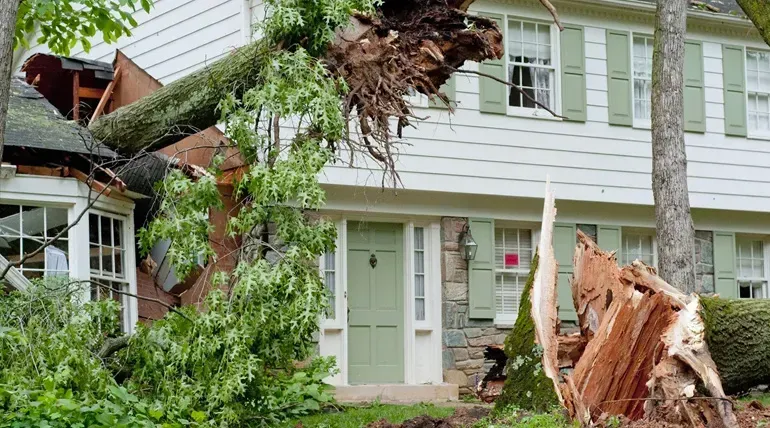 Storm response, Denver metro
Serving Denver metro and Front Range communities
Direct answer: Precision Exteriors Restoration serves homeowners across Denver and the surrounding Front Range, including Aurora, Thornton, Lakewood, Arvada, Westminster, Centennial, Littleton, Highlands Ranch, and Castle Rock, locally based and locally responsive from our downtown Denver office.
Storm damage: frequently asked questions
What do I do immediately after a storm hits my home? +
How long do I have to file a storm damage insurance claim in Colorado? +
Will filing a storm damage claim raise my homeowner's insurance premium? +
What is the difference between ACV and RCV on a storm damage claim? +
What is recoverable depreciation and how do I collect it? +
Does storm damage always mean I need full replacement? +
What do insurance adjusters most commonly miss on storm damage claims? +
How do I avoid storm chasers after a hail event? +
Why should I call a contractor before my insurance company after a storm? +
Get a free storm damage assessment
Precision Exteriors Restoration has handled storm restoration across Denver and the Front Range since 2016. Call (720) 408-1840 for a free, no-pressure damage assessment, inspection, repair, and full exterior restoration.