
Roof replacement in Denver, built for Colorado's climate
Full tear-off and certified installation engineered for Denver hail, high-altitude UV, and freeze-thaw, backed by the 10-year Precision Warranty. Free roof inspection with a written report in 24 hours.
Book your free inspection
Pick a time and we send a written report with photos within 24 hours.
Roof replacement in Denver, done right the first time
Direct answer: A full roof replacement in Denver typically costs $9,000 to $25,000+ and takes 1 to 2 days, depending on roof size and material (asphalt shingle, metal, or tile). Precision Exteriors Restoration is a licensed Colorado contractor (License #0248041), Owens Corning Preferred, with 3,000+ projects since 2016. We handle tear-off, decking repair, and certified installation, and back every roof with a 10-year workmanship warranty. After hail or wind, most replacements qualify for an insurance claim.
| Factor | Roof repair | Roof replacement |
|---|---|---|
| Best when | Isolated leaks or flashing issues, under ~30% damage, roof under 15 years old | Widespread hail or wind damage, roof 15+ years old, or repeated leaks |
| Typical Denver cost | $400 to $2,500 | $9,000 to $25,000+ |
| Added lifespan | 1 to 5 years | 25 to 50 years by material |
| Timeline | Same day to 1 day | 1 to 2 days |
| Warranty | Repair-area workmanship | 10-year workmanship + manufacturer coverage |
Not sure which way to go? Start with our Denver roof repair options, or read the full repair versus replacement framework. After hail or wind, see storm damage guidance first.
What Denver's climate does to roofs, and why it matters
Direct answer: Denver roofs fail from frequent hail, high-altitude UV, and freeze-thaw cycling. The Denver metro sits in Hail Alley with 7 to 9 significant hail days a year, UV roughly 25 percent stronger than at sea level, and 150-plus freeze-thaw cycles annually, which shortens standard shingle life to 18 to 22 years.
Roofing in Denver is not the same as roofing in most of the country. The conditions that drive failure, the materials that perform, and the damage patterns that matter for insurance purposes are all specific to Colorado's climate. A roofing contractor without deep experience in this market often discovers that after the project is done.
Hail Alley. The Denver Metro sits at the center of Hail Alley, the corridor running from north Texas through eastern Colorado that produces more damaging hail per year than anywhere else in North America. Multiple events each season produce hail at or above 1 inch in diameter, the threshold at which functional roofing damage begins. Hail at 1.5 inches and above, which occurs multiple times per decade in any given Denver neighborhood, causes widespread fiberglass mat fracture in standard architectural shingles. That fracture is invisible from the ground and does not immediately cause a leak, but it eliminates the shingle's structural integrity and dramatically shortens remaining service life.
Denver sits at 5,280 feet. UV intensity at altitude is approximately 25 percent higher than at sea level. That differential accelerates granule loss on asphalt shingles, oxidizes the asphalt mat faster than manufacturer specifications reflect, and shortens the functional service life of standard architectural shingles in Colorado to 18 to 22 years, shorter than the 25 to 30 year lifespan printed on most product warranties.
The Front Range experiences 150-plus freeze-thaw cycles annually. Each cycle stresses flashings, sealants, and every penetration where two different materials meet: pipe boots, chimney step flashing, valley metal, and drip edge. A roofing system installed without quality underlayment, proper ice and water shield coverage at the eave, and correctly integrated flashing at every transition will develop leak points at these locations within a few years in Denver's climate.
Foothills communities, Arvada, Lakewood, Golden, Wheat Ridge, and the western Denver suburbs, experience periodic downslope Chinook wind events reaching 60 to 100 mph. These events lift ridge caps, displace shingles at eave edges, and pull flashing from wall transitions. Post-Chinook inspection is recommended for any home in these communities, particularly on south and west-facing roof planes.
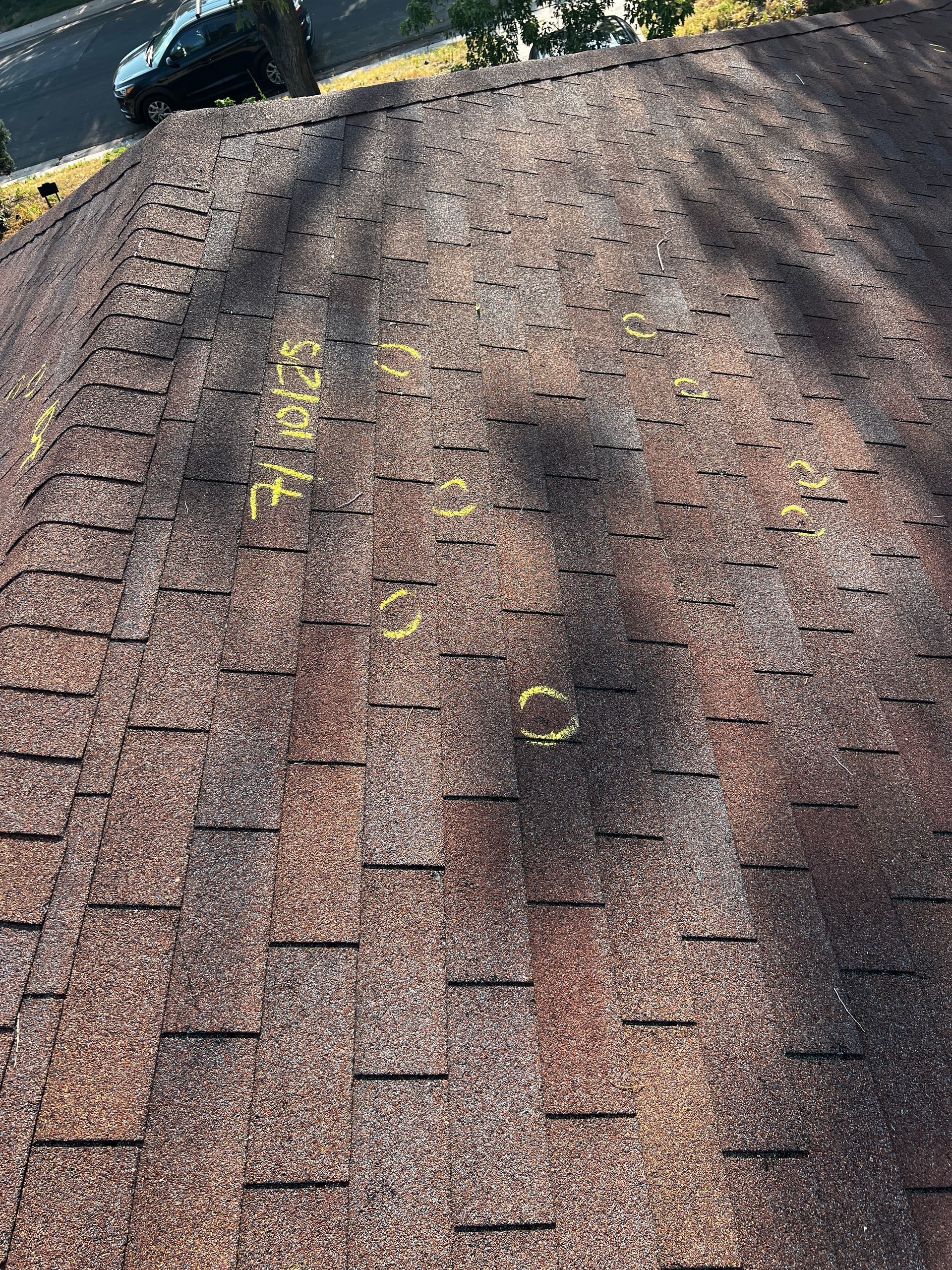 Hail damage, Denver metro
What a full roof replacement includes
Direct answer: A real Denver roof replacement is a complete system rebuilt to code, not just new shingles over old problems. It includes complete tear-off to the decking, decking inspection and repair, synthetic underlayment with ice-and-water shield, new flashing at every penetration, certified shingle installation, full cleanup, and a written 10-year workmanship warranty.
🪓 Complete tear-off
Full removal of the existing shingles and underlayment down to the decking, so nothing old is buried under your new roof.
📐 Decking inspection & repair
We inspect the decking and replace any rotted or damaged sections before the new system goes on.
💧 Underlayment & ice-and-water shield
Synthetic underlayment across the deck, with ice-and-water shield at the eaves and in every valley per Denver code.
🔧 Re-flashed leak points
Chimneys, valleys, skylights, pipe boots, and wall transitions all re-flashed, the most common Denver leak points.
🏗 Certified shingle install
Installed to Owens Corning Preferred and CertainTeed Shingle Master Installer standards, with ridge and hip cap and verified ventilation.
🧹 Cleanup & 10-year warranty
Full magnetic-nail cleanup, a final inspection, and your written 10-year workmanship warranty.
Denver roofing material guide: what actually performs in Colorado
Direct answer: The best Denver roofing materials are impact-resistant. Material selection for a Denver roof is not a generic decision. Colorado's specific combination of hail frequency, high-altitude UV intensity, and freeze-thaw cycling eliminates some materials from serious consideration and changes the economics of others significantly.
🏠 Standard architectural shingles (Class 1/Class 2 UL 2218)
The most common material in Denver's residential roofing stock. Standard architectural shingles perform adequately in moderate conditions but sustain fiberglass mat fracture from hail impacts at 1.5 inches and above, the hail size Denver's Hail Alley produces multiple times per decade in any given neighborhood. A standard shingle roof that sustains a significant hail event in Denver will typically require full replacement, not repair.
Why Denver: legitimate for the lowest upfront cost when the replacement likelihood is accepted.🪨 Class 4 impact-resistant shingles (UL 2218, highest rating)
The most defensible roofing choice for the Denver Metro market. UL 2218 Class 4 is the highest impact resistance classification available, tested by dropping a 2-inch steel ball at 90 mph onto the shingle surface without causing fracture of the fiberglass mat beneath. The premium over standard architectural shingles is $0.50 to $1.50 per square foot. Named products we install: Owens Corning Duration Storm, TruDefinition Duration Storm, CertainTeed Landmark IR.
Why Denver: many Colorado carriers offer 20 to 30 percent premium discounts, paying back the premium within 3 to 5 years.⚡ Metal roofing
A legitimate premium option for Denver homeowners who want a one-decision roof. Standing seam metal roofing provides 40 to 70 year service life, is effectively immune to hail damage at any diameter, and performs exceptionally in Colorado's UV and freeze-thaw environment. The cost is 2 to 3 times that of Class 4 shingles.
Why Denver: superb for forever homes where single-installation economics are compelling.🏙 Tile
Concrete or clay tile delivers premium durability and a distinctive look with maximum lifespan, where the roof structure supports the added weight and the budget allows.
Why Denver: long-term durability and curb appeal for the right structure.See storm damage become a finished roof
Drag the slider to compare a storm-damaged Denver roof with the completed Precision Exteriors Restoration result. Every replacement is documented this way for your records and your insurer.
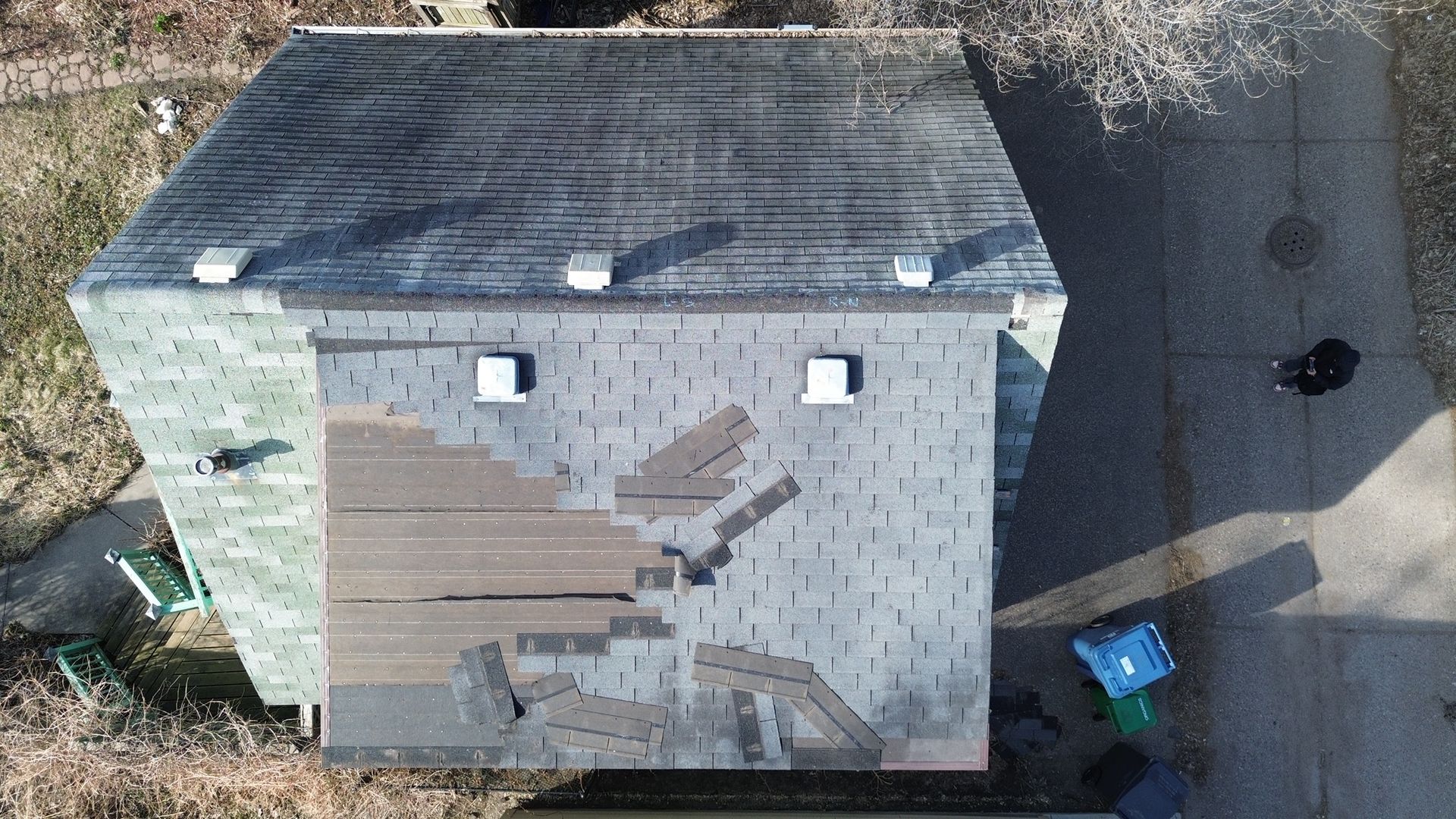
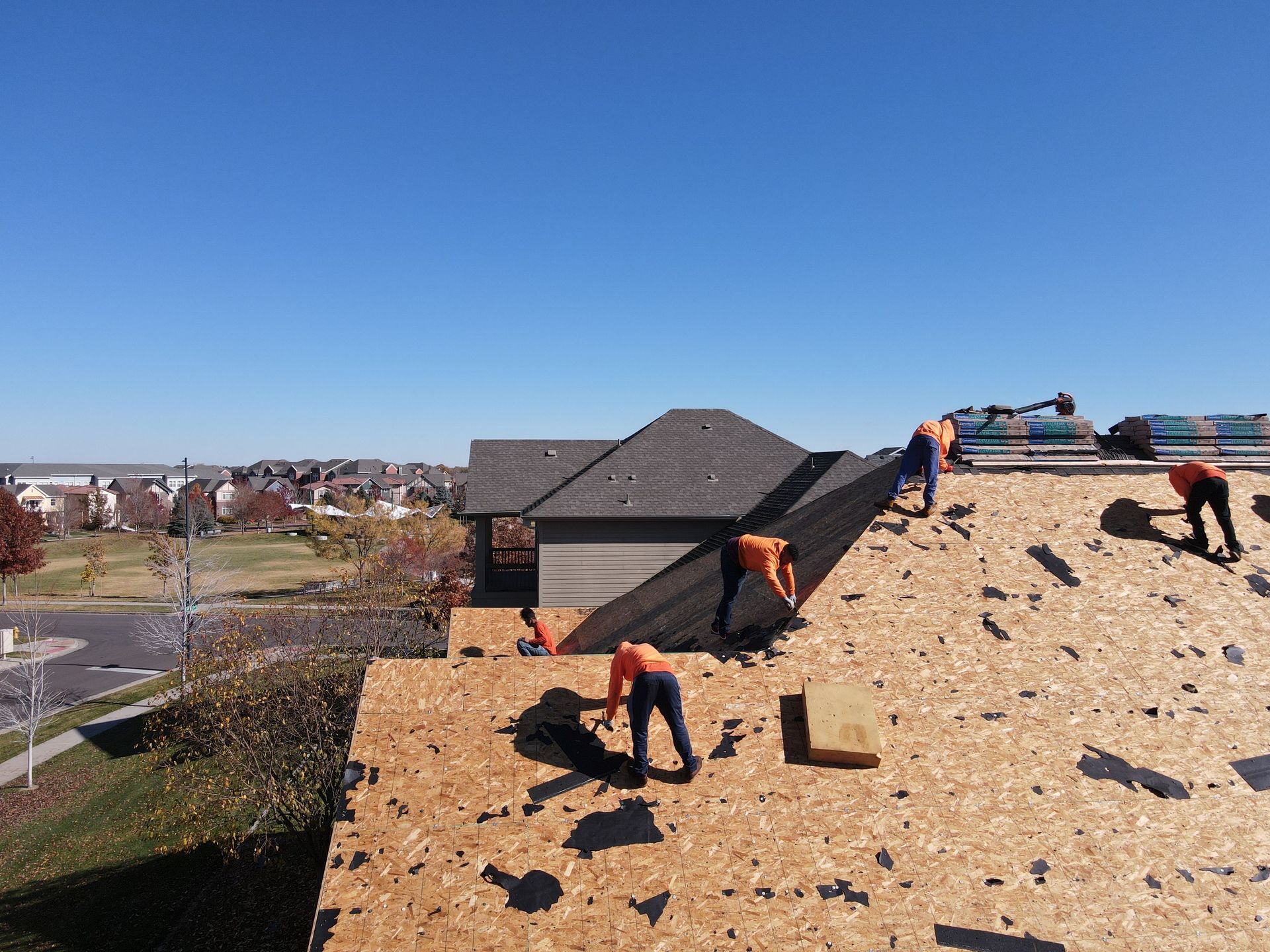
Drag to reveal the restoration. Real Colorado job, completed by Precision Exteriors Restoration.
Insurance & roofing claims in Denver: what to expect
Direct answer: The majority of roof replacement projects in the Denver Metro follow hail or wind damage events and involve an insurance claim. The process affects documentation requirements, scope development, and payment timing. Here is what Precision Exteriors provides on every claim-supported project.
- ✓ Xactimate estimates. We prepare our repair estimates in Xactimate, the industry-standard estimating platform used by insurance carriers and independent adjusters. An estimate in Xactimate format allows direct line-item comparison between our scope and the carrier's scope, making scope gaps visible and the supplement process more efficient.
- ✓ Adjuster meeting attendance. We attend the adjuster's inspection for every client who requests it. We walk the roof with the adjuster, present our photo documentation and findings, and ensure the full scope of functional damage is evaluated, not just what is visible from the eave.
- ✓ Supplement documentation. Our internal supplements team prepares complete documentation packages for items in our agreed scope that were missing from the initial adjuster estimate. Each supplement item is supported by photos, measurements, and where applicable, code citations or manufacturer requirement documentation. Common Denver supplement items include drip edge, ice and water shield, pipe boot replacement, ventilation corrections, and permit fees.
- ✓ Code upgrade documentation. When restoration work triggers current Denver building code or manufacturer installation requirements not present on the original system, we document the specific code basis for each upgrade item and include it in the supplement package.
- ✓ Depreciation release. On Replacement Cost Value policies, the initial payment is ACV, the depreciated value of the system. The recoverable depreciation is released after repairs are completed and documented. We provide completion documentation specifically formatted for depreciation release, a step many homeowners miss, leaving money uncollected.
Repair vs. replacement: the Denver framework
Direct answer: The repair vs. replacement decision on a Denver roof depends on four factors evaluated honestly after close-range inspection: how widespread the damage is, the roof's age at altitude, code upgrade thresholds, and cost logic.
Localized damage on an otherwise sound system with meaningful remaining service life supports repair. Widespread damage across multiple slopes or elevations, or damage distributed across enough impact points that targeted repairs leave the system's overall integrity uncertain, supports replacement.
A roof at 8 years with hail damage is a strong repair candidate. A roof at 22 years with the same damage, where remaining serviceable life was already limited at altitude, is a replacement candidate, particularly when code upgrades triggered by replacement bring the system to current standards at minimal incremental cost.
Denver building code and manufacturer installation requirements create upgrade obligations when restoration scope crosses certain thresholds. When targeted repairs approach a cost level where replacement is competitive and replacement delivers a code-compliant system with a fresh manufacturer warranty, replacement typically produces better total value.
Cost logic. When estimated repair costs approach 40 to 50 percent of replacement cost on a system within 5 years of end of service life, replacement typically produces better long-term value. We explain this math after every inspection, in plain language, before any commitment is made.
Our roof replacement process in Denver
Direct answer: Our Denver roof replacement process runs in six clear steps, from a free photo-documented inspection through your written 10-year workmanship warranty, with permit handling and insurance support built in. No high-pressure sales. No surprise costs.
Free inspection
Close-range check of shingles, flashing, vents, and gutters, fully documented with photos.
Written scope
A written scope of exactly what needs repair or replacement, with materials and timeline.
Permit & insurance
We pull Denver permits and, on insurance claims, handle the Xactimate estimate and adjuster meeting.
Certified install
Installed to Owens Corning Preferred and CertainTeed Shingle Master Installer standards and Denver building code.
Walkthrough & warranty
A final inspection, full cleanup, and your 10-year workmanship warranty paperwork.
24/7 support
Ongoing emergency roof repair support across the Denver metro after your project.
The Precision Warranty: a 10-year workmanship guarantee
Every qualifying installation is backed by the Precision Warranty, a 10-year workmanship warranty. Combined with the enhanced manufacturer warranty our Owens Corning Preferred and CertainTeed Shingle Master Installer certifications unlock, you get bumper-to-bumper protection on labor and materials.
10-Year Workmanship Warranty
The Precision Warranty covers installation defects on every qualifying system under one warranty document, for a full decade, in writing.
Certified-Installer Manufacturer Warranty
Owens Corning Preferred and CertainTeed Shingle Master Installer certifications enhance your material warranty, with layered coverage through Platinum Protection and SureStart PLUS on qualifying systems.
A Denver roofing contractor with a real local track record
We have worked on roofs like yours, in storms like the ones that hit your neighborhood, and we have been doing it since 2016.
Why choose Precision Exteriors for your Denver roof replacement
Direct answer: Precision Exteriors Restoration is a licensed, dual-certified Denver roofing contractor with verifiable credentials, Xactimate and supplement capability, proven local volume, and honest repair-versus-replace recommendations, all backed by a 10-year workmanship warranty.
Licensed and verifiable
Colorado License #0248041, verifiable through the Colorado Division of Regulatory Agencies at dora.colorado.gov. In Denver's post-storm market, unlicensed contractors appear frequently after major hail events.
Both manufacturer credentials, not one
Owens Corning Preferred Contractor and CertainTeed Shingle Master Installer. Both credentials provide access to extended warranty programs, Platinum Protection and SureStart PLUS, unavailable through uncredentialed contractors.
Proven volume in your market
200+ roofing projects in Denver, Aurora, and Montebello in 2024. 100+ in Aurora and Denver in 2025. 3,000+ total completed Front Range projects since 2016.
Xactimate estimates and supplement capability
We prepare estimates in Xactimate and have an internal team that prepares and submits supplement documentation directly with the carrier. If your contractor cannot produce an Xactimate estimate and handle supplements, scope gaps between their estimate and the adjuster's scope become your problem to resolve out of pocket.
Honest repair vs. replacement recommendations
We regularly advise homeowners to repair rather than replace. When repair is the right answer, we say so and we document why. That honesty has produced 3,000+ completed projects from a business that started in 2016.
10-year workmanship warranty, every project
Covering installation defects on every system under one warranty document. On qualifying projects, layered manufacturer warranty coverage through Owens Corning and CertainTeed on top.
Trusted across the Front Range
Real, verified Google reviews from Denver-area homeowners. We are proud of an honest 4.6 stars rating built one roof at a time. Read our reviews.
"The Precision team provided great customer service and results. Special thanks to Anthony for helping me through the insurance process and making sure the details were covered. The work was done on time, with a great clean-up."
"Great quality work, friendly service. Fast and clean service. I highly recommend them."
"They were great to work with. They showed up on time, they knew their stuff, and they did the work well. I would recommend them to anyone who needs a roof repair."
Related roofing and exterior services
A roof replacement is one part of a full exterior restoration. Explore the rest of our Denver roofing and exterior services.
Roof repair →
Roof repairs by expert contractors for Denver leaks, shingles, and flashing.
Roof inspections →
Free, photo-documented roof inspections with a written report in 24 hours.
Emergency roofing →
Emergency roof tarp and 24/7 response to stop water before it spreads.
Siding services →
Fiber cement, engineered wood, and vinyl siding to match your new roof.
Gutter services →
Seamless gutters, leaf guards, and downspouts that move Denver snowmelt away.
All roofing services →
Browse the full Denver roofing hub, from inspection through replacement.
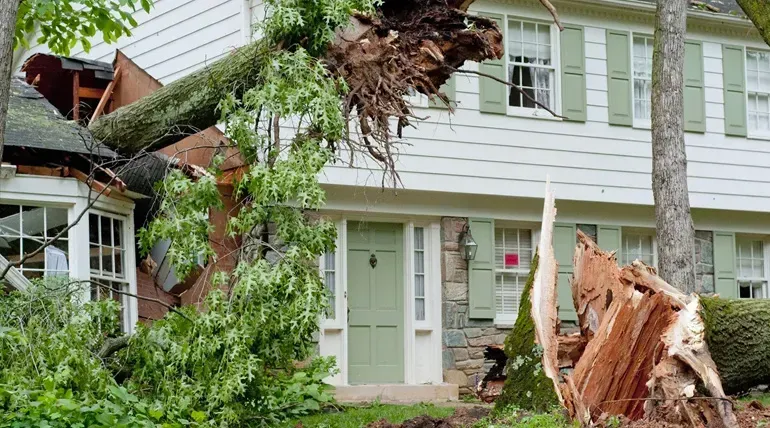 Storm response, Denver metro
Serving Denver and the Front Range
Direct answer: Precision Exteriors Restoration provides roof replacement across the Denver Metro and the Front Range, locally based and locally responsive, including Aurora, Arvada, Thornton, Westminster, Lakewood, Centennial, Littleton, and Castle Rock, from our downtown Denver office.
Roof replacement FAQs: Denver
Straight answers to what Denver homeowners ask about replacing their roof.
How long does a roof replacement take in Denver? +
What does a full roof replacement include? +
How much does a roof replacement cost in Denver? +
Will my insurance cover a roof replacement? +
What roofing materials do you install? +
Are Class 4 impact-resistant shingles worth it in Denver? +
Do I need a permit, and do you handle it? +
What warranty comes with a new roof? +
Do you handle cleanup and old-roof disposal? +
Could I repair my roof instead of replacing it? +
Protect your home: start with a free roof inspection
A no-pressure, photo-documented roof inspection from a licensed, local Denver roofing contractor, with a written report in 24 hours.