Wind Damage to Residential Exteriors — Risks, Signs, and Next Steps

Licensed Wind Damage Contractor — Founded 2016 — Serving Homeowners for Nearly a Decade · Colorado License #0248041 · 3,000+ Completed Projects Across your area · Owens Corning Preferred Contractor · CertainTeed Master Installer · BBB A+ Accredited · NRCA Member · 20+ Years Combined Experience · 10-Year Workmanship Warranty · Free Inspections — No Obligation · 24-Hour Emergency Response

Precision Exteriors Restoration is a licensed exterior restoration contractor (Colorado License #0248041) specializing in wind damage inspection and restoration for residential and multi-family properties across the your area. Founded 2016. 20+ years of combined experience in storm restoration. 3,000+ completed projects. Owens Corning Preferred Contractor. CertainTeed Master Installer. BBB A+ Accredited. NRCA member.

Wind damage occurs when strong or sustained winds compromise a home's exterior by lifting, loosening, or displacing materials. Unlike hail damage — which leaves impact evidence on every exposed surface simultaneously — wind damage often affects attachment points, edges, and transitions selectively, making it especially difficult to detect without close inspection. A roof that shows no missing shingles after a wind event may still have widespread seal strip failure, loosened ridge cap fastening, and compromised step flashing that will produce a leak in the next rain event.

Colorado's Front Range wind environment is among the most demanding in the country. This page covers what wind specifically does to residential exteriors, why the damage is so frequently missed, how to document it for an insurance claim, and what the repair and restoration process looks like.

Schedule a Free Wind Damage Inspection → | Call (720) 408-1840

Colorado's Wind Environment — Why the Front Range Is Different

homeowners face three distinct wind damage mechanisms that do not exist at the same frequency or intensity in most other markets. Understanding each one tells you when a free inspection moves from optional to essential.


Chinook Winds — The Primary Structural Threat

Chinook winds are warm, dry downslope winds that descend from the Rocky Mountains across Colorado — typically from the west or northwest — and accelerate as they compress against the plains. In the foothills communities west and northwest of Denver — Arvada, Lakewood, Golden, Wheat Ridge, Westminster — Chinook events regularly produce sustained winds of 50–70 mph with gusts reaching 80–100 mph. In the most severe events, gusts have exceeded 100 mph in Jefferson County communities.

At these speeds, wind is not moving shingles — it is removing them. Ridge cap sections that have been in place for 15 years are displaced in a single gust. Step flashing at wall transitions is pulled away from substrate. Gutter fasteners that have held through dozens of seasons fail under lateral load. The damage from a single Chinook event can be equivalent to a hail claim in scope — and it is entirely covered under standard homeowner policies as a named wind peril.

Chinook events occur most frequently in fall, winter, and early spring — outside the hail season window homeowners typically think of as "storm season." Many homeowners experience Chinook damage in December or February and do not connect the following spring's leak to the wind event months earlier.


Thunderstorm Outflows — The Summer Wind Damage Driver

Colorado's summer thunderstorm season — May through August — produces a different wind damage mechanism. Thunderstorm outflows are rapid downdraft winds that spread outward from a storm cell as it collapses. In the your area, these outflows regularly generate 40–60 mph straight-line winds across the city, arriving with little warning and affecting properties that are not directly under the storm cell.

Thunderstorm outflow wind damage differs from Chinook damage in one important way: it typically occurs simultaneously with hail. A homeowner who files a hail claim after a summer storm may have separate and equally significant wind damage on the same property — displaced shingles, loosened gutter fasteners, siding panel separation at seams — that is documented and claimed as a distinct wind peril item on the same scope.


Sustained Front Range Winds — The Chronic Stress Mechanism

Even without a discrete storm event, the your area experiences sustained winds of 20–35 mph for extended periods — particularly in late winter and spring. These sustained winds do not cause the dramatic visible damage of Chinook or thunderstorm events, but they create chronic fatigue stress on every attachment point on the roof and exterior.

Seal strips that have been thermally cycled through freeze-thaw seasons are particularly vulnerable to sustained wind loading. A shingle that has gone through 150-plus freeze-thaw cycles has reduced adhesive bond strength at the seal strip — sustained winds at 25–30 mph over 12–18 hours can progressively lift those edges without ever producing the dramatic displacement of a single high-gust event. The result is widespread marginal seal failure across entire slopes that only becomes apparent when the next rain event finds dozens of entry points simultaneously.


Wind Speed and Damage Thresholds — What Each Level Does to a Home

20–35 mph — Sustained Front Range Winds Chronic seal strip fatigue on shingles with compromised adhesive bond. No visible displacement. Damage accumulates over multiple wind events across seasons. Most vulnerable: roofs with prior hail history or UV degradation that has reduced seal strip adhesion.

40–50 mph — Moderate Gust Threshold The minimum threshold at which most homeowner policies recognize wind as a covered peril. At this speed: shingle edges begin lifting at seal strip failure points, ridge cap fasteners experience meaningful lateral load, gutter fasteners on long gutter runs experience pull stress. Visible damage unlikely from the ground. Close-range inspection warranted after any event confirmed at 45 mph or above.

50–70 mph — Chinook and Strong Thunderstorm Outflow Range Consistent shingle displacement at seal failure points. Ridge cap sections with degraded fastening displace or separate. Step flashing at chimney and wall transitions lifts and separates from substrate. Gutter sections pull away from fascia. Soffit panels displace at end caps. Siding panels at corner boards and seams begin separating. Visible from the ground at the severe end of this range. Insurance claim warranted in most cases for properties with standard roofing systems.

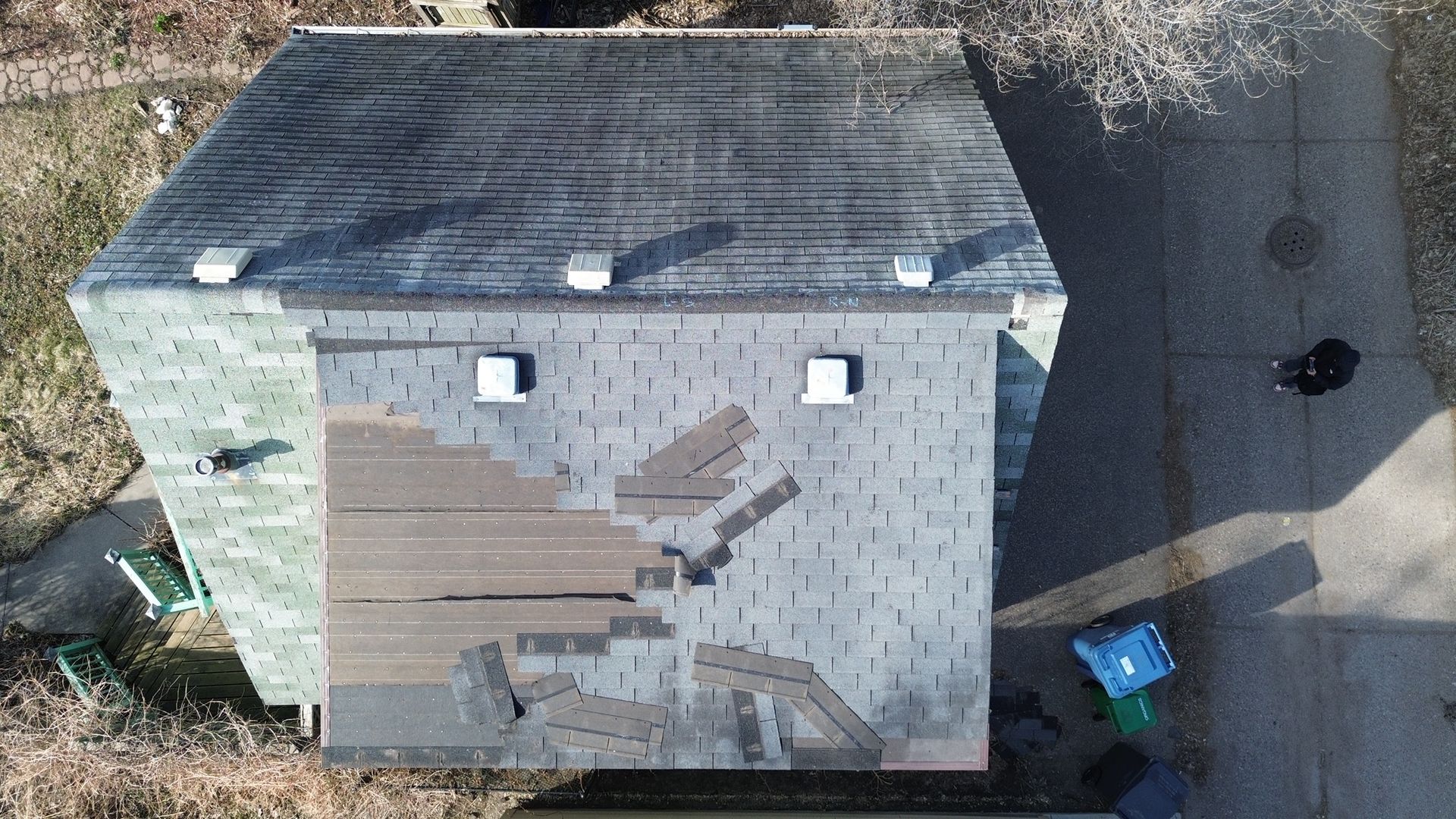
70–100 mph — Severe Chinook and Downslope Event Range Widespread shingle displacement across entire slopes. Full ridge cap sections removed. Step flashing and counter flashing pulled completely from substrate at multiple locations. Gutter sections separated from fascia over significant run lengths. Siding panels displaced, cracked, or removed. Window frame stress and seal failure from wind load. Active structural breach possible — emergency stabilization may be warranted same-day. Full replacement scope likely on roofing. Siding and gutter scope significant.

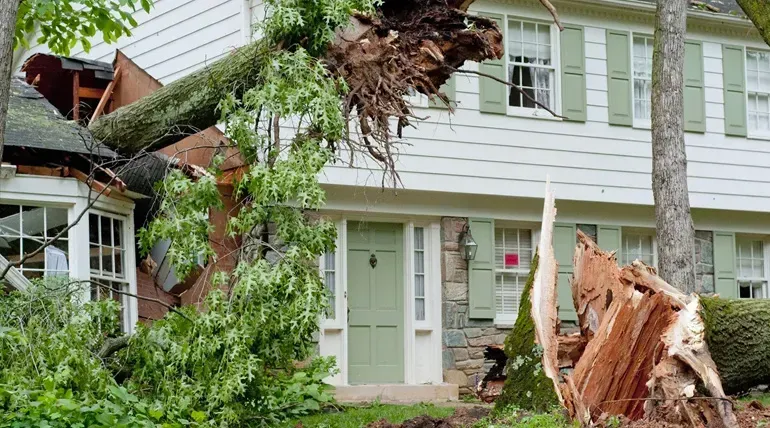
100 mph and above — Extreme Downslope Event Structural damage beyond exterior systems possible — roof deck stress, rafter movement at ridge and eave connections. Underlayment exposure across multiple slopes from complete shingle removal. Emergency tarping and stabilization required immediately. These events are documented in Jefferson County and the foothills communities multiple times per decade.

The practical implication: After any event where local weather station data or NOAA records confirm sustained winds above 45 mph or gusts above 60 mph in your neighborhood — schedule a free inspection. Wind speed data from the nearest weather station is available through NOAA's public records and is used by Precision Exteriors to support wind speed verification on insurance claims.


How Wind Damages Different Exterior Systems

Wind affects roofing, siding, gutters, and windows in distinct ways. Understanding what damage looks like on each system helps homeowners identify what warrants close-range professional inspection.


Roof Damage From Wind

Wind roof damage differs from hail damage in a critical way: it is primarily an attachment failure, not an impact failure. Hail fractures material. Wind separates it from its substrate or from the component beneath it.

Lifted shingles and seal strip failure. The most common wind roof damage finding — and the most frequently missed. Shingles lift at their leading edge when wind load exceeds the adhesive strength of the seal strip. They may re-seat when wind drops, leaving no visible displacement from the ground but a permanently compromised seal. A shingle that has lifted and re-seated has broken the seal strip bond — it will lift again in the next wind event, and progressively, at lower and lower wind speeds as the remaining adhesive bond weakens. This is the progressive damage mechanism that produces leaks 3–12 months after the original wind event.

Ridge cap displacement. Ridge cap is the most wind-exposed component on the roof — elevated, exposed on both sides, and relying on fastener penetration through multiple shingle layers. In Chinook and thunderstorm outflow events, ridge cap sections with degraded fastening are the first components to displace or separate. Missing ridge cap is visible from the ground and is an active water entry point at the highest point of the roof structure.

Step flashing and counter flashing separation. Step flashing at chimneys, skylights, and wall-to-roof transitions is held against the substrate by a combination of fasteners and sealant. Wind load at these transitions — particularly in Chinook events where wind approaches from a consistent direction — progressively separates flashing from substrate. A step flashing gap of 3–4mm is an active leak pathway that is invisible from the ground and frequently invisible even from the roof surface without close examination of the flashing edge.

Nail pop and shingle crease. Wind uplift that is insufficient to displace a shingle can still cause the fastener to back partially out of the decking — a nail pop — while the shingle remains in place. A nail-popped shingle has a raised bump visible only at close range, a compromised fastening, and a crack or crease at the nail location that allows moisture penetration directly through the shingle face.

Exposed underlayment. In severe wind events, shingle displacement across a slope section exposes the underlayment beneath. Underlayment is a temporary weather barrier — not a permanent water management system. Exposed underlayment represents an active leak risk within the next rain event.

Learn more about roof repair → | Learn more about roof replacement →


Siding Damage From Wind

Wind pressure acts on siding panels differently than hail impact — instead of point fractures, wind creates distributed load failure at attachment points, seams, and edges.

Panel detachment at seams and corners. Siding panels are interlocked at horizontal seams and fastened at vertical studs. Wind load at panel faces creates suction pressure on leeward sides that pulls panels away from their interlocks. Corner boards and end caps — the terminal attachment points of any siding run — are the highest-risk locations. Once a corner board separates, the entire adjacent panel run loses its terminal support and is vulnerable to progressive detachment.

Siding warp and buckling. Sustained wind load combined with thermal movement causes vinyl and fiber cement panels to warp or buckle at mid-span between fasteners. Warped panels create gaps at seams and horizontal joints that allow wind-driven rain to penetrate the wall cavity — producing moisture damage that is not apparent until interior wall staining appears, sometimes months later.

Wind-driven debris impact. Wind-carried debris — gravel, branches, dirt — at 50 mph or above causes impact damage to siding surfaces that is distinct from hail damage. Wind debris impact marks are typically irregular in shape and distribution, whereas hail impact marks follow consistent diameter and directional patterns. Distinguishing between the two is relevant to insurance claim documentation.

Learn more about siding repair → | Learn more about siding replacement →


Gutter and Fascia Damage From Wind

Gutter pullout and fastener failure. Gutters on long runs are particularly vulnerable to wind load — especially on the windward face of the home where direct wind pressure adds to the gutter's own weight. Gutter fasteners that have loosened over multiple seasons of thermal cycling fail under lateral wind load, pulling the gutter away from the fascia board. A gutter that has separated from the fascia even partially has lost its drainage seal and is directing water behind the fascia rather than into the downspout.

Fascia board damage. When gutters are pulled away from the fascia under wind load, they frequently damage the fascia board — splitting, cracking, or pulling out sections of fascia material. Fascia damage is a moisture entry point at the roofline and a framing vulnerability that can allow water migration into the rafter tail cavity.

Downspout displacement. Downspouts on exposed wall faces are displaced by direct wind pressure and by gutter movement. A displaced downspout that is no longer directing water away from the foundation creates concentrated ground saturation that affects foundation drainage — a consequential damage item on wind claims.

Learn more about gutter replacement →


Window and Door Stress From Wind

Frame stress and seal failure. Wind load on window frames creates flex stress at the corners and perimeter seal of the window unit. In severe wind events, this flex stress compromises the weatherproof seal — producing drafts and moisture infiltration that appear days or weeks after the event. Window seal failure from wind load is a covered wind damage item that is frequently missed when homeowners focus only on the roof.

Debris impact on glass and frames. Wind-carried debris at 50 mph or above can crack glass, dent aluminum frames, and tear screens. Even small cracks in glass that remain in place are a safety concern and an insulation failure — both of which are covered under standard homeowner policies as wind damage.

Learn more about window replacement →


Why Wind Damage Is Often Missed — The Three Mechanisms

Wind damage is the most consistently underestimated storm damage category. Three specific mechanisms explain why.

Lifted but re-seated materials. Shingles lift during the wind event and settle back into place when the wind drops — leaving no visible displacement from the ground, no missing materials, and no immediate leak. What remains is a broken seal strip bond that will never re-adhere, a shingle that will lift again at progressively lower wind speeds, and an eventual leak that appears to have no clear cause when it finally develops. This mechanism is responsible for a large percentage of "mystery leaks" that homeowners experience 6–18 months after a significant wind event.

Progressive damage over time. Loose components — partially lifted ridge cap, a step flashing section that is separating at one corner, a gutter fastener that has pulled halfway out — worsen gradually under subsequent wind events, thermal cycling, and the weight of winter snow load. Each subsequent stress event advances the failure by a small increment. The cumulative result is a system failure that appears sudden but has been developing over multiple seasons. By the time the failure produces visible symptoms, the original wind event that initiated the damage sequence may be outside the insurance claim filing window.

Edge and transition vulnerability. The most wind-vulnerable locations on a residential roof — ridge, eaves, rakes, step flashing transitions, and roof-to-wall connections — are not visible from the ground. A homeowner who walks around their property after a wind event and sees no obvious damage may conclude the roof is fine, when the components that actually failed are on the edges and transitions that require close-range roof access to assess. This is the same dynamic that makes hail damage inspection necessary — the damage that matters is not the damage visible from the driveway.

Wind Damage Repair vs. Replacement — The Three-Tier Decision

Wind damage requires a different repair decision framework than hail damage because the failure mode is different. Hail produces distributed impact across the full shingle field — the decision is typically all-or-nothing based on functional damage density. Wind produces attachment failure at specific components — the decision depends on whether the failure is isolated or systemic.

Tier 1 — Targeted Repair Appropriate when damage is isolated to a defined component or area: a ridge cap section that displaced, a step flashing transition that separated, a gutter run that pulled away on one face, isolated shingle displacement on a single slope. Targeted repair is the correct answer when the surrounding system has remaining service life and the failure point is clearly identifiable and addressable.

Tier 2 — Partial or Full Replacement Appropriate when widespread attachment failure has occurred across multiple slopes or systems — seal strip failure across significant sections of the shingle field, ridge cap displacement along the full ridge line, gutter separation on multiple faces. At this scale, targeted repair is economically inefficient and does not address the systemic attachment degradation that produced the failure. Replacement scope is determined by the distribution and extent of functional damage documented during close-range inspection.

Tier 3 — Emergency Stabilization Required when an active structural breach exists — exposed roof deck, structural opening from debris impact, displaced materials creating an immediate water entry risk. Emergency stabilization — tarping, temporary flashing, board-up of window openings — stops active damage within 24–72 hours and is covered as a mitigation expense under most homeowner policies when the underlying wind event is a covered peril.

Professional evaluation after any significant wind event determines which tier applies — and the answer is not always what is visible from the ground.

Wind Damage Insurance Claims — Documentation and Process

Wind damage is a named covered peril under standard homeowner policies. The documentation requirements differ from hail claims in one important way: wind speed verification.

Wind speed verification using NOAA data Unlike hail — where stone size is established by impact diameter on soft metals — wind speed must be verified through external data sources. NOAA's public weather station network provides historical wind speed data by date and location. Precision Exteriors uses nearest-station wind speed records from NOAA to establish that wind speeds at or above policy threshold occurred on the date of the claimed event. This documentation is submitted with the claim and is essential for wind damage claims where the insurer disputes whether a covered wind event occurred.

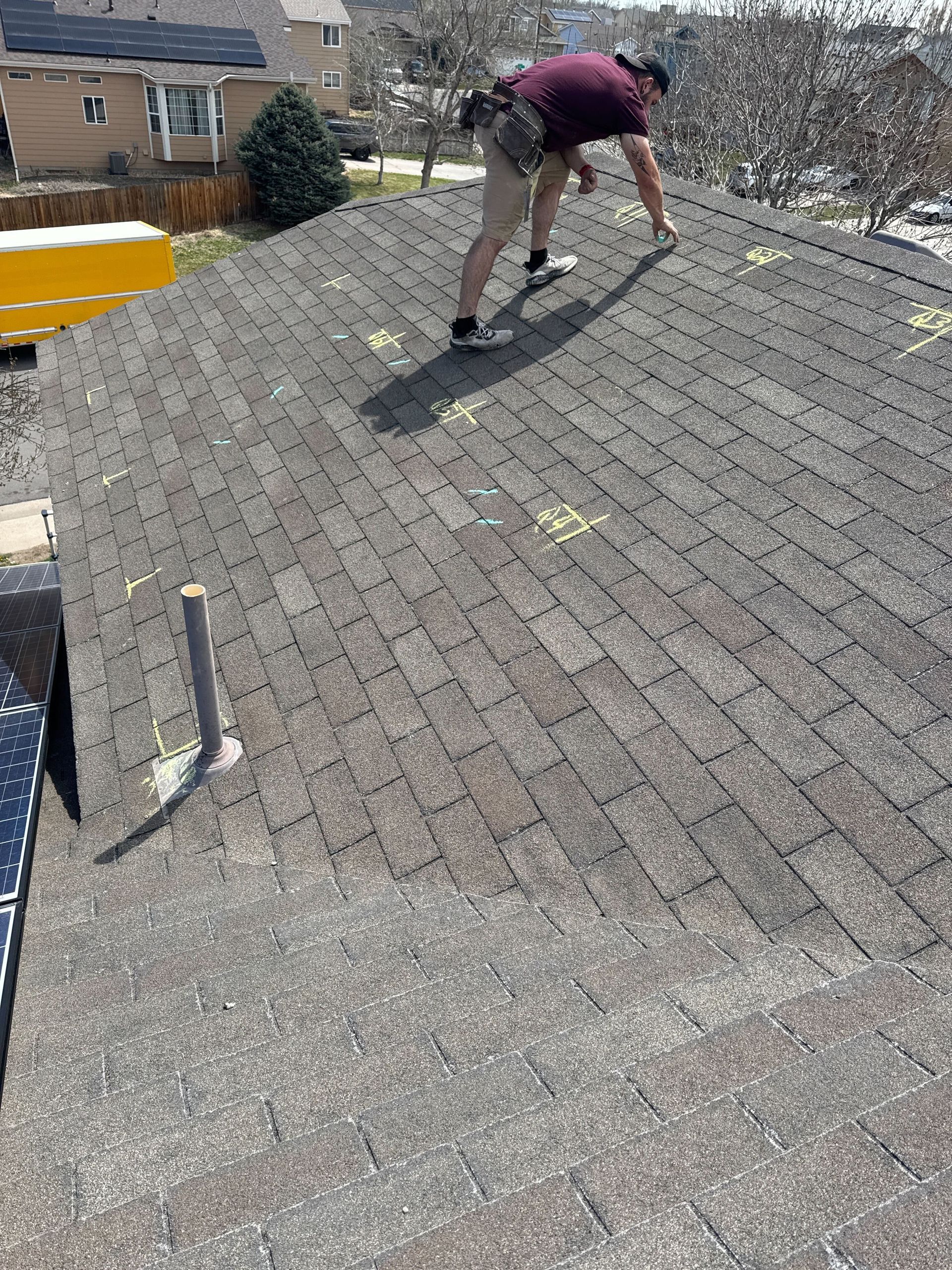
Pre-adjuster inspection and documentation Close-range inspection before the adjuster arrives — every attachment failure point photographed, every displaced or lifted component documented with location reference. The pre-adjuster record establishes the damage condition before any weathering, additional wind events, or contractor activity can complicate damage attribution.

Supplement documentation specific to wind claims Common missed line items on wind damage adjuster scopes:

  • Ridge cap replacement — frequently scoped as repair when full replacement is warranted by displacement extent
  • Step flashing and counter flashing — frequently omitted when separation is partial rather than complete
  • Gutter fascia repair — frequently omitted when gutter pullout has damaged fascia board
  • Drip edge — required by local building code on any full replacement triggered by wind scope
  • Permit fees — required on any replacement; routinely omitted
  • Overhead and profit — required on multi-system projects coordinating roofing, siding, and gutter work

ACV vs. RCV on wind claims The same ACV/RCV distinction that applies to hail claims applies to wind claims. On RCV policies, recoverable depreciation on a full wind-damaged roof replacement is typically $2,000–$5,000 — released after the completion package is submitted. Precision Exteriors prepares this package on every RCV wind claim.

Learn more about insurance claims →


What to Do After a Wind Event

1. Prioritize safety. Stay clear of downed power lines, displaced roof materials at the ground level, and any structural opening created by debris impact. Do not go on the roof.

2. Document from the ground immediately. Photograph any visible damage — displaced shingles, missing ridge cap sections, gutter separation, siding panel displacement, broken windows — before anything is touched. Date and time stamps are automatic on smartphone cameras. Ground-level documentation establishes the pre-inspection condition.

3. Document interior if applicable. If wind-driven rain has entered the home through a breach point — ceiling staining, wet insulation, active drip — photograph interior conditions before placing buckets or moving anything. Interior water damage from a covered wind event is a consequential damage claim item.

4. Call Precision Exteriors for a free inspection. Same-day response. We perform close-range inspection of every component — shingles, ridge cap, all flashings, pipe boots, drip edge, gutters, siding, and windows. Written findings delivered before you contact your insurer. NOAA wind speed data pulled for the event date and location.

5. Avoid pressure decisions. Do not sign any contract during or immediately after an emergency response. A legitimate wind damage contractor provides written findings, a specific scope of work, and time to review both before any commitment is made.

Our Wind Damage Inspection and Restoration Process

Step 1 — Free Inspection and NOAA Documentation Close-range inspection of every exterior system. Every attachment failure point photographed with location reference. Damage classified as isolated vs. systemic, repair vs. replacement. NOAA wind speed records pulled for event date and your specific location. Written findings delivered before you call your insurer. Free, no obligation.

Step 2 — Findings, Scope, and Repair Decision Written findings with specific component-level documentation. Scope of work — targeted repair, partial replacement, or full replacement — with the specific basis explained. Repair vs. replacement recommendation is made on condition, not on revenue opportunity.

Step 3 — Adjuster Meeting and Supplement Submission Precision Exteriors attends the adjuster meeting. NOAA wind speed data presented. Supplement documentation prepared and submitted for missing line items — ridge cap scope, step flashing, fascia damage, drip edge, permit fees, overhead and profit on multi-system projects.

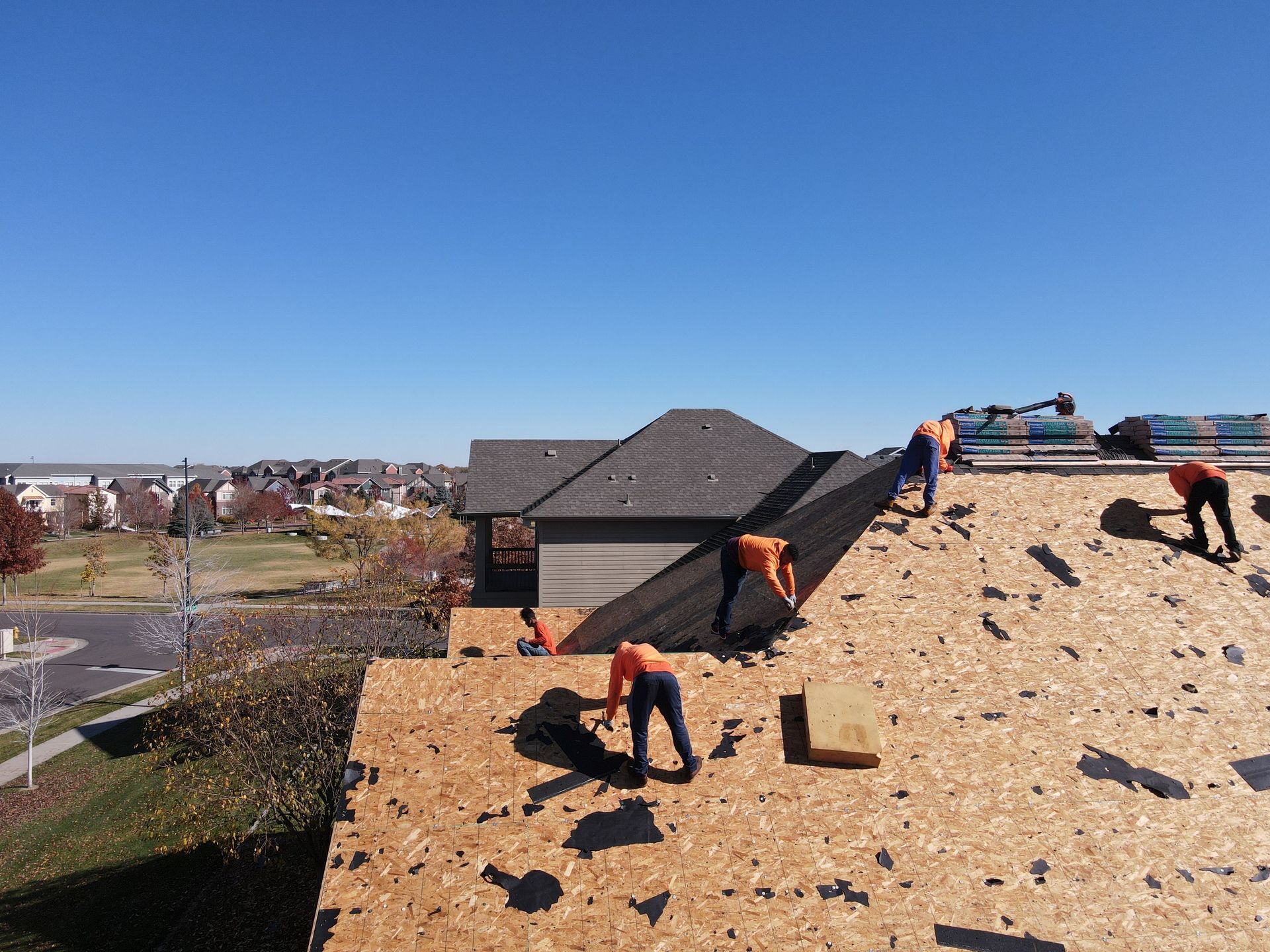
Step 4 — Professional Restoration Installation to Owens Corning Preferred Contractor and CertainTeed Master Installer standards and local building code. A permit is pulled before work begins on replacement scope. Landscaping and property surfaces protected. Site cleanup completed same day.

Step 5 — Final Walkthrough, Warranty, and Depreciation Collection Final inspection confirming scope completed as agreed. 10-year workmanship warranty documentation provided. Completion package submitted for recoverable depreciation release on RCV policies.

Wind Damage — Frequently Asked Questions

Can wind damage occur without missing shingles?

Yes — and this is the most important thing to understand about wind roof damage. Shingles can lift during a wind event and re-seat when the wind drops, leaving no visible displacement from the ground but a permanently broken seal strip bond. Those shingles will lift again in the next wind event at progressively lower wind speeds, eventually producing a leak that appears to have no clear cause. A close-range inspection after any event above 45 mph sustained is the only way to identify this condition.


Is wind damage limited to the roof?

No. Siding panels separate at seams and corners. Gutters pull away from fascia. Window frames stress and seal strips fail under wind load. In Chinook events, all four exterior systems can sustain simultaneous damage at 70–100 mph wind speeds. A claim that addresses only the roof on a full-building-envelope wind event leaves covered damage uncollected.


Can wind damage cause delayed leaks?

Yes. This is one of the most common scenarios we encounter on Front Range properties. A wind event breaks seal strip bonds across a significant section of the shingle field — no immediate leak, no visible missing shingles. Three to six months later, a heavy rain event finds dozens of compromised entry points simultaneously. The leak appears sudden to the homeowner. The damage has been present since the original wind event. If the insurance filing window has closed, the claim is lost.


How do I know if my roof was damaged by wind if there are no missing shingles?

You generally cannot tell from the ground. The specific damage indicators that confirm wind attachment failure — broken seal strip bonds, nail pops, step flashing separation — are only visible at close range on the shingle surface and at flashing transitions. This is why a close-range inspection by a licensed contractor after any significant wind event is worth scheduling even when the roof appears undamaged from the street.


What wind speeds are required for an insurance claim?

Most standard homeowner policies recognize wind as a covered peril when sustained winds or gusts exceed 40–50 mph — the exact threshold varies by policy. NOAA weather station data confirms actual wind speeds at your location for a specific event date. Precision Exteriors pulls this data on every wind damage claim to establish that the event meets the policy threshold.


Does wind damage look different from hail damage?

Yes. Hail damage produces consistent impact patterns across the shingle field — bruising and granule displacement at consistent diameter, calibrated by soft metal denting. Wind damage produces attachment failures at edges, transitions, and seal strips — irregular displacement patterns, lifted leading edges, ridge cap gaps, and flashing separation. Both can occur simultaneously in summer thunderstorm events. An experienced inspector distinguishes between the two and documents each as a separate covered peril item on the same claim scope.


Will my insurance cover wind damage?

Wind damage is a named covered peril under standard homeowner policies. Coverage applies when the wind event meets the policy's minimum wind speed threshold and the damage is documented as the result of the wind event. Pre-adjuster photo documentation and NOAA wind speed verification are the two most important elements of a successful wind damage claim.


What is the difference between Chinook wind damage and thunderstorm wind damage?

Chinook winds are warm, dry downslope winds descending from the Rockies — most severe in the foothills communities west and northwest of Denver, occurring primarily in fall, winter, and early spring. Thunderstorm outflows are straight-line wind events generated by collapsing summer storm cells — affecting the full your area in the May through August storm season. Both are covered wind perils. Chinook events tend to produce higher peak gusts over shorter duration. Thunderstorm outflows produce shorter but still significant gusts, often combined with hail.


How long do I have to file a wind damage claim in Colorado?

Most Colorado homeowner policies require storm damage claims to be filed within one year of the event — some policies specify two years. The deadline is in your policy's general conditions section. Because wind damage frequently does not produce visible symptoms until months after the event, homeowners who do not schedule an inspection promptly risk discovering the damage after the filing window has closed.


What is the 10-year workmanship warranty on wind damage restoration?

All restoration work completed by Precision Exteriors is backed by a 10-year workmanship warranty covering installation defects attributable to our work — separate from and in addition to manufacturer warranties. Owens Corning Platinum Protection on qualifying systems. CertainTeed SureStart PLUS on qualifying systems.

Denver's wind environment — Chinook downslope events, thunderstorm outflows, and sustained Front Range winds — creates damage conditions that are less visible than hail but equally significant for the long-term performance of your home's exterior systems. The damage that produces a leak in March was often created by a wind event in November.


Precision Exteriors Restoration. Wind damage inspection, repair, and full exterior restoration. your area. NOAA documentation on every wind claim. Free inspections, no obligation.


Colorado License #0248041. 3,000+ completed projects. Owens Corning Preferred Contractor. CertainTeed Master Installer. BBB A+. 10-year workmanship warranty.


Schedule a Free Wind Damage Inspection → | Call (720) 408-1840 — 24 Hours | View Service Areas →