Exterior Restoration in Denver, CO — Roofing, Siding, Gutters & Windows as a Complete System

Licensed Roofing Contractor — Denver Metro & Colorado's Front Range


Colorado License #0248041 · Owens Corning Preferred Contractor · CertainTeed Master Installer · BBB A+ Accredited · 20+ Years Combined Experience · 3,000+ Projects Completed · 10-Year Workmanship Warranty · Free Inspections — No Obligation · Xactimate Estimates · Supplement Documentation Prepared and Submitted

Colorado is one of the most storm-active states in the country for exterior damage. The Denver Metro sits at the heart of Hail Alley — the corridor stretching from Texas through Colorado into Nebraska that produces more large hail events per year than anywhere else in North America. The Front Range averages 7 to 9 significant hail days annually, and multiple events each season produce hail large enough to cause functional damage to roofing, siding, gutters, and windows simultaneously.


Precision Exteriors Restoration specializes in storm damage assessment, documentation, and full exterior restoration for homeowners across the Denver Metro and Front Range. As a licensed contractor (CO #0248041), Owens Corning Preferred Contractor, CertainTeed Master Installer, and BBB A+ Accredited business with 20+ years of combined experience and 3,000+ completed projects, we have assessed and restored more Front Range exteriors after storm events than most contractors in this market will see in a career.


This page is your starting point after any severe weather event. Below you will find guidance on what storm damage looks like across different exterior systems, how the inspection and documentation process works, what a legitimate insurance claim process looks like, and how to verify that any contractor you consider — including us — is licensed and operating honestly.

Schedule a Free Inspection → | Call (720) 408-1840

What a Denver Exterior Restoration Contractor Does

Exterior restoration in Denver is not the same category of work as a single-system repair. It is the coordinated assessment, documentation, and restoration of a home's complete exterior envelope — roofing, siding, gutters, fascia, and windows — treated as the integrated weather barrier system it actually is.

A home's exterior functions as a system. The roof sheds water into gutters. Gutters direct it away from siding and foundation. Siding protects the wall assembly. Windows seal the openings. When one component fails, it stresses adjacent components. A restored roof that drains into storm-damaged gutters is not a restored exterior. A replaced siding panel adjacent to a failed window flashing will develop moisture intrusion regardless of how well the siding was installed. Full exterior restoration closes every gap in the building envelope at once — under one scope, one contractor, and one warranty.

Why this matters specifically in Denver: The hailstone that hits your roof hits your siding, dents your gutters, and potentially fractures your window glass in the same storm. Wind forces that lift shingle edges also load gutter hangers, pull siding corners, and stress window frame seals. A contractor who evaluates only the roof after a Denver storm leaves multi-system storm damage undocumented and unrepaired. Exterior restoration in Denver requires a full-envelope approach because Denver's storms produce full-envelope damage.

Colorado Storm Damage — What You Are Dealing With


Three types of storm events drive the overwhelming majority of exterior damage calls across the Front Range.


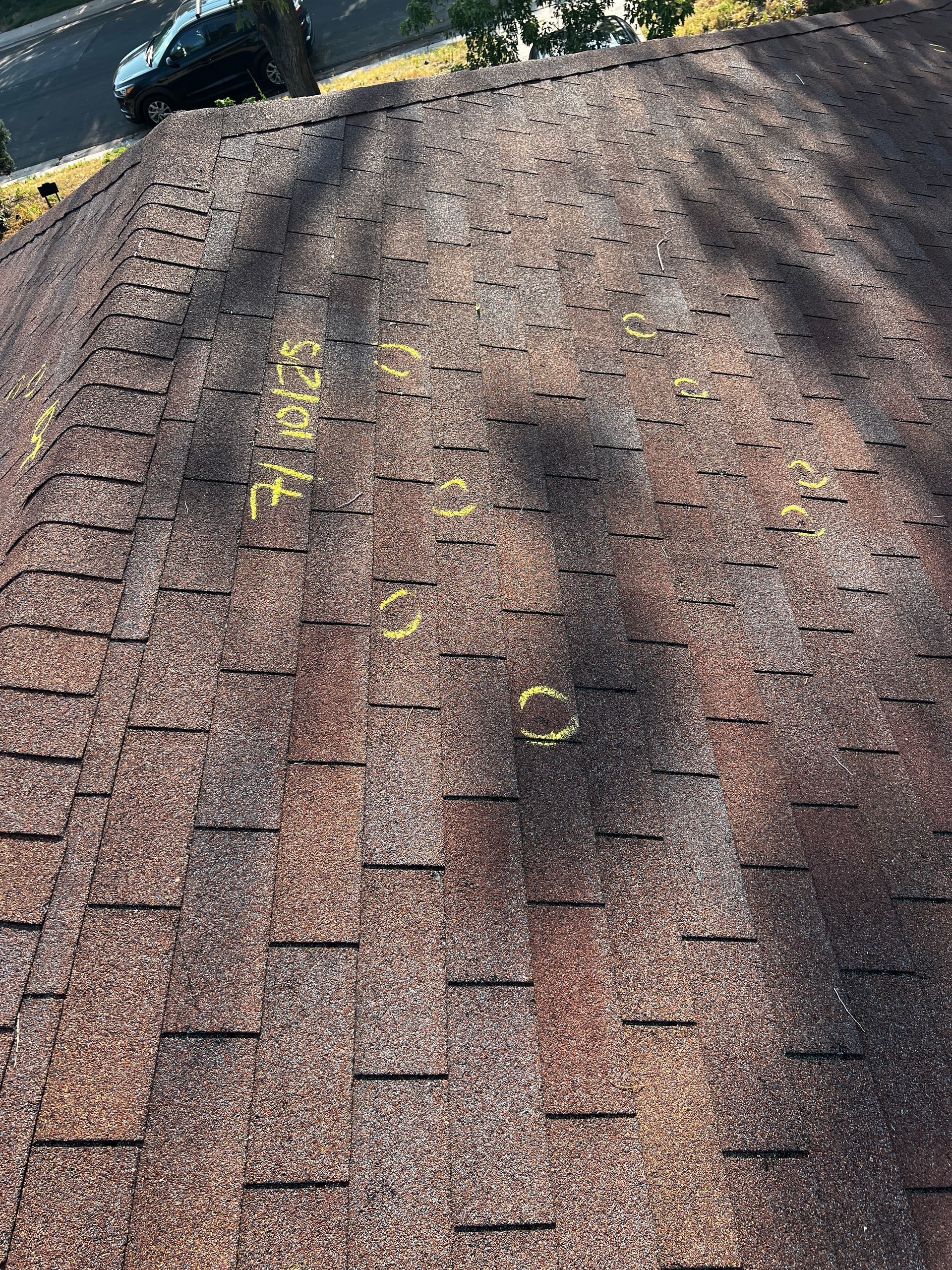
Hail damage. Hail is the dominant driver of exterior damage claims in Colorado. Hail at or above 1 inch — which the Denver Metro sees multiple times per year — causes functional damage to roofing shingles, siding panels, gutter runs, and window frames simultaneously. Hail above 1.5 inches causes significant functional damage to standard materials and is the typical threshold for full roofing and siding replacement claims.

The critical distinction in hail damage assessment is functional damage versus cosmetic damage. Functional damage affects the material's ability to perform its weather-protection role — granule loss that exposes the asphalt mat, fiberglass mat fracture beneath the shingle surface, cracked vinyl panels that no longer provide a weather-tight seal. Cosmetic damage is surface marking without performance impairment. Insurance coverage is triggered by functional damage. If an adjuster returns a cosmetic-only finding on a claim you believe involves functional damage, you have options — documented in the insurance section below.

Hail damage assessment →


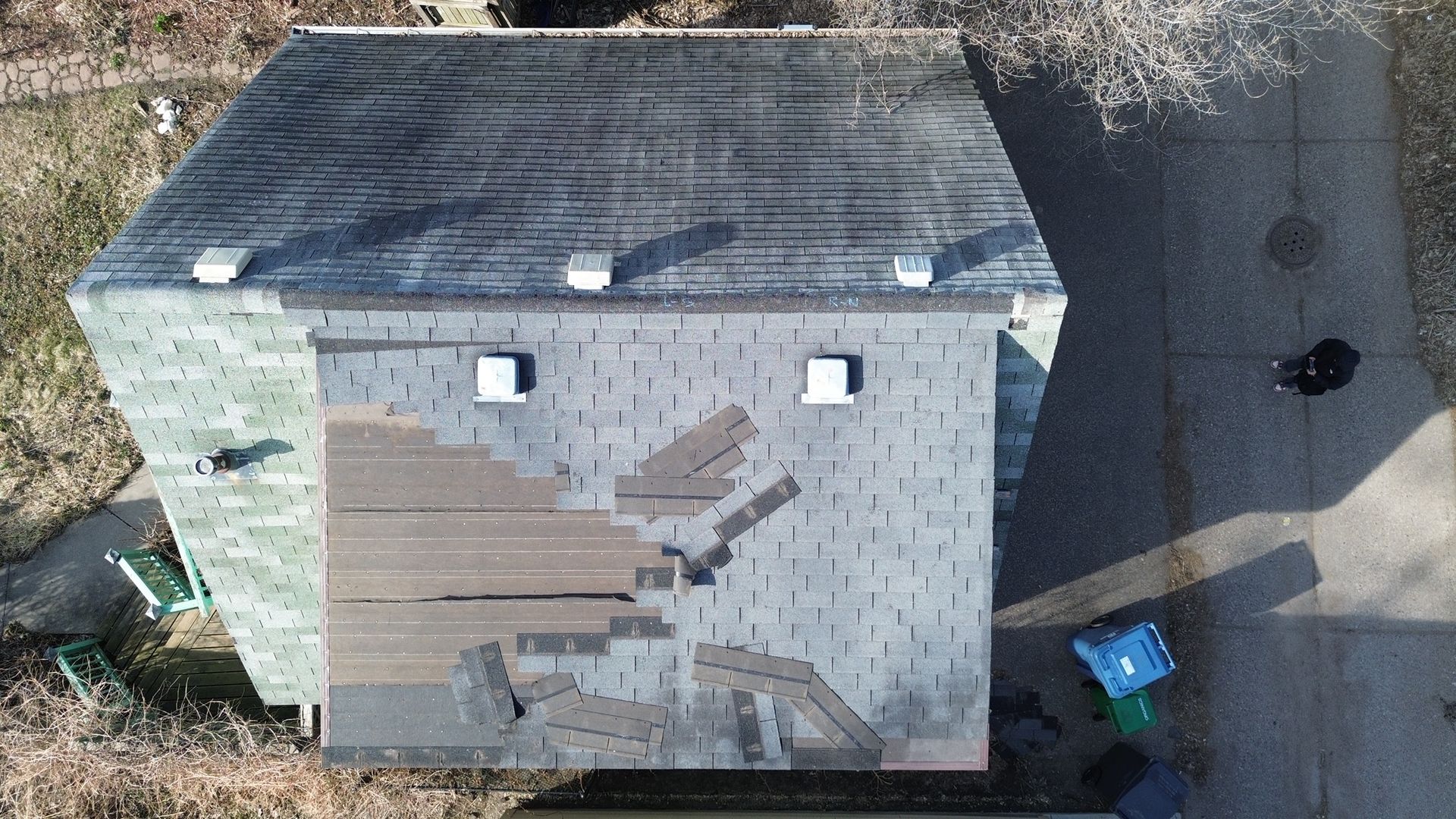
Wind damage. Wind damage most commonly involves lifted or missing shingles along ridge lines and eave edges, siding panels loosened at fastener points, blown gutter sections, and window or door damage from wind-driven debris. Foothills communities west of Denver — Arvada, Lakewood, Golden, Wheat Ridge — experience periodic downslope Chinook wind events reaching 60–100 mph that produce damage concentrated along specific elevations of a home.

Wind damage tends to be more visually obvious than hail damage — a missing shingle section or detached gutter run is typically apparent without a professional inspection. However, wind events frequently cause fastener-level failures not visible from the ground that create water infiltration vulnerability over subsequent rain events.

Wind damage assessment →


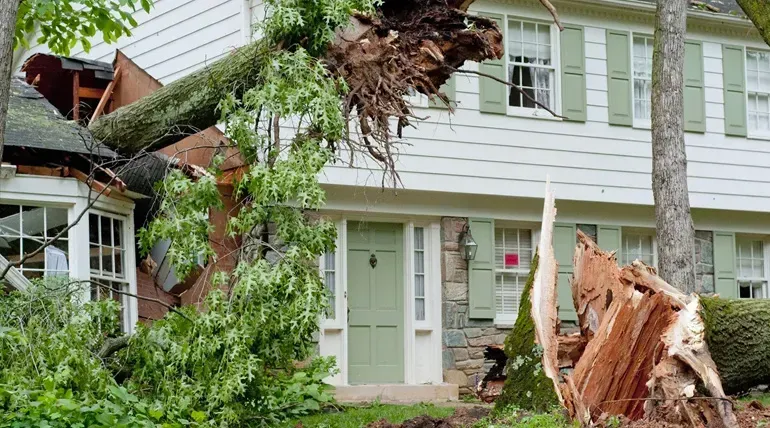
Debris and tree damage. Falling branches, airborne debris, and whole tree impacts create the most immediately visible storm damage. Impact damage requires rapid assessment to determine structural implications before cosmetic restoration begins. Debris damage documentation for insurance requires clear photography before any debris removal — the impact point and debris characteristics are part of the functional damage record.

Debris and tree damage →


Roofing Restoration Denver — Every Component of the Assembly

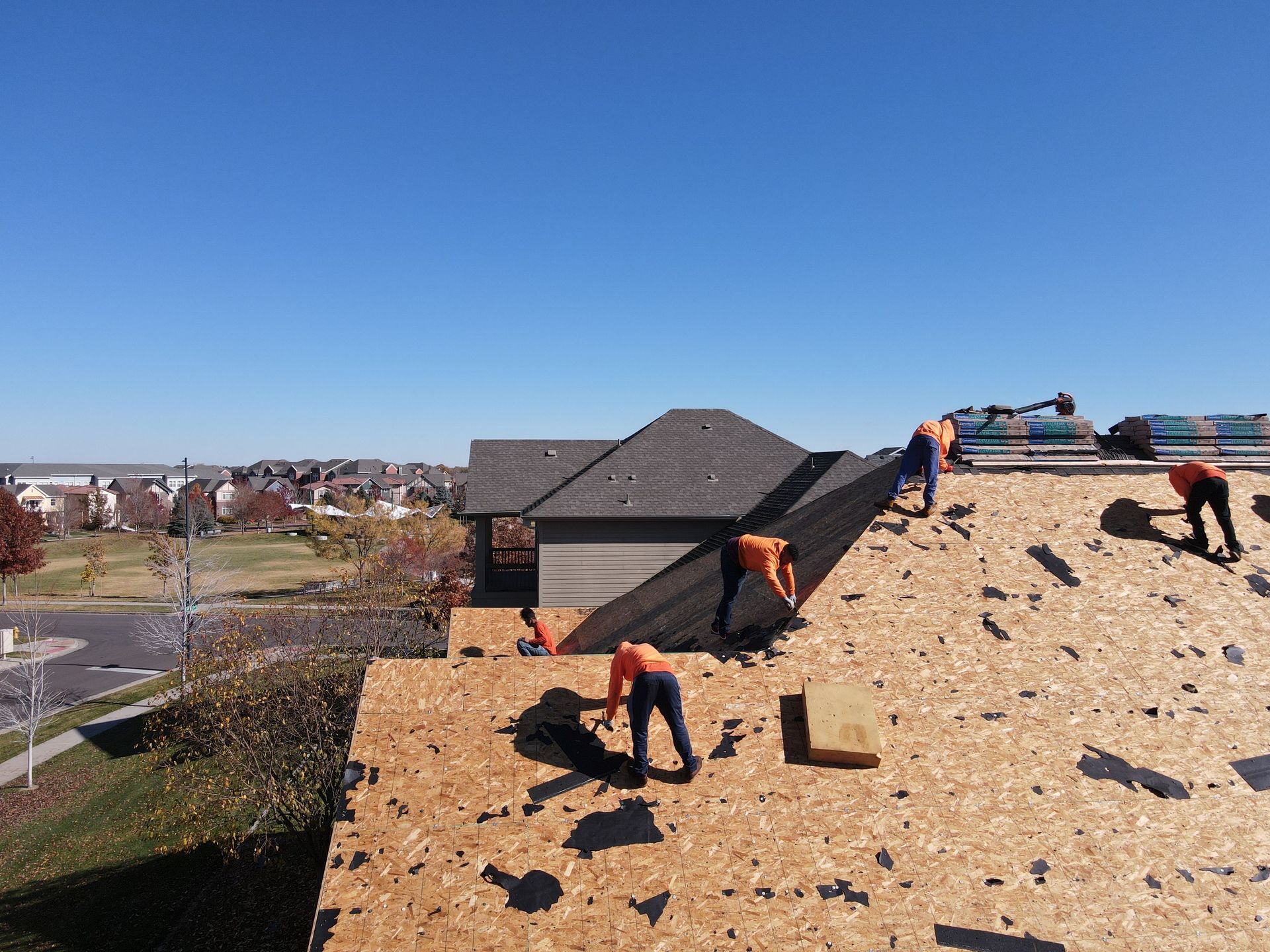
As a roofing contractor in Denver with Owens Corning Preferred and CertainTeed Master Installer status, we restore every component of the roofing assembly — not just the shingle surface. Roof replacement in Denver under our scope addresses:


Shingles and surface material. Standard architectural shingles or Class 4 impact-resistant shingles (UL 2218 rated — the highest hail-resistance classification available). For any Denver-area property given the Metro's hail frequency, Class 4 shingles resist the fiberglass mat fracture that standard shingles sustain from hail impact and may qualify for homeowner's insurance premium discounts from several major Colorado carriers.


Underlayment. The secondary water barrier beneath the shingles — critical for Denver's ice dam risk at eave lines where meltwater backs up under shingle edges during freeze-thaw cycles.


Ice and water shield. Self-adhering membrane at the eave required by Denver building code — extending minimum 24 inches beyond the interior wall line. A code upgrade item on many older Denver roofs and a supplement line item when not present on the original system.


Drip edge. Metal edge at eave and rake that directs water off the roof deck and into the gutters. Required by Denver building code and manufacturer installation requirements. Absence means water contacts the fascia board directly — a common code upgrade item on claims.


Flashings. Metal transitions at every roof-to-wall junction, chimney, skylight, and penetration. Among the most common sources of active leaks after Denver storm events. Pipe boot failures — the rubber collar at plumbing penetrations — are the single most common leak source on Denver roofs and are frequently missed in initial adjuster scopes.


Ridge caps and hip caps. The most exposed components on the roof, subject to direct wind uplift. Lifted or missing ridge caps after Front Range wind events and Chinook loading are among the most common findings on post-storm inspections.


Ventilation. Intake and exhaust balance required by Denver building code. Ventilation deficiencies discovered during replacement are code upgrade items that must be corrected to qualify for manufacturer warranty coverage.

As an Owens Corning Preferred Contractor, we have access to the Platinum Protection warranty — a system-wide warranty covering both materials and workmanship not available through uncredentialed contractors. As a CertainTeed Master Installer, we install CertainTeed systems under their SureStart PLUS enhanced warranty program.


Roof Replacement → | Roof Repair → | Roof Inspections → | Emergency Roofing →

Siding Restoration Denver — Material Performance in Colorado's Climate

As a siding contractor in Denver, we install and restore vinyl siding and James Hardie fiber cement siding — the two dominant materials in Denver's residential market.


James Hardie HardiePlank fiber cement is the best-performing siding material for Denver's specific demands. It does not crack, fracture, or dent from hail impact — the most consequential performance advantage in Hail Alley. HardiePlank with ColorPlus Technology factory finish resists UV fading at Denver's high altitude significantly better than field-applied paint, carrying a 15-year non-prorated finish warranty. Fiber cement is dimensionally stable through Denver's 150+ annual freeze-thaw cycles, maintaining seal integrity at panel joints where vinyl and wood-based products develop moisture intrusion. For any Denver homeowner who has replaced siding more than once after hail events, the economics of James Hardie are worth a specific conversation.


Vinyl siding is the most common material in Denver's residential stock. Its vulnerabilities in Colorado's environment are specific: hail cracks vinyl panels, particularly below 40°F when the material becomes brittle — which is exactly when Denver's spring hail season peaks. Premium vinyl (0.046"–0.055" wall thickness) substantially outperforms standard 0.040" in impact resistance and UV stability. Thermal expansion in Denver's 50°F+ Chinook temperature swings is at the upper limit of standard vinyl installation tolerances, making correct installation clearance critical.


The aluminum siding matching standard is a critical insurance consideration for Denver's mid-century housing stock. Original aluminum profiles from the 1960s–1970s are largely discontinued — when hail damages an aluminum-sided home, the inability to match the original profile supports an insurance argument for whole-house replacement rather than partial repair.


Siding Services → | Siding Replacement → | Siding Repair →

Gutters and Fascia Restoration Denver

Gutter replacement and repair in Denver serve a drainage function that directly protects every other exterior system. When gutters fail — from hail deformation, Chinook wind lateral loading on hangers, or ice dam loading in winter — the consequences extend to the fascia board, the siding below, and the foundation drainage around the home.


We install seamless aluminum gutters sized correctly for the roof area and Denver's precipitation patterns — including the high-volume summer thunderstorm runoff that undersized 5-inch systems cannot handle on larger roofs. Seamless fabrication eliminates the joint sealant failure points that Denver's 150+ annual freeze-thaw cycles attack in sectional systems.


Hail damage to gutters is the most visible ground-level storm damage indicator and a covered insurance claim item. Distributed denting on aluminum gutters from a documented hail event is corroborating evidence for the roof and siding damage on the same claim — the same hailstone that dented the gutter hit the roof and siding at the same velocity. Gutters are one of the most commonly omitted items on initial adjuster scopes and one of the most consistently recoverable supplement items.


Gutter Services → | Gutter Replacement → | Gutter Repair →

Window Restoration Denver

Window replacement and repair address the most critical sealing points in the exterior envelope — and the components most frequently missed in initial storm damage adjuster scopes. Hail damage to windows presents across four components: glass fracture and seal failure in the insulated glass unit, pitting and cracking of vinyl frames on windward elevations, denting of aluminum frame components, and screen damage across all elevations.

Screen damage is the most reliable ground-level indicator of hail impact — document every elevation. Seal failures in the insulated glass unit may appear as fogging weeks after the storm as the desiccant absorbs ambient moisture — not immediately visible but clearly attributable to the impact event when the storm date is documented.

Window restoration addresses glazing, frames, flashing integration, and the sealant where the window frame meets the wall assembly — the failure point most commonly missed when windows are replaced without attention to the surrounding system. A new window installed in a compromised rough opening integration is a future leak.


Window Replacement → | Window Repair → | Emergency Window Services →

Storm Damage Insurance Claims  —  What the Process Actually Looks Like

Most full exterior restoration projects in Denver follow storm events. When insurance is involved, the process affects sequencing, documentation, scope development, and payment timing. Here is what Precision Exteriors provides and what every Denver homeowner should understand before filing.


Xactimate estimates. We prepare repair estimates in Xactimate — the industry-standard estimating platform used by insurance carriers and independent adjusters. An estimate in Xactimate format allows direct line-item comparison between our scope and the carrier's scope, making scope gaps visible and the supplement process more efficient.


On-site adjuster meetings. We attend the adjuster's inspection for every client who requests it. We walk every exterior system with the adjuster, present our photo documentation, and ensure multi-system storm damage is fully evaluated — not just the roof.


Supplement preparation. Our internal supplements team prepares complete documentation packages for items in our agreed scope missing from the initial adjuster estimate — photos, measurements, code citations, and manufacturer requirement documentation for each supplemented item.


Code upgrade documentation. When restoration triggers current code requirements — ice and water shield, drip edge, ventilation corrections — we document the specific code basis for each upgrade item and include it in the supplement package.


Recoverable depreciation — the second check most homeowners miss. On Replacement Cost Value (RCV) policies, insurers pay Actual Cash Value (ACV) initially — the depreciated value of your existing system. The recoverable depreciation — the difference between ACV and full replacement cost — is held back until repairs are completed. Once work is finished, you submit a completion package to your insurer and they release the holdback. This second check can represent thousands of dollars on a full exterior claim. Many homeowners never collect it because their contractor did not explain the process or prepare the documentation. We do both on every RCV claim.


Percentage deductibles — what many homeowners do not realize. Most homeowners assume their deductible is a flat dollar amount. Policies issued or renewed in Colorado in recent years increasingly carry percentage deductibles — typically 1% of the home's insured value. On a home insured at $500,000, a 1% deductible is $5,000. On a $700,000 home, it is $7,000. Review your declarations page before filing — knowing your actual deductible before the adjuster arrives prevents surprises at settlement.


Deductible waiving is illegal under Colorado law. Any storm restoration contractor in Denver who offers to waive, absorb, or "cover" your deductible as part of their proposal is violating Colorado law — and creating legal exposure for you as the homeowner. This practice is one of the primary markers of storm chaser contractors operating in post-storm Denver. We will never make this offer.


Will filing a claim raise my insurance rates? The honest answer: it depends on your carrier, your policy, your claim history, and the nature of the claim. A weather-related claim — hail, wind — is treated differently by most carriers than an at-fault claim. Many Colorado homeowners with RCV policies file legitimate weather claims without rate increases. But we cannot make that determination for you — your agent is the right person to ask before you file, not after. What we can tell you is that not filing a legitimate claim on functional storm damage does not make the damage go away. It means you absorb a repair cost that your policy may cover.


Full insurance claim guidance →

This is paragraph text. Click it or hit the Manage Text button to change the font, color, size, format, and more. To set up site-wide paragraph and title styles, go to Site Theme.

Storm Damage Discovered Late — Do You Still Have a Path?

One of the most common scenarios we encounter: a homeowner contacts us weeks or months after a storm — sometimes after a neighbor mentions their own claim, sometimes after noticing a stain on the ceiling that was not there before, sometimes after a routine inspection turns up damage they did not know existed.

The answer is: possibly yes — but the window has conditions attached.


Every insurance policy has a claim filing deadline measured from the date of loss — not the date you discover the damage. Most Colorado policies require claims to be filed within one year of the loss event, though this varies by carrier and policy. The sooner you act after discovering potential damage, the more options you have.


What closes the window faster than the deadline: Deferred maintenance findings are the most common reason late-discovered storm damage claims are denied or reduced. If an adjuster can point to pre-existing deterioration, incorrect prior repairs, or evidence that the damage was present for an extended period without mitigation, the carrier has grounds to reduce or deny the claim regardless of whether the storm caused the initial damage.


What keeps the window open: A documented inspection with findings tied to a specific storm event — NOAA storm data confirming hail size and date at your address, photo documentation with timestamps, a written inspection report from a licensed contractor — builds the case that the damage is storm-caused and within the filing period. The path is still walkable. But every week of delay makes it narrower.


The guidance: If you suspect storm damage — regardless of when the storm occurred — schedule an inspection before contacting your insurer. Know what you have before you file. A licensed contractor's documented findings are your evidence base. Without them, you are filing blind.


Schedule a Free Inspection →


How to Vet a Denver Exterior Restoration Contractor

After every major hail event, the Denver Metro sees an influx of out-of-state contractors — storm chasers — who follow the weather, knock on doors in affected neighborhoods, and offer fast estimates to homeowners who are anxious about storm damage. Some are licensed and competent. Many are not. And some are operating in ways that create legal and financial risk for the homeowners who hire them.

This is the most important section on this page for any homeowner who has been approached by a contractor after a storm — or who is evaluating multiple bids.

Step 1 — Verify the Colorado contractor license. Colorado requires a state contractor license for exterior restoration work. Verification takes two minutes: go to the Colorado Division of Regulatory Agencies (DORA) contractor license lookup at dora.colorado.gov and search by license number or company name. A legitimate contractor has an active license with no disciplinary actions. Precision Exteriors: Colorado License #0248041 — verify it directly.

Step 2 — Verify insurance. A legitimate contractor carries general liability insurance and workers' compensation coverage. Ask for certificates of insurance before signing anything. If a worker is injured on your property and the contractor is uninsured, your homeowner's policy may be exposed.

Step 3 — Get a written contract with specific scope. A legitimate contract includes the specific scope of work by system, the materials being installed with manufacturer and product line named, the timeline, the warranty terms, and the payment schedule. A contract that is vague about materials, asks for full payment upfront, or includes language assigning your insurance benefits to the contractor (assignment of benefits) is a red flag.

Step 4 — Deductible waiving is a disqualifying red flag. Under Colorado law, a contractor who offers to waive or absorb your insurance deductible is violating state statute. This practice is how storm chasers generate margin — they inflate the claim scope to absorb the deductible and pocket the difference in material and labor quality. If a contractor makes this offer, end the conversation.

Step 5 — Local presence and verifiable history. A contractor who will be gone from Denver in 90 days cannot honor a 10-year workmanship warranty. Ask how long they have operated in Colorado, where their physical office is, and how you reach them if a warranty issue arises in year three. Verify their BBB rating and check Google reviews for patterns — not just star count.

We will publish a full contractor vetting guide with a contract checklist and red flag reference — link will be added here when live.


Why choose Precision Exteriors →

Repair vs. Replacement — The Denver Framework


The repair vs. replacement decision depends on four factors evaluated honestly after inspection — not defaulted to replacement because it generates more revenue.


Damage scope. Localized damage on an otherwise sound system with meaningful remaining service life supports repair. Widespread damage across multiple slopes or distributed across enough points that targeted repairs leave system integrity uncertain supports replacement.


System age. A roof at 8 years with hail damage is a strong repair candidate. A roof at 22 years with the same damage — where remaining serviceable life was already limited — is a replacement candidate, particularly when code upgrades triggered by replacement bring the system to current standards at minimal incremental cost.


Code implications. When targeted repairs approach a cost level where replacement becomes competitive and replacement brings the system to current code, replacement often produces better total value.


Cost logic — a concrete example. A 19-year-old roof with documented hail damage. Repair bid: $5,500 to address the damaged sections. Replacement bid: $16,000 with Class 4 shingles, full code upgrades, and Platinum Protection warranty. Insurance covers $13,500 after the deductible on an RCV policy. Out-of-pocket on replacement after insurance: $2,500. Out-of-pocket on repair: $5,500 with no insurance participation on a repair-only scope, 1–3 years of remaining service life, and no warranty upgrade. The math on replacement is better — and the homeowner ends a 20-year replacement cycle with a system that resists the next hail event better than the one being replaced.

We walk through this logic on every estimate. You understand and agree with the recommendation before any commitment is made.


Full repair vs. replacement guide →


What to Do After a Storm in Denver

Step 1 — Stay safe. Do not walk on a roof, attempt to remove fallen debris, or approach a structure where impact may have compromised load-bearing elements. Assess for structural safety before re-entering if a tree or large debris has hit the home.

Step 2 — Document before touching anything. Photograph all visible exterior damage from the ground before any cleanup, tarping, or temporary repair. Date-stamped photos tied to the storm date are your baseline evidence. Do this as soon as safely possible after the event.

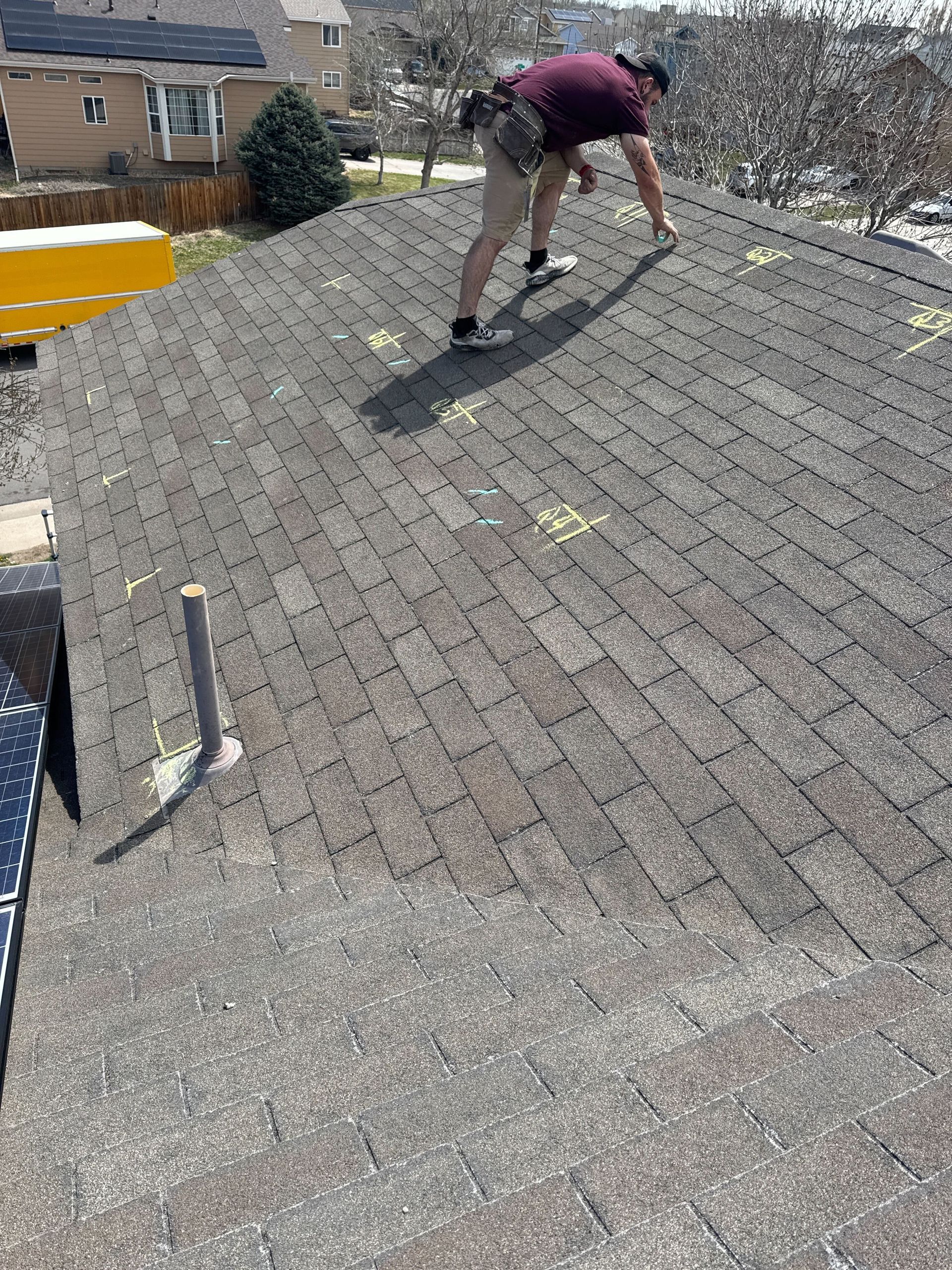
Step 3 — Schedule a professional inspection. Do not rely on a ground-level walk-around. Functional hail damage to roofing is not visible from the ground. Contact a licensed contractor for a full exterior assessment with ladder access and close-range evaluation of all systems.

Step 4 — Get written documentation before filing a claim. A professional inspection with written findings and photo documentation gives you a complete picture of what the storm actually did — and the evidence base for an insurance claim if damage warrants filing. Filing without documentation is the most common mistake that leads to underpaid or denied claims.

Step 5 — Contact your insurer if damage warrants a claim. Your insurer will assign an adjuster. You have the right to have your contractor present during the adjuster inspection and to request supplemental review if initial findings miss items documented in your contractor's assessment.

Step 6 — Proceed with restoration. Once scope and insurance are settled, coordinated restoration across roofing, siding, gutters, and windows — when multiple systems were damaged in the same event — is more efficient: one mobilization, one period of disruption, one final inspection across all systems.

If you discovered damage after the fact: The path may still be open. Review the section above on late-discovered damage and schedule an inspection before contacting your insurer. Know what you have first.

Why Choose Precision Exteriors Restoration as Your Denver Exterior Restoration Company

There are several dozen exterior restoration contractors operating in the Denver Metro. Here is what distinguishes Precision Exteriors — in plain language.

Licensed and verifiable. Colorado License #0248041 — verifiable in two minutes at dora.colorado.gov. In Denver's post-storm market, unlicensed contractors appear frequently after major hail events. Verification takes two minutes and matters.

Manufacturer credentials with real warranty implications. Owens Corning Preferred Contractor status provides access to the Platinum Protection warranty — covering both materials and workmanship — not available through uncredentialed contractors. CertainTeed Master Installer status provides access to SureStart PLUS enhanced warranty programs. These credentials are not marketing badges. They have direct warranty value to the homeowner.

Xactimate estimates and internal supplement capability. We prepare estimates in Xactimate format and have an internal process for preparing and submitting supplement documentation. This is what separates a storm restoration contractor who can manage an insurance claim from one who cannot.

Whole-envelope approach. We handle roofing, siding, gutters, and windows — the complete exterior envelope. One contractor managing the full scope produces better integration at system transitions, a single warranty covering everything, and a simpler process for the homeowner.

20+ years of combined Denver-market experience. 3,000+ completed projects across the Front Range. Denver's climate, building stock, permitting requirements, and insurance market are specific — experience in this market is not transferable from Phoenix or Houston.

BBB A+ accredited. NRCA member. Third-party credentialing that is independently verifiable and provides a baseline of accountability that matters when choosing a contractor for a project involving $20,000–$80,000 in insurance-funded restoration work.

Serving Denver and the Front Range


Precision Exteriors Restoration provides exterior restoration services in Denver CO and throughout the Denver Metro — including Aurora, Lakewood, Arvada, Westminster, Thornton, Centennial, Littleton, Highlands Ranch, Brighton, Golden, Castle Rock, and Front Range communities in Jefferson, Arapahoe, Adams, and Douglas counties. Colorado License #0248041. 999 18th Street, Unit 3000, Denver, CO 80202. (720) 408-1840.


Denver service area → | All service areas → | Schedule free inspection →

Frequently Asked Questions — Exterior Restoration Denver

What does a Denver exterior restoration contractor do that a regular roofer does not?

A Denver exterior restoration contractor evaluates and restores the complete building envelope — roofing, siding, gutters, and windows — as an integrated system. A roofer evaluates one system. In Denver's hail environment, where a single storm routinely damages all four exterior systems simultaneously, limiting the assessment to the roof leaves multi-system storm damage undocumented. The transitions between systems — where roof flashing meets siding, where gutters meet fascia, where window flashings integrate with the wall assembly — are managed correctly only when one contractor has visibility into all of them.


How do I verify a roofing contractor's license in Colorado?

Go to dora.colorado.gov and search the contractor license lookup by license number or company name. An active license with no disciplinary actions is the baseline. Precision Exteriors is Colorado License #0248041 — verify it directly. Also request certificates of general liability insurance and workers' compensation before signing any contract.


What is recoverable depreciation and how do I collect it?

On a Replacement Cost Value (RCV) policy, your insurer initially pays Actual Cash Value — the depreciated value of your existing system. The recoverable depreciation is the difference between ACV and full replacement cost, held back until repairs are completed. After restoration is finished, you submit a completion package — typically a final invoice and photos of completed work — and the carrier releases the holdback. This second check can represent thousands of dollars on a full exterior claim. Precision Exteriors prepares the completion package on every RCV claim as part of our standard process.


What is a supplement and why would my claim need one?

A supplement is additional documentation submitted to your insurer after the initial adjuster estimate to add items that were present in the inspection findings but missing from the initial scope. Common supplement items on Denver roofing and exterior claims include pipe boots, drip edge, ice and water shield, gutters, window screens, and code upgrade items. Each supplement item is supported by photos, measurements, and where applicable, code citations. Our internal supplements team handles this process directly.


What does functional vs. cosmetic damage mean on an insurance claim?

Functional damage affects the material's ability to perform its weather-protection role — granule loss that exposes the asphalt mat, cracked vinyl siding panels, deformed gutter channel. Cosmetic damage is surface marking without performance impairment. Insurance coverage is triggered by functional damage. If an adjuster returns a cosmetic-only finding that you believe mischaracterizes the damage, you have the right to request a re-inspection, provide a second licensed contractor's documented assessment, and if the dispute persists, invoke the appraisal clause in your policy — which provides for a neutral third-party assessment to resolve the disagreement.


What are Class 4 impact-resistant shingles and are they worth it in Denver?

Class 4 shingles carry a UL 2218 rating — the highest impact resistance classification available for asphalt shingles. They resist the fiberglass mat fracture that standard shingles sustain from hail impact, extending functional service life significantly in Denver's hail-active environment. Several major Colorado insurance carriers offer premium discounts for Class 4 installations — discounts that in some cases offset a meaningful portion of the incremental cost difference over standard shingles over the life of the policy. For any Denver homeowner given the Metro's hail frequency, they are worth a specific cost-benefit conversation.


Do you handle insurance supplements for missed scope items?

Yes. Our internal supplements team prepares and submits complete documentation packages for items in our agreed scope missing from the initial adjuster estimate — including photos, measurements, code citations, and manufacturer requirement documentation for each supplemented item.


What is a code upgrade and why does it appear on my claim?

When exterior restoration triggers current Denver building code or manufacturer installation requirements not present on the original system, the cost of meeting those requirements is a code upgrade — a legitimate, documentable claim item. Common Denver code upgrades on roofing claims include ice and water shield at the eave, drip edge at eave and rake, ventilation corrections, and manufacturer accessory requirements for warranty-qualifying systems.


How long do I have to file a storm damage claim in Colorado?

Claim filing deadlines vary by carrier and policy — there is no single Colorado statutory answer that applies to every homeowner. Most policies require filing within one year of the date of loss, but your specific deadline is in your policy's declarations and conditions pages. What is consistent: the window narrows as time passes. Deferred maintenance findings, evidence that damage was present without mitigation, and difficulty establishing storm correlation all become harder to overcome the longer you wait. If you suspect storm damage — regardless of when the storm occurred — schedule an inspection now and know what you have before the window closes.


What roofing materials do you install in Denver?

We install Owens Corning and CertainTeed roofing systems — standard architectural shingles and Class 4 impact-resistant shingles (UL 2218 rated). For siding, we install James Hardie HardiePlank fiber cement and vinyl siding. For gutters, seamless aluminum in 5-inch and 6-inch K-style profiles. For windows, we restore and replace as part of the complete exterior envelope scope.

If you have storm damage — or suspect you might — the first step is a documented professional inspection. Not a carrier call. Not a neighbor's opinion. A licensed contractor on a ladder with close-range eyes on every exterior system, producing a written finding you can take to your insurer with confidence.


Precision Exteriors Restoration. Licensed exterior restoration contractor serving Denver Metro and the Front Range. Colorado License #0248041. 3,000+ completed projects. Owens Corning Preferred Contractor. CertainTeed Master Installer. BBB A+. NRCA member. 10-year workmanship warranty. Free inspections — no obligation.


Free inspections. No obligation. No deductible waiving.

Schedule a Free Exterior Inspection → | Call (720) 408-1840

Schedule Your Inspection Today