
Storm damage insurance claims in Denver, explained start to finish
A homeowner's guide to filing and managing a Denver roof and exterior storm claim, from the free documented inspection through the adjuster meeting to the final payment. We explain ACV vs RCV and recoverable depreciation so you know exactly what your policy pays, and most homeowners owe only their deductible.
Book your free inspection
A documented inspection before you file. We send a written report with photos within 24 hours.
Educational guidance, not legal advice. This page provides general information about how storm damage and homeowner's insurance typically interact. It is not policy-specific guidance and does not guarantee any insurance outcome. Coverage decisions are made exclusively by your insurance provider based on your specific policy terms. When in doubt, consult your insurance agent or a licensed public adjuster.
Denver and Front Range storm claimsA homeowner's guide to the storm damage insurance claim process
Direct answer: A storm damage insurance claim is how a Denver homeowner gets a hail or wind damaged roof and exterior repaired through their homeowner's policy. Precision Exteriors Restoration documents the damage, prepares the estimate in Xactimate format, attends the adjuster meeting, submits supplements when items are missing, and collects your recoverable depreciation at the end. On most replacement-cost claims you pay only your deductible.
Storm insurance claim help by area: Denver and Thornton.
Precision Exteriors Restoration helps homeowners across Denver, Aurora, Arvada, Centennial, Highlands Ranch, and the wider Front Range file and manage roof and exterior insurance claims after hail and wind storms. As a licensed Colorado contractor (License #0248041) since 2016 with 3,000+ completed projects, our role is to handle the documentation and restoration so the process is precise rather than stressful. This page sits under our Denver storm damage hub, where you can also explore insurance claim service areas and our storm response details.
Insurance payout: ACV vs RCV
Direct answer: Actual Cash Value (ACV) pays the depreciated value of damaged materials upfront. Replacement Cost Value (RCV) pays the full cost to replace with new materials of like kind and quality, holding back depreciation initially and releasing it after repairs are completed and documented. RCV coverage typically results in meaningfully higher recoverable amounts, and on most RCV claims the homeowner owes only their deductible.
ACV: Actual Cash Value
- ✓ Pays the depreciated value of materials
- ✓ Paid upfront, minus depreciation
- ✓ No held-back depreciation to recover later
- ✓ Lower total recovery on older roofs
RCV: Replacement Cost Value
- ✓ Pays to replace with new like kind and quality
- ✓ Recoverable depreciation released after work is completed
- ✓ Requires a completion package to release the held-back amount
- ✓ Homeowner typically pays just the deductible
The storm claim terms every Denver homeowner should know
Direct answer: Understanding the language used in storm damage and insurance conversations helps you ask better questions and interpret what you are being told. The terms that matter most are storm-related damage, wear and tear, functional damage, cosmetic damage, Xactimate, and public adjuster.
Storm-related damage
Damage caused by a sudden, identifiable weather event such as a hail storm, high wind event, or debris impact. Policies typically treat this differently from gradual deterioration.
Wear and tear
The progressive degradation of materials over time from age, UV exposure, and normal weather cycling. Policies generally do not cover wear and tear, which is why the distinction from storm damage is central to most claims.
Functional damage
Damage that reduces the performance, durability, or water-shedding ability of an exterior system, even if it does not immediately cause a leak. This is the standard used in most insurance evaluations.
Cosmetic damage
Damage that affects appearance but does not reduce performance. Some policies exclude cosmetic-only damage, particularly on older roofs. Determining functional versus cosmetic often requires professional inspection.
Xactimate
The industry-standard software adjusters use to prepare damage estimates. A contractor who prepares estimates in the same format speaks the adjuster's language, which matters when supplements are submitted and scope differences need to be resolved.
Public adjuster
A licensed professional who represents the homeowner's interests in a claim negotiation, distinct from the insurer's adjuster. If you want formal representation, a licensed public adjuster is the right professional. Precision Exteriors is not a public adjuster and does not provide this service.
The storm damage claim, step by step
Direct answer: A residential storm damage claim follows a clear sequence: free inspection, filing decision, claim filed, adjuster inspection, initial ACV payment, supplement if needed, repairs, completion package, and recoverable depreciation release. Knowing the order up front keeps the process predictable.
Free documented inspection
Filing decision
Claim filed
Adjuster inspection
Initial estimate and ACV payment
Supplement if needed
Repairs completed
Completion package
Depreciation released
Claim closed, warranties
Free close-range inspection before filing
Schedule a free inspection before you file. It establishes the full picture of damage across all exterior systems, and the findings inform the filing decision and provide the documentation foundation for the claim.
Filing decision
Use the inspection findings to decide whether and when to file. If repair costs are near the deductible, filing may not make financial sense. If damage is widespread across multiple systems on an RCV policy, the financial case is strong.
Claim filed
Contact the insurer to report the loss with the storm date, description of damage, and your documentation. Record the claim number and adjuster name as reference points for all later communication.
Adjuster inspection
Be present during the adjuster's inspection and share your documentation. Having your contractor present is common and often improves assessment completeness. The adjuster's findings become the basis for the initial estimate.
Initial estimate and ACV payment
Review the insurer's estimate carefully against your inspection findings. On RCV policies, the initial payment reflects the depreciated ACV value, and recoverable depreciation is held back until repairs are completed.
Supplement if needed
If items in your contractor's scope are missing from the insurer's estimate, a supplement is submitted in Xactimate format with supporting photos, measurements, and code citations. This is a standard part of the process, not adversarial.
Repairs completed
Our Owens Corning Preferred and CertainTeed Shingle Master Installer crews complete the approved restoration on schedule, then walk the finished work with you.
Completion package submitted
Invoices, photos of completed work, and a contractor completion statement are submitted to the insurer. This triggers recoverable depreciation release on RCV policies, typically $2,000 to $5,000 on a full roof. Do not skip this step.
Recoverable depreciation released
The held-back depreciation is released and the claim is closed.
Warranty documentation provided
All warranty documentation, including the 10-year workmanship warranty and your manufacturer warranty (Platinum Protection or SureStart PLUS), is provided at project completion.
Xactimate: why it matters for your claim
Direct answer: Xactimate is the estimating software nearly every insurance adjuster uses to price a storm damage claim line by line. A contractor who prepares estimates in Xactimate format produces a document the adjuster can evaluate directly, which makes missing items easy to identify and supplements precise rather than general.
When a contractor prepares an estimate in a different format, a flat-price quote or a handwritten scope, it does not translate into the insurer's Xactimate-based evaluation, and line items get challenged or ignored. When Precision Exteriors submits a supplement, it arrives as a Xactimate estimate with specific line items, measurements, and local Denver pricing that the adjuster can respond to directly. On wind damage claims we also pull NOAA weather station data for the event date and location to establish that sustained winds or gusts met your policy's covered peril threshold.
Get a free documented inspection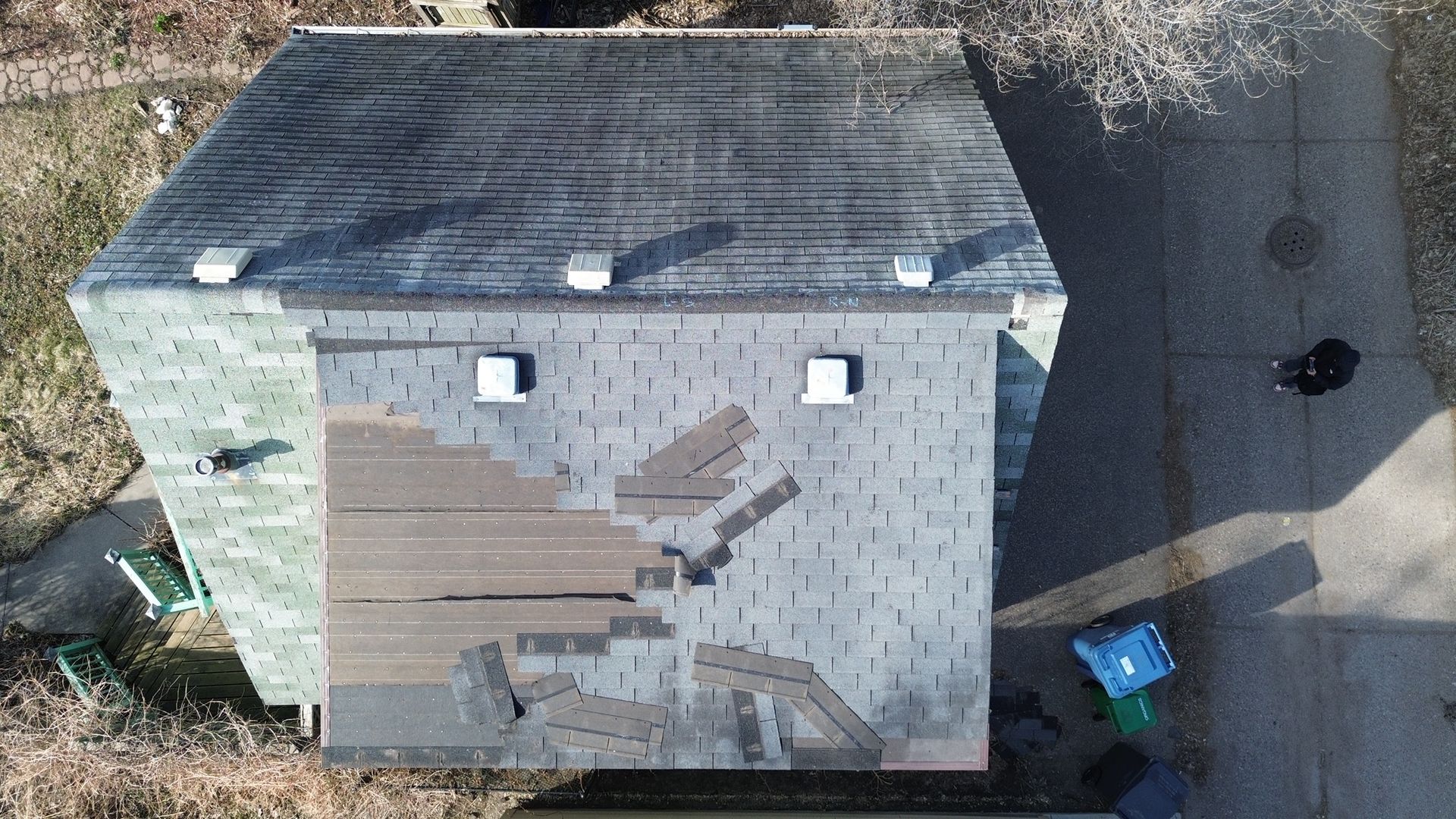 Wind damage documented, Denver metro
The numbers behind a fully documented claim
A supplement is the normal path for resolving gaps between your contractor's scope and the insurer's initial estimate. Each one is submitted in Xactimate format with photos, measurements, and local building code citations.
What we do, and what we do not do
Direct answer: Precision Exteriors documents storm damage, prepares Xactimate estimates and supplements, attends the adjuster meeting, completes the restoration, and collects your recoverable depreciation. We do not act as a public adjuster, negotiate your policy terms, or ever waive your deductible.
What Precision Exteriors does on your claim
- ✓ Free pre-adjuster inspection with a written report in 24 hours
- ✓ Detailed scopes of work in Xactimate format
- ✓ NOAA wind speed verification on wind damage claims
- ✓ Adjuster meeting attendance on site
- ✓ Supplement preparation when scope items are missing
- ✓ Completion package so recoverable depreciation is released
What we do not do
- ✕ Act as a public adjuster or insurance representative
- ✕ Negotiate or interpret your specific policy terms
- ✕ Guarantee a specific insurance outcome
- ✕ Waive your deductible, which C.R.S. 6-22-105 prohibits
If you feel the insurer's determination is inaccurate and want formal representation, a licensed public adjuster is the appropriate professional. We complete the restoration work regardless of whether you use a public adjuster or handle the process yourself.
The Precision Warranty
Protected in writing, long after the claim closes
Every Precision Exteriors Restoration project is backed in writing, so your Denver roof stays protected long after the insurance claim is settled and our crew leaves.
10-Year Workmanship Warranty
The Precision Warranty covers the quality of our installation for a full decade, in writing, included on every restored claim.
Certified-Installer Manufacturer Warranty
As an Owens Corning Preferred Contractor and CertainTeed Shingle Master Installer, we register manufacturer-backed warranties (Platinum Protection or SureStart PLUS) most contractors cannot offer.
Licensed, Insured, Local Since 2016
Colorado License #0248041, BBB A+ accredited, NRCA member, with 3,000+ completed Front Range projects.
Rated 4.6 stars by Denver neighbors
Real, verified Google reviews from Denver-area homeowners we have guided through the insurance claim process. Read our reviews.
"The Precision team was great and provided me with great customer service and results. Special thanks to Anthony for helping me through the insurance process in making sure the details were covered. The work was done on time and they did a great job with clean up."
"They walked us through every step of the claim, met our adjuster on the roof, and handled the supplement when the first estimate came up short. We only paid our deductible."
"They showed up on time, they knew their stuff, they did the work, and they did it well. The recoverable depreciation came back exactly like they said it would."
"Could not give Precision Exteriors a higher recommendation. Professional, timely, and great to work with through a stressful hail claim."
We take the claim work off your shoulders
Filing a storm claim should feel manageable. Between thorough documentation, hands-on adjuster support, and end-to-end restoration, the path forward is clear from the first inspection.
We document the damage
A free pre-adjuster inspection with a written report and photos in 24 hours, across roof, siding, gutters, and windows, so nothing covered gets missed.
We meet your adjuster
We attend the adjuster meeting on site, share our Xactimate scope, and prepare supplements when the initial estimate comes up short.
We collect your depreciation
On RCV claims we submit the completion package so your recoverable depreciation is released, the step homeowners most often miss.
Denver storm claim questions, answered
Does scheduling an inspection mean I have to file a claim? +
What is the difference between ACV and RCV coverage? +
What is recoverable depreciation and how do I collect it? +
Do I need to be home when the adjuster inspects? +
Is cosmetic damage treated differently than functional damage? +
What should I do if a contractor offers to waive my deductible? +
How long does the insurance claim process typically take? +
Can I use any licensed contractor or does my insurer assign one? +
Can storm damage affect more than one exterior system? +
What should I avoid after a storm event? +
Start with a free, documented inspection
Whether you are deciding whether to file, preparing for an adjuster visit, or working through an active claim, a thorough inspection gives you the clearest possible picture of what happened and what needs to happen next. Written report with photos in 24 hours.