
Free Roof Inspections in Denver, Photo-Documented and No-Pressure
A close-range, fully photographed roof inspection from a licensed, local Denver roofing contractor. If your roof needs nothing, we tell you. Most roof inspection Denver visits are scheduled within the same week.
Book your free inspection
Photo-documented and no-pressure: book in 60 seconds and we confirm a time, often the same week.
Free roof inspection Denver, in plain terms
A roof inspection is the cleanest first move when you are uncertain about your roof: after a storm, before a sale, when a neighbor gets a new roof, or simply because the system is aging. Precision Exteriors Restoration provides free, close-range, photo-documented roof inspections across the Denver metro, performed by a licensed Colorado contractor (License #0248041) and delivered as a written report you can actually use. Most inspections are scheduled within the same week. If your roof needs nothing, we tell you that, and that is the full outcome of the visit.
Serving Denver since 2016. Owens Corning Preferred Contractor, CertainTeed Shingle Master Installer, BBB A+, NRCA member, 3,000+ Colorado projects completed. Call (720) 408-1840 or request your inspection online.
What does a professional roof inspection include?
Direct answer: A professional roof inspection is a close-range examination of the entire roofing system: shingles, flashing, penetrations, ventilation, gutters, and drainage, documented with photos on every roof plane. In Denver, it also means checking specifically for hail bruising, wind-lifted seals, and freeze-thaw stress that a ground-level look cannot detect.
Most roof damage in Colorado is invisible from the driveway. Hail fractures the fiberglass mat inside a shingle without causing an immediate leak. Wind lifts and reseats shingles so they look normal from the street even though the seal is already broken. That is why every Precision inspection puts a trained inspector on the roof itself, plane by plane. Here is what a residential roof inspection covers on every visit.
Shingle condition and the mat beneath
Hail bruising, granule loss, mat fracture, cracking, curling, and blistering. We apply hand pressure at impact points to feel for the fiberglass mat fracture that shortens a roof's remaining life without producing an obvious leak.
Flashing and penetrations
Pipe boots, chimney step flashing, valley metal, skylight seals, and wall transitions. Colorado's 150-plus annual freeze-thaw cycles stress these joints harder than most climates, and most Denver leaks start here, not at mid-field shingles.
Ventilation and the attic side
Balanced intake and exhaust extends shingle life and limits ice dams. Where access allows, we check ventilation balance and look for interior signs of water intrusion.
Gutters, drip edge, and eaves
Drainage path, drip edge integration, and eave detailing. Excess granules in the gutters are an early signal of shingle wear.
Storm and hail focus
Denver sits in Hail Alley, so we look hardest for the functional hail damage and wind damage that ground checks miss entirely.
Photo documentation of everything
Every finding is photographed, good and bad, so nothing is left to a verbal description.
How much does a roof inspection cost in Denver?
Direct answer: A professional roof inspection from Precision Exteriors is free anywhere in the Denver metro, with no obligation. Paid inspections in the market typically run $75 to $600 depending on the type, with a national average around $250, so know what you are getting before you pay for one.
Here is the honest breakdown of what roof inspections cost when they are not free.
Basic visual inspection
Roughly $75 to $200. A walkaround and surface check, often without full photo documentation.
Standard professional inspection
Most homeowners nationally pay about $120 to $400, with $250 as a typical flat rate for an average asphalt-shingle home.
Comprehensive with attic and moisture
Roughly $250 to $400, adding an attic and moisture evaluation to the exterior inspection.
Drone or infrared inspection
The high end of the range, useful for steep or complex roofs, though neither replaces hands-on mat testing for hail damage.
Our inspection is free because it is how we earn the work when a roof genuinely needs repair or replacement, and how we earn trust when it does not. You get the same close-range inspection, photo documentation, and written assessment either way, and the price is the same whether you are in Denver, Aurora, Lakewood, or anywhere else on the Front Range: zero. There is no charge if we find nothing, and no pressure if we do. One thing we will never do is offer to waive your deductible; deductible waiving is illegal under Colorado law, and any contractor offering it is creating legal exposure for you both.
How long does a roof inspection take?
Direct answer: A typical residential roof inspection in Denver takes 45 to 60 minutes. Larger, steeper, or more complex roofs, or inspections that include attic access, can take longer. You do not need to be home for the exterior portion, and your written report with photos follows within 24 hours.
We do not rush inspections, because the damage that matters most in Colorado, mat fracture and broken seals, is exactly the kind that a quick pass misses. If attic access is part of the visit, we will need to be let inside; otherwise, being available afterward by phone to walk through the findings is all we ask.
How often should you get a roof inspection in Denver?
Direct answer: At least once a year, ideally in spring before hail season peaks, plus after any significant hail or wind event. Colorado's damaging hail season runs roughly mid-April to mid-August, and the Front Range averages three to four catastrophic hailstorms a year, so annual plus post-storm is the standard we recommend.
Beyond the annual check, schedule a roof inspection in Denver when any of these apply.
After hail or a major wind event
Even if nothing looks wrong from the ground after hail near 1 inch. Dented gutters and soft-metal dings are reliable ground-level clues that the roof was hit too.
When a neighbor's roof gets replaced
Hail affects whole neighborhoods at once. If homes on your street received insurance-supported replacements, yours saw the same event.
After heavy snow, ice, or hard freeze-thaw
Ice dams force water backup into flashing transitions and pipe boot seals. A post-winter check catches it before spring rain turns it into an active leak.
When you see the warning signs
Granules in the gutters, a ceiling stain, a musty attic odor, daylight in the attic, or curling and missing shingles. If any are active, roof repair may already be needed.
When the roof is 15 or more years old
At 5,280 feet, higher UV ages shingles faster; standard asphalt shingles run about 18 to 22 years at altitude.
Before a warranty expires
Before a manufacturer or workmanship warranty expires, so covered issues surface while coverage still applies.
What happens in a roof inspection after a hailstorm?
A post-hailstorm inspection documents impact damage while it can still be dated to the event: impact distribution across exposed slopes, mat condition at impact points, granule displacement, and soft-metal indicators on gutters and vents. Done before the adjuster visits, it is the most valuable step in the entire insurance claim.
Timing matters more after a storm than at any other point. An inspection performed within days or weeks of a hail event establishes a clear date relationship between the storm and the damage, which strengthens an insurance claim. Most Colorado homeowner policies limit hail and wind claims to roughly one year from the date of loss, and some allow less, so waiting to see if it leaks can quietly cost you your coverage window. Check your own policy for the exact deadline.
When our inspection finds storm damage, the documentation is built for the claim from day one: dated photos, measurements, and a description of functional damage rather than just what is visible from the eave. We prepare estimates in Xactimate, the same platform carriers use, which allows a direct line-item comparison against the adjuster's scope. For any client who requests it, we attend the adjuster meeting and walk the roof alongside them so the full scope gets evaluated. An adjuster who arrives with no contractor documentation sets the baseline from their own walkover, which is frequently incomplete. Our full insurance claims guidance covers the process step by step. We never guarantee claim outcomes; coverage decisions belong to you and your insurer. Our job is making sure what the storm actually did is on the record.
What does a roof damage assessment report contain?
Direct answer: A roof damage assessment report contains dated, roof-level photos of every finding, a plain-language condition summary organized by component, a damage classification separating storm damage from normal wear and installation defects, and a clear recommendation: repair, monitor, or replace, with the reasoning explained.
This is the deliverable of every Precision inspection, in writing within 24 hours.
Annotated photo documentation
Labeled photos of each finding on each roof plane, so you see your roof the way we see it.
Component-by-component summary
Shingles, flashing, ventilation, and drainage: what is performing, what shows concern, and what is failing, without roofing jargon.
Damage classification
Storm damage, normal wear, or installation defect. The distinction matters for insurance eligibility and for understanding the cause.
Remaining-life estimate
An honest read on the roof's overall health so you can plan instead of guess.
One of three recommendations
Repair, when damage is isolated and the system is otherwise sound. Monitor, when findings are cosmetic and stable, with a re-inspection timeline of 6 to 12 months. Replace, when distributed storm damage or end-of-life degradation exceeds the repair threshold.
The same roof damage assessment works for an insurance conversation, a repair decision, a real-estate transaction, or simply your maintenance file.
Do you need a roof inspection when buying or selling a home?
Direct answer: Yes. A documented roof inspection before a real-estate transaction gives both sides verified information about one of the home's most expensive components. Sellers avoid surprises in the buyer's inspection; buyers avoid inheriting an unknown roof and a five-figure replacement they did not budget for.
General home inspectors evaluate the whole property and typically view the roof from a ladder or the ground. A roofing-contractor inspection puts trained eyes on the roof itself and produces the photo documentation and remaining-life estimate that a purchase negotiation actually turns on. In a hail market like Denver, this matters twice over: the roof may carry unrepaired storm damage from a prior owner's claim window, and that is exactly the kind of finding you want documented before closing, not after.
Why choose Precision Exteriors for a residential roof inspection?
Direct answer: Precision Exteriors Restoration is a licensed, local Denver contractor (Colorado License #0248041, verifiable at dora.colorado.gov), founded in 2016, with 3,000+ Colorado projects completed. Inspections are close-range and photo-documented, findings are honest, and there is never an obligation to buy anything.
Licensed and verifiable
Colorado License #0248041. BBB A+ accredited. NRCA member. Local to Denver and here after the storm-chasers leave.
Manufacturer-certified eyes
Owens Corning Preferred Contractor and CertainTeed Shingle Master Installer. When inspection leads to work, those certifications unlock enhanced manufacturer warranty coverage, on top of our 10-year workmanship warranty.
Insurance-ready documentation
Xactimate estimates, dated photos, and adjuster-meeting support when storm damage is found.
Honest findings, every time
If your roof needs nothing, that is what the report says. We would rather earn your trust now and your business when you actually need a roof.
We serve the full Denver metro: Denver, Aurora, Arvada, Lakewood, Littleton, Centennial, Thornton, Westminster, Highlands Ranch, Parker, Castle Rock, Broomfield, and the surrounding Front Range communities. Book a free, no-pressure roof inspection: call (720) 408-1840 or contact us online. Most Denver-metro inspections are scheduled within the same week.
Why Denver roofs need close-range inspections
Denver's position in Hail Alley and its high-altitude UV exposure age roofs faster than most climates, which is why annual, documented checks matter here.
The Precision Warranty
Inspected by a Licensed, Certified Denver Roofer
When an inspection leads to work, that work is backed by the Precision Warranty: a 10-year workmanship warranty, plus the enhanced manufacturer coverage our Owens Corning Preferred and CertainTeed Shingle Master Installer certifications unlock.
Close-Range, Documented
A real on-roof inspection with photos of every finding, not a driveway guess.
Licensed and Verifiable
Colorado License #0248041, verifiable at dora.colorado.gov.
10-Year Workmanship Warranty
If work follows your inspection, our installation quality is covered for a full decade, in writing.
Related Exterior Services
An inspection is the front door to the rest of our work. When findings call for action, here is where to go next.
Roof Repair
Targeted Denver roof repair for leaks, shingles, flashing, and storm damage found during your inspection.
Roof Replacement
Full tear-off and impact-rated roof replacement, backed by manufacturer-certified warranties.
Emergency Roofing
24/7 emergency roof tarp and rapid response to stop water before it spreads.
Siding Services
Fiber cement, engineered wood and vinyl siding.
Gutter Services
Seamless gutters, leaf guards and downspouts.
Window Services
Energy-efficient window replacement, repair and installation.
See all of our work at the Denver roofing services hub.
Trusted Across the Front Range
Rated 4.6 stars on Google. Read our verified reviews on Google, Angi, Thumbtack, and Yelp. Read all reviews.
"The Precision team provided great customer service and results. Special thanks to Anthony for helping me through the insurance process and making sure the details were covered. The work was done on time, with a great clean-up."
"Great quality work, friendly service. Fast and clean service. I highly recommend them."
"They were great to work with. They showed up on time, they knew their stuff, and they did the work well. I would recommend them to anyone who needs a roof repair."
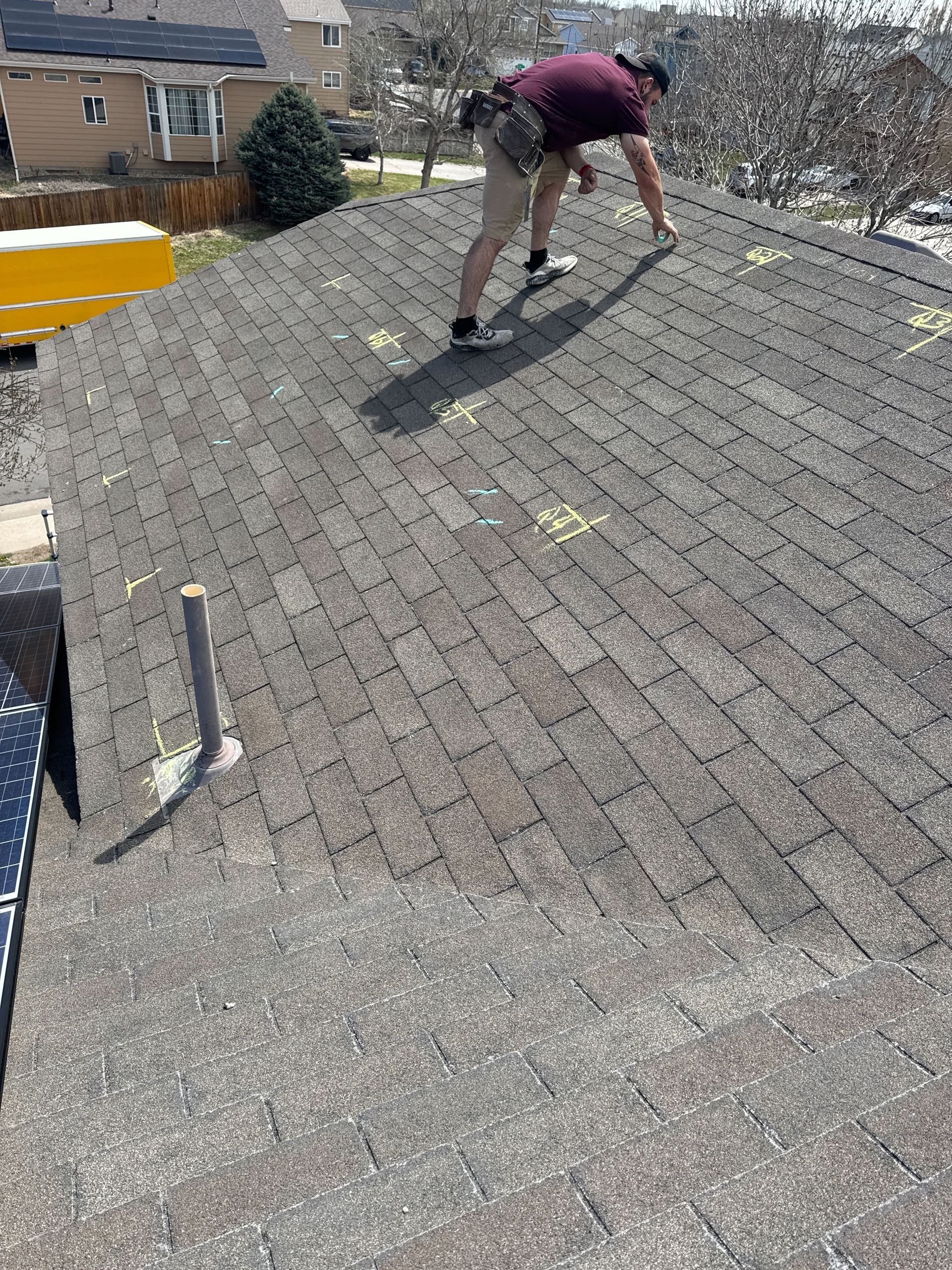 Close-range inspection, Denver metro
Roof Inspections Across Denver and the Front Range
Direct answer: Serving homeowners across Denver Metro and the Front Range: locally based and locally responsive, including Denver, Aurora, Thornton, Lakewood, Arvada, Centennial, Littleton, Castle Rock, and more.
Roof Inspection FAQs: Denver
Straight answers to what Denver homeowners ask before booking an inspection.
Is a free roof inspection really free and no obligation? +
How long does a roof inspection take? +
Do I need to be home for the inspection? +
Will you actually get on the roof? +
How often should I have my roof inspected in Denver? +
What happens if you find damage? +
Do you help with insurance claims after a storm inspection? +
Can you do a pre-purchase or pre-sale roof inspection? +
Do you charge if you do not find any damage? +
Why choose a local Denver contractor for my roof inspection? +
Protect Your Home: Start With a Free Roof Inspection
A no-pressure, photo-documented roof inspection from a licensed, local Denver roofing contractor. We proudly serve the Denver Metro Area.