
Siding in Denver: a siding contractor for repair, replacement, and storm restoration
Fiber cement, engineered wood, and vinyl siding installed, repaired, and storm-restored by a licensed Denver exterior contractor, backed by the 10-year Precision Warranty. As a siding contractor Denver homeowners trust since 2016, we handle hail and wind damage, full siding replacement Denver projects, and insurance claims.
Book your free siding inspection
Photo-documented and no-pressure: book in 60 seconds and we send a written assessment.
Your full-service siding contractor in Denver
Direct answer: Precision Exteriors Restoration installs and repairs siding across Denver and the Front Range, including fiber cement (James Hardie), LP SmartSide engineered wood, and vinyl. A licensed Colorado contractor (License #0248041) since 2016 with 3,000+ projects, we handle hail and wind damage, full replacements, and insurance claims, backed by a 10-year workmanship warranty. Most siding projects finish in 3 to 7 days, and free inspections are usually within the same week.
Our siding services: siding repair, siding replacement, James Hardie siding, and emergency siding service.
Siding services: siding repair, siding replacement, James Hardie siding, vinyl siding, and emergency siding service.
As a siding contractor Denver homeowners call after every major storm, we cover the full job under one licensed team: siding repair, siding replacement Denver projects, James Hardie siding Denver installs, vinyl siding Denver options, and emergency siding response. Each service below has its own dedicated guide.
Siding repair vs. full replacement in Denver
Direct answer: A few damaged or loose boards, localized hail dents, or isolated rot usually call for siding repair, often $300 to $1,500 and about a day of work. Widespread hail or wind damage, fading or warping across walls, or siding 20+ years old points to a full siding replacement, typically $8,000 to $20,000+ over 3 to 7 days, and frequently covered after a storm.
| Factor | Siding repair | Siding replacement |
|---|---|---|
| Best when | A few damaged or loose boards, localized hail dents, isolated rot | Widespread hail or wind damage, fading or warping across walls, siding 20+ years old |
| Typical Denver cost | $300 to $1,500 | $8,000 to $20,000+ |
| Added lifespan | A few years | 20 to 40 years by material |
| Timeline | About 1 day | 3 to 7 days |
| Insurance fit | Often paid out of pocket | Frequently covered after a storm (ACV or RCV) |
What Colorado weather does to siding
Direct answer: Siding in Denver takes the same beating the roof does, just from a different angle. The same hail, UV, wind, and freeze-thaw that age a roof attack your siding, and the failure modes are specific to Colorado.
Hail cracks and punctures vinyl, dents steel and aluminum, and chips paint and fiber cement. The damage often lands on the north and west elevations, is easy to miss from the ground, and opens the wall to water.
High-altitude UV. At 5,280 feet, UV runs about 25 percent stronger than at sea level. It fades color, makes vinyl brittle, and breaks down lower-grade products years before their rated life.
Wind and freeze-thaw. Chinook and storm winds pull loose or aging panels off the wall, while 150-plus freeze-thaw cycles a year work moisture into every seam, gap, and penetration, so siding installed without proper flashing and a weather-resistant barrier develops hidden moisture problems.
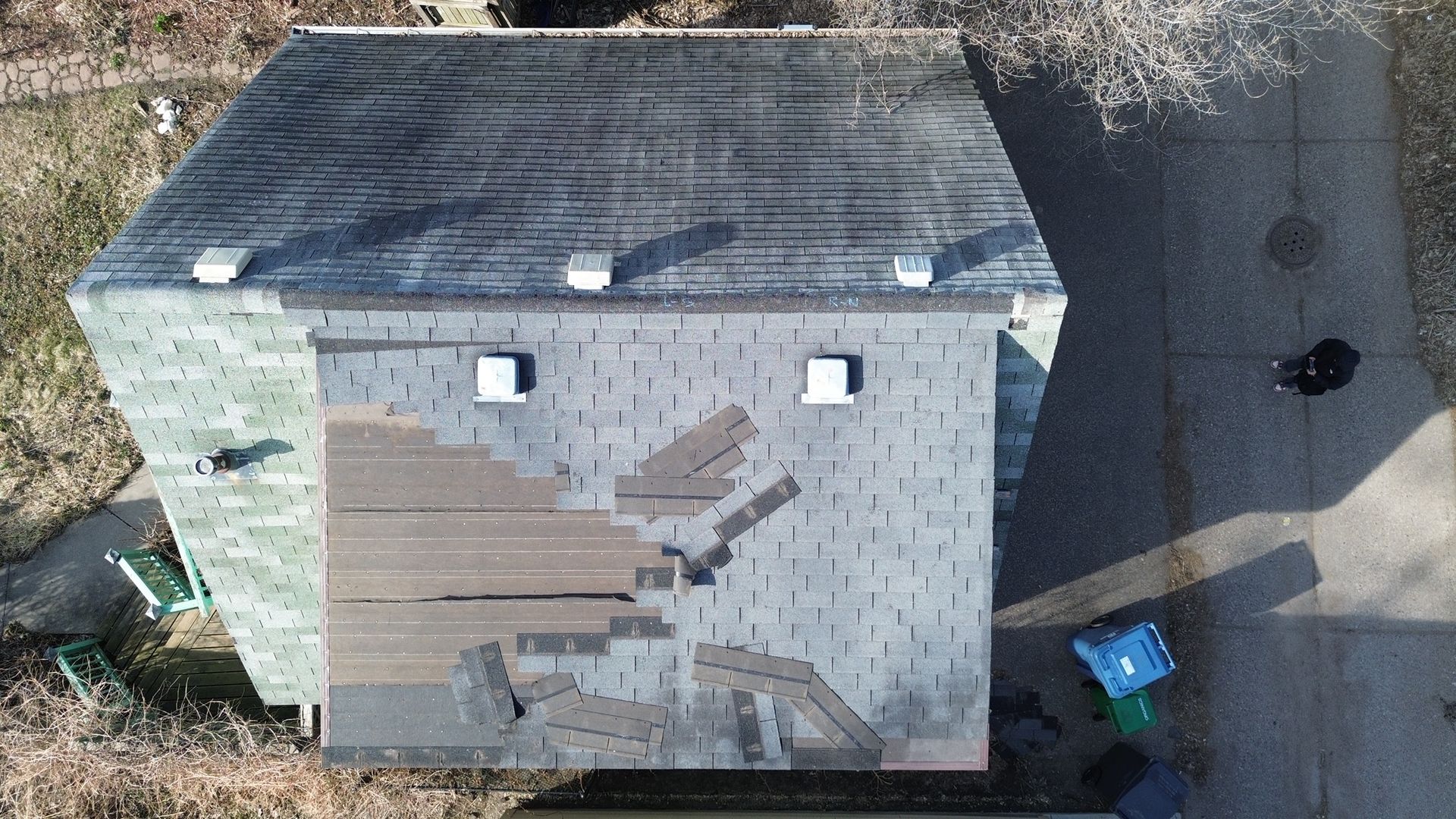 Storm damage, Denver metro
Complete siding services in Denver
Direct answer: Repair through full replacement and storm restoration, from one licensed, local exterior contractor. Choose the dedicated guide for your siding need below.
Siding repair Denver
Cracked, punctured, or storm-damaged panels repaired and color-matched, fixed right the first time.
Siding repair →Siding replacement Denver
Full siding replacement in fiber cement, engineered wood, or vinyl, installed to manufacturer spec.
Siding replacement →Storm & hail damage
Hail and wind crack, dent, and tear siding. We document the damage and handle the insurance claim.
Storm damage →Emergency siding services
Fast response to seal breached or torn-off siding before water gets behind the wall.
Emergency siding →Denver siding material guide: what performs in Colorado
Direct answer: The right siding for a Denver home is the one that handles hail, UV, and freeze-thaw without fading or failing early. Fiber cement (James Hardie) is the most defensible Front Range choice, engineered wood (LP SmartSide) is a strong middle option, and vinyl is the budget choice when impact-rated grades are used.
🧱 Fiber cement (James Hardie)
The most defensible choice for the Front Range. Fiber cement resists hail, fire, rot, and pests, holds factory color (ColorPlus) against high-altitude UV, and carries long manufacturer warranties.
Why Denver: it costs more up front and is the option most Denver homeowners are happiest with long term.🪵 Engineered wood (LP SmartSide)
A lighter, lower-cost alternative to fiber cement with strong impact resistance and a real wood look.
Why Denver: it performs well in Colorado when installed and sealed correctly, a strong middle option on cost and durability.🏷 Vinyl siding Denver
The lowest upfront cost and a legitimate budget choice, but Colorado hail cracks it and high-altitude UV fades and embrittles lower grades over time.
Why Denver: premium, impact-rated vinyl performs far better than builder-grade.⚡ Steel and aluminum
Durable and fire-resistant, but hail dents metal siding, which is cosmetic rather than structural.
Why Denver: a good fit for specific designs and exposures.Denver siding facts every homeowner should know
Denver sits in Hail Alley, where storm frequency and high-altitude conditions put siding under more stress than almost anywhere in the country.
Siding insurance claims in Denver: what to expect
Direct answer: Hail and wind damage to siding is a covered peril on most homeowner policies, and siding claims are frequently bundled with a roof claim after the same storm.
- ✓ Xactimate estimates. We prepare estimates in Xactimate, the platform carriers use, so our scope compares line-for-line against the adjuster's scope.
- ✓ On-site adjuster meetings. We meet the adjuster, walk the elevations, and present our photo documentation so the full scope of siding damage is evaluated, not just the obvious panels.
- ✓ Supplement documentation. Our team documents items missing from the initial estimate, with photos, measurements, and code or manufacturer requirements where they apply.
- ✓ A note on deductibles. Deductible waiving is illegal under Colorado law. Any contractor who offers to waive your deductible creates legal exposure for you and for them. Precision will never make that offer.
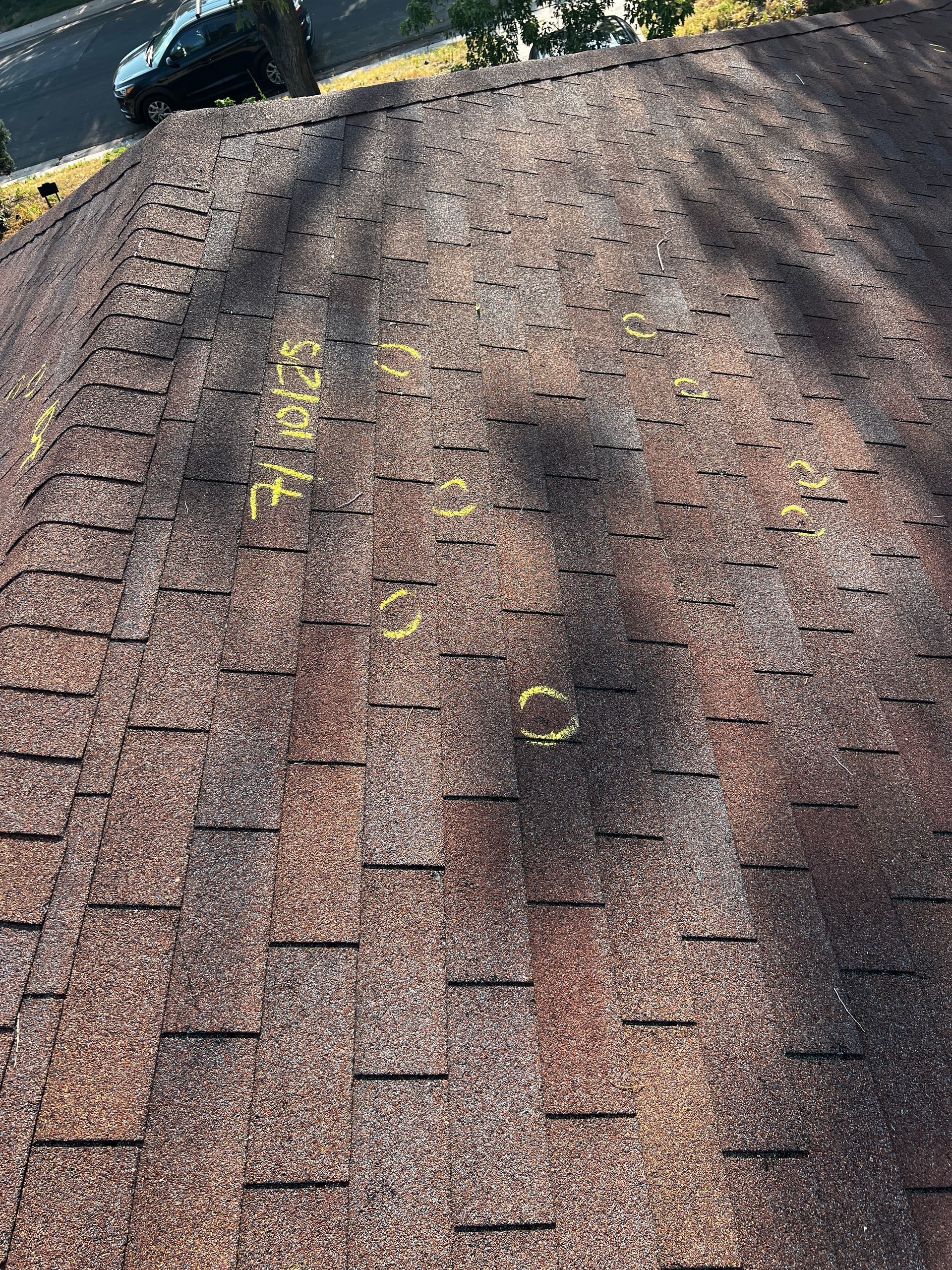 Hail damage, documented for claims
Siding repair vs. replacement: the Denver framework
Direct answer: Whether to repair or replace siding comes down to four honest factors after a close-range look: damage scope, age and condition, color and product match, and cost logic.
Damage scope
A few cracked or punctured panels on a sound wall is a repair. Damage across multiple elevations, or hail damage spread widely enough that the wall's integrity is uncertain, points to replacement.
Age and condition
Newer siding with isolated damage is a strong repair candidate. Faded, brittle, or failing siding near the end of its life is a replacement candidate.
Color and product match
If your siding is current and available, repairs blend in. On discontinued products or sun-faded color, a clean match is not always possible, and we will tell you that before any work.
Our siding process in Denver
Direct answer: Our siding process is five clear steps, from a free close-range inspection through a final walkthrough and your 10-year workmanship warranty. No high-pressure sales, no surprise costs, and you see photos of everything.
Free inspection
Close-range check of panels, seams, flashing, and trim across every elevation, fully documented with photos.
Scope & options
A written scope of exactly what needs repair or replacement, with materials and timeline.
Permit & insurance
We pull Denver permits and, on insurance claims, handle the Xactimate estimate and adjuster meeting.
Certified install
Installed to manufacturer specification (including James Hardie and LP) with proper flashing and weather-resistant barrier, to Denver code.
Walkthrough & warranty
A final inspection, full cleanup, and your 10-year workmanship warranty paperwork.
What your free siding inspection includes
No cost, no pressure. Here is exactly what you receive.
- ✓ Close-range check of panels, seams, flashing, and trim
- ✓ Photo documentation of every finding, every elevation
- ✓ Hail and wind damage assessment for insurance
- ✓ Honest repair-versus-replace recommendation
- ✓ Material and warranty options explained clearly
- ✓ Written assessment at no cost and no obligation
The Precision Warranty
A 10-year workmanship guarantee, in writing
Every qualifying siding installation is backed by the Precision Warranty: a 10-year workmanship warranty. Combined with the manufacturer product warranty on systems like James Hardie and LP SmartSide, you get protection on both labor and materials.
10-Year Workmanship Warranty
Our installation quality is covered for a full decade, in writing.
Certified-Installer Manufacturer Warranty
Installed to James Hardie and LP specification so the manufacturer product warranty stays valid. On qualifying projects, layered Owens Corning and CertainTeed coverage on top.
Bumper-to-Bumper Peace of Mind
Labor and materials covered end to end: you chose the right company. Colorado License #0248041, BBB A+, serving Denver since 2016.
Why choose Precision Exteriors for siding in Denver
Direct answer: A licensed and verifiable Colorado contractor (License #0248041) with 3,000+ completed exterior projects since 2016, Xactimate and supplement capability, manufacturer-certified installs that keep your warranty intact, and honest repair-versus-replace advice.
Licensed and verifiable
Colorado License #0248041, verifiable through the Colorado Division of Regulatory Agencies at dora.colorado.gov. In Denver's post-storm market, unlicensed contractors appear frequently after major hail events.
Installed to keep your warranty intact
We install manufacturer-certified siding systems, including James Hardie and LP SmartSide, to the exact specification their warranties require, so your product warranty stays intact. Many crews cut corners that quietly void it.
Proven volume in your market
3,000+ completed exterior projects across the Front Range since 2016. We have restored homes like yours after the same storms that hit your neighborhood, and we have been doing it for nearly a decade.
Xactimate estimates and supplement capability
We prepare estimates in Xactimate and have an internal team that prepares and submits supplement documentation directly with the carrier, so scope gaps do not become your problem to resolve out of pocket.
Honest repair vs. replacement
We regularly advise homeowners to repair rather than replace. When repair is the right answer, we say so and we document why. That honesty has produced 3,000+ completed projects from a business that started in 2016.
10-year workmanship warranty, every project
Covering installation defects on every system under one warranty document. On qualifying projects, layered manufacturer warranty coverage through Owens Corning and CertainTeed on top.
Related exterior services
One licensed crew handles your whole exterior. Bundle siding with roofing, gutters, or windows into a single, well-documented storm claim.
Roofing services
Storm-ready roofing across Denver and the Front Range, from a licensed Denver roofing contractor.
Roofing services →Gutter services
Seamless gutters, leaf guards, and downspouts that move Denver snowmelt away from your home.
Gutter services →Window services
Energy-efficient window replacement, repair, and installation built for the Front Range.
Window services →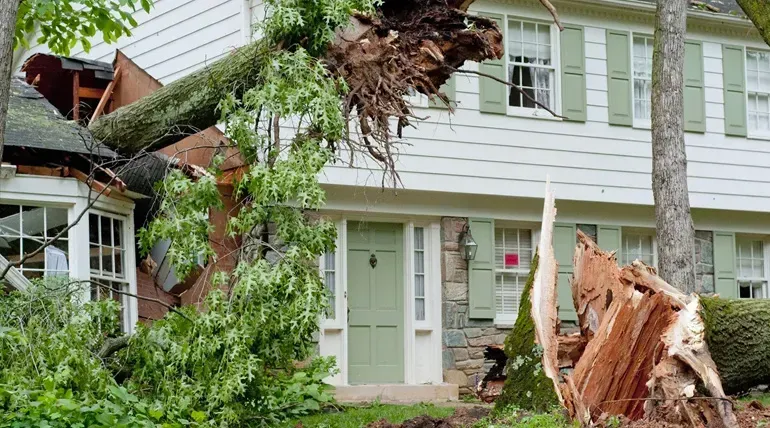 Storm response, Denver metro
Serving Denver and the Front Range
Direct answer: Serving homeowners across Denver Metro and the Front Range, locally based and locally responsive, including Aurora, Thornton, Lakewood, Arvada, Westminster, Centennial, Littleton, and Castle Rock.
Trusted across the Front Range
Real, verified Google reviews from Denver-area homeowners. We are proud of an honest 4.6 stars rating built one project at a time. Read our reviews.
"The Precision team provided great customer service and results. Special thanks to Anthony for helping me through the insurance process and making sure the details were covered. The work was done on time, with a great clean-up."
"Great quality work, friendly service. Fast and clean service. I highly recommend them."
"They were great to work with. They showed up on time, they knew their stuff, and they did the work well. I would recommend them to anyone who needs a roof repair."
Straight answers to what Denver homeowners ask
What siding materials do you install? +
Is hail or wind damage to my siding covered by insurance? +
Can you repair just the damaged panels and match my existing siding? +
Fiber cement or vinyl, which is better for a Denver home? +
How long does a siding replacement take? +
Can you do siding and roofing at the same time? +
Is the siding inspection free? +
Do you warranty your siding work? +
Why choose a local Denver contractor for siding? +
Protect your home: start with a free siding inspection
A no-pressure, photo-documented inspection from a licensed, local Denver siding contractor. We inspect, we document, and we handle your insurance claim so you do not have to.