
Denver's licensed roofing and exterior restoration contractor
Storm damage, repair, replacement, and more. Precision Exteriors Restoration is a Denver-based exterior restoration contractor since 2016, serving Front Range homeowners with roofing, siding, gutters, and windows across every Denver neighborhood. Free inspection, no obligation.
Book your free Denver inspection
Pick a time and we assess your roof, siding, gutters, and exterior transitions, then give you an honest recommendation.
Licensed Exterior Restoration Contractor, Founded 2016
Direct answer: Precision Exteriors Restoration is a licensed Denver-based exterior restoration contractor, Colorado License #0248041, providing roofing, siding, gutter, and window services to residential and multi-family properties throughout Denver, Colorado. Founded in Denver in 2016, with 3,000+ completed Front Range projects, an Owens Corning Preferred Contractor, CertainTeed Shingle Master Installer, BBB A+, and NRCA member.
Nearby service areas: Aurora, Englewood, Commerce City, Lakewood and Wheat Ridge.
Serving Front Range Homeowners for Nearly a Decade. We handle roof inspections, roof repair, roof replacement, emergency roofing, storm damage evaluation, siding repair and replacement, gutter repair and replacement, and window replacement. Founded in Denver in 2016. 3,000+ completed Front Range projects. 200+ jobs in Denver, Aurora, and Montbello in 2024. 100+ projects in Aurora and Denver in 2025. Denver-based and Denver-focused through every hail season since 2016.
Free inspections, no obligation. Denver homes face a specific and well-documented threat profile: a front-range hail corridor that produces billion-dollar storm events, three city-defined wind speed zones that govern material requirements for every replacement job, high-altitude UV exposure that accelerates shingle degradation faster than lower-elevation states, and freeze-thaw cycles that open penetrations and flashing transitions across every season. A contractor who works Denver needs to understand these conditions, not just Front Range weather in general, but the specific code environment, the specific storm history, and the specific insurance dynamics that shape every project in this city. We have worked this market since 2016. We will be here after the next storm season. For the broader regional picture, see our Colorado service area overview or return home.
Start Here, What Do You Need Help With?
Use this guide to get to the right page quickly. If you are not sure where to start, a documented inspection is the cleanest first step. It tells you what is functional, what is vulnerable, and what the right scope looks like, before any commitment is made.
Denver's Storm and Climate Profile
Direct answer: Denver sits at 5,280 feet in the heart of the Front Range hail corridor. The May 2024 Denver hailstorm produced an estimated $1.9 billion in metro-wide insured losses, following a 2017 supercell that caused $2.3 billion. Two events, same month of the year, combined losses exceeding $4 billion. These are not anomalies in Denver's weather history. They are the pattern.
Metro-wide insured losses from the May 2024 Denver hailstorm, following a 2017 supercell that caused $2.3 billion in the same month of the year.
At a mile high the atmosphere provides significantly less UV filtration than at sea level, so asphalt shingles on Denver roofs degrade faster than manufacturer tables calibrated to lower-elevation conditions suggest.
Freeze-thaw cycling opens every weak point: flashing transitions, pipe boot seals, valley intersections, and ridge cap attachments. These are the locations where active leaks develop, and the ones a thorough inspection prioritizes.
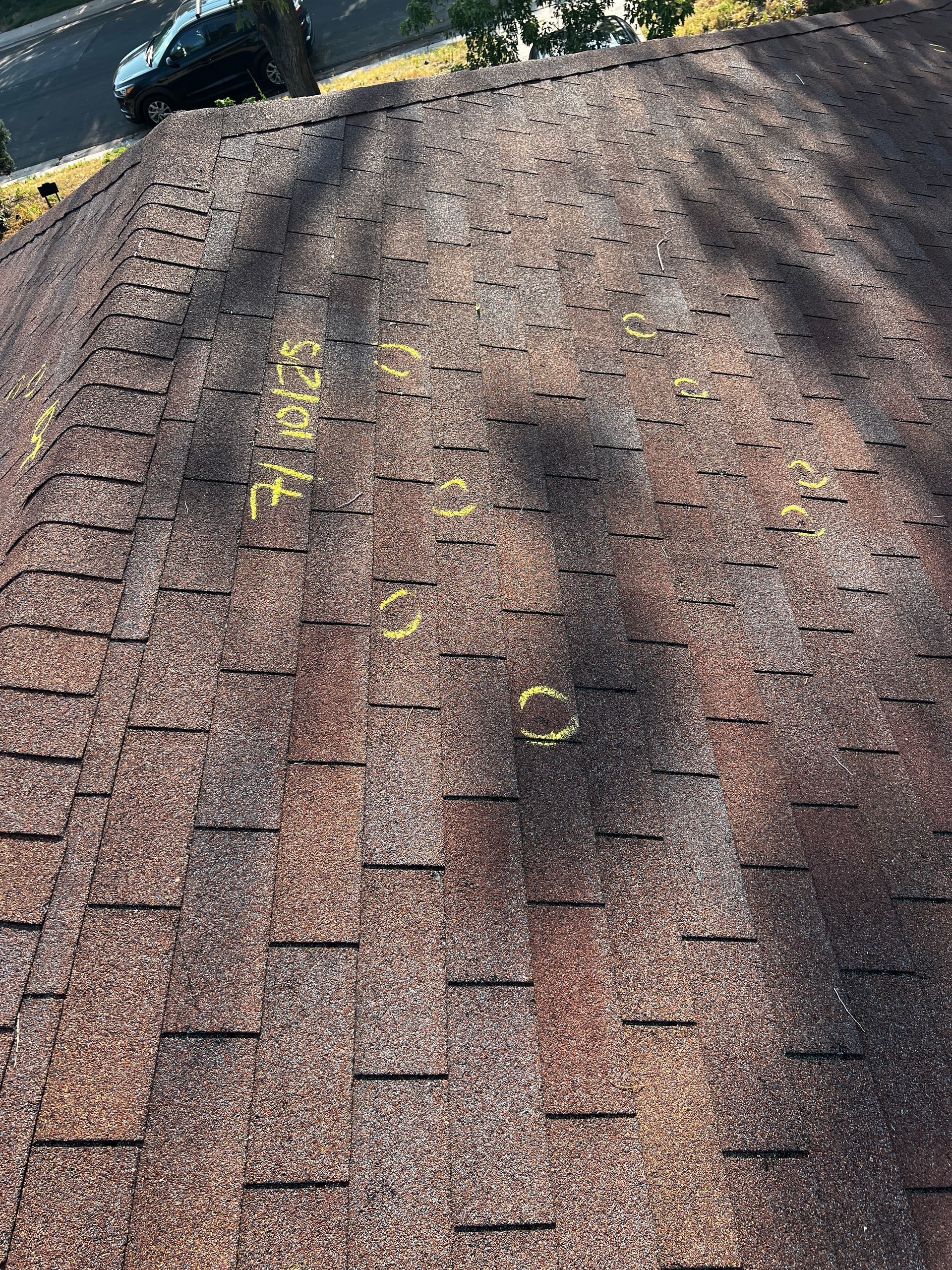 Hail damage, Denver metro
Denver's Three Wind Zones, and Why They Matter
Direct answer: Denver operates under a three-zone wind speed classification system that most homeowners and many out-of-area contractors are unaware of. The city defines Zone 1 at 115 mph, Zone 2 at 125 mph, and Zone 3 at 140 mph. Material requirements differ by zone, and a contractor who installs Zone 1-rated shingles on a Zone 3 property has installed the wrong product, regardless of what the shingles look like from the street.
Zone 1
Base design wind speed. Shingles, ridge cap, and fastening patterns rated to this zone do not meet higher-zone requirements.
Zone 2
Mid-tier design requirement. Material and fastening specifications step up from Zone 1.
Zone 3
Primarily on the exposed western edges of the metro. The strictest design wind speed in the city.
Roofing Services in Denver
Direct answer: Roofing is the primary exterior system on any Denver property and the most common source of both storm damage claims and long-term performance concerns. Precision Exteriors provides the full scope of residential and multi-family roofing services in Denver, from post-storm inspections through emergency stabilization, repair, and full replacement.
Roof Inspection Denver
A professional roof inspection documents shingle integrity, granule loss, flashing performance, penetration seals, ventilation, and storm impact indicators. In Denver's hail environment, inspection is not optional after a significant event. Hail bruising is often not visible from the ground and fractures the fiberglass mat, accelerating failure within one to three seasons.
Roof Inspection Denver →Roof Repair Denver
Repair addresses isolated failures: a damaged pipe boot, separated flashing, open ridge cap gap, missing shingle course, or active leak source. Prompt repair after a weather event prevents interior damage escalation and preserves the insurance claim record by stopping the damage at the point where it occurred.
Roof Repair Denver →Roof Replacement Denver
Replacement is appropriate when the system has reached end of service life, sustained widespread storm damage, or shows repeated failure patterns beyond what isolated repair can address. Denver replacements require permits, and material selection must account for wind zone classification, impact resistance rating, and altitude performance.
Roof Replacement Denver →Emergency Roofing Denver
Active leaks, storm-displaced shingles, open roof penetrations, and structural exposure require same-day response. We provide 24-hour emergency roofing service in Denver including emergency tarping, leak diagnosis, ceiling leak source identification, and same-day permanent repair when conditions allow.
Emergency Roofing Denver →Storm Damage Restoration in Denver
Direct answer: Storm damage in Denver is rarely limited to one system. A hail event that hits the roof at 60 mph also hits every exposed exterior surface: siding, gutters, window trim, soft metals, flashing caps, and downspout elbows. A wind event that lifts shingles also drives debris into siding seams and gutter joints. Evaluating storm damage in Denver means evaluating the full exterior, not just the most visible damage point.
Hail Damage Denver. Denver is one of the most hail-exposed metro areas in the country. Quarter-sized hail, the threshold at which asphalt shingles begin to sustain functional damage, is routine in Front Range storm seasons. Larger events produce baseball-sized stones that fracture decking, destroy pipe boots, and damage every exposed surface on the property. Post-storm inspection documents the damage condition before any stabilization or repair work begins, which is the record the adjuster needs to see. Hail Damage Denver →
Wind Damage Denver. Denver's three-zone wind classification exists because wind damage in this city is not uniform. Zone 3 properties, primarily on the exposed western edges of the metro, face 140 mph design requirements. Wind events lift tab shingles, displace ridge cap, open flashing transitions, and drive water into wall assemblies. Wind Damage Denver →
Debris and Tree Damage Denver. Fallen branches, airborne debris, and tree impact create immediate structural exposure. Debris damage requires emergency stabilization first, tarping and structural assessment, before permanent repair scope can be determined. Debris and Tree Damage Denver →
Insurance and Storm Damage Guidance Denver. Insurance navigation in Denver requires specific documentation practices, an understanding of how Colorado carriers handle hail and wind claims, and familiarity with the ACV versus RCV policy structures that are increasingly common in the metro. Insurance and Storm Damage Guidance Denver →
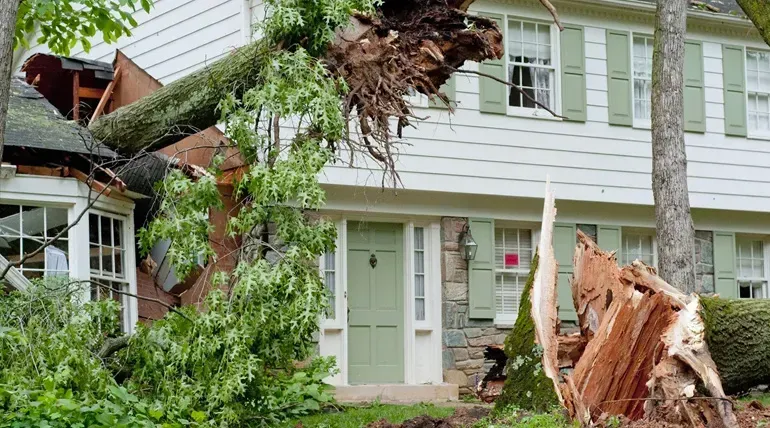 Storm response, Denver metro
Why Your Denver Roofing Permit Record Matters for Your Insurance Claim
Direct answer: When an insurance adjuster evaluates a roof claim in Denver, one factor that determines whether your policy pays Replacement Cost Value (RCV) or Actual Cash Value (ACV) is the documented age and installation history of your roof. A roofing permit creates an official, city-filed record of when your roof was installed and by whom. Missing permit records are increasingly used by carriers to shift claims from RCV to ACV settlements, which can reduce a homeowner's payout by $5,000 to $15,000 or more on a full replacement scope.
Why the permit record becomes critical
RCV pays the full cost to replace your roof at current material and labor prices. ACV deducts depreciation, meaning an older roof, or a roof whose installation cannot be verified, may pay out thousands of dollars less than what replacement actually costs. When a licensed contractor pulls a permit and the work passes inspection, that record exists permanently in Denver's building department database. An insurer can verify it. An adjuster can reference it. Your claim is evaluated against a documented installation date, not an assumed one.
When a roof is replaced without a permit, which is common practice among storm chasers and unlicensed contractors who skip the permit process to move faster and cut costs, no official installation record exists. The insurer cannot verify the installation date, and the roof's age becomes disputed or assumed based on visible condition rather than documented history.
What Denver homeowners should do
- Before any roof replacement is finalized, ask your contractor directly: "Will you pull a permit for this job?" A licensed, code-compliant contractor will always answer yes. If the answer is no, or the contractor suggests skipping the permit to move faster, that is a significant warning sign.
- After the job is complete, request a copy of the permit and the signed inspection record. Keep it with your home file alongside your homeowner's insurance policy. If you ever file a roof claim, this document establishes your installation date and supports an RCV settlement.
- If you purchased a home and are unsure whether a previous roof replacement was permitted, Denver building permits are searchable at the Denver Community Planning and Development portal. You can look up your address and confirm whether a permit was pulled for the most recent roof work.
Precision Exteriors pulls permits on every roof replacement project in Denver. It is a standard part of our process, not an optional add-on. The permit protects the homeowner's claim record long after the installation is complete.
How to Identify a Legitimate Denver Roofing Contractor
Direct answer: Every significant hail event in Denver brings a surge of door-to-door roofing solicitations. Storm chasers, out-of-state or out-of-area crews who follow storm events, pressure homeowners into same-day contracts, complete fast installations without permits, and leave the market before warranty issues surface, are a well-documented problem in Denver. The Colorado Roofing Association, DORA, and the BBB all publish consumer warnings about this pattern specifically after Front Range hail events.
The consequence is not just poor workmanship. It is a missing permit record. It is a voided manufacturer warranty because installation did not meet wind zone requirements. It is an ACV claim payout when your policy entitled you to RCV. It is a roof that fails in two seasons when it should have lasted twenty. Here is how to verify a Denver roofing contractor before signing anything.
Verify the Colorado license
Colorado contractor licenses are searchable at dora.colorado.gov. Search the contractor's name or license number before anyone gets on your roof. Precision Exteriors Restoration is Colorado License #0248041, search it, confirm it, verify it is current. Any legitimate contractor gives you their license number without hesitation.
Confirm a permanent address and ask about permits
A contractor with a verifiable local address has a stake in this market beyond this storm season. A P.O. box or out-of-state address is a warning sign. Any code-compliant Denver replacement requires a permit, and a contractor who proposes to skip it is proposing to expose you to an ACV claim outcome and a failed inspection record.
Do not sign under pressure, check local reviews
Emergency stabilization does not require a full contract. A contractor who pressures you to sign a replacement agreement during an emergency call is using urgency to close a sale. A company with 200+ completed Denver and Aurora projects in 2024 has a verifiable local footprint. Reviews that reference specific Denver neighborhoods, adjusters, and storm events are credible signals of a genuinely local operator.
Siding, Gutter, and Window Services in Denver
Direct answer: Siding is the second most common exterior system damaged in Denver hail events, and because the damage is less dramatic than a roof, it is frequently underreported in insurance claims. Gutters are a critical drainage system in Denver's snowmelt and storm environment, and windows can sustain seal failure and impact damage that altitude-driven thermal cycling accelerates. We evaluate every exterior system within the full storm damage assessment.
Siding Services Denver
Hail cracks vinyl panels, dents fiber cement, and opens seams that allow moisture into the wall assembly. Moisture through damaged siding causes wall cavity rot and insulation degradation that is far more expensive to remediate than the original repair. We inspect, repair, and replace vinyl, James Hardie fiber cement, and other residential exterior assemblies.
Siding Services Denver →Gutter Services Denver
Undersized, clogged, or damaged gutters let water accumulate at the fascia, overflow against the foundation, and in freezing conditions create the ice dam loading that forces water under shingles at the eave. Denver hail dents aluminum and steel sections and cracks downspout elbows. We provide repair, replacement, seamless systems, and gutter guards.
Gutter Services Denver →Window Replacement Denver
Windows can sustain seal failure and impact damage in Denver hail events, and altitude-driven thermal cycling accelerates seal degradation in insulated glass units. A failed seal reduces insulation performance and causes interior condensation often misdiagnosed as roofing or HVAC problems. We provide evaluation and replacement for residential properties.
Window Replacement Denver →Roofing Services Denver
Roofing is the primary exterior system and the most common source of storm claims and long-term performance concerns. From post-storm inspection through emergency stabilization, repair, and full code-compliant replacement, one licensed Denver team manages the entire scope.
Roofing Services Denver →Denver facts every homeowner should know
Denver sits in the Front Range hail corridor, where storm frequency, three-zone wind code, and high-altitude conditions put exteriors under more stress than most homeowners realize until they are in the middle of a claim.
Rated 4.6 stars by Denver neighbors
Real, verified Google reviews from Denver-area homeowners. We are proud of an honest 4.6 stars rating built one roof at a time. Read our reviews.
"The Precision team was great and provided me with great customer service and results. Special thanks to Anthony for helping me through the insurance process in making sure the details were covered."
"Great quality work, friendly service. Fast and clean service."
"They showed up on time, they knew their stuff, they did the work, and they did it well."
"Could not give Precision Exteriors a higher recommendation. Professional, timely, and great to work with."
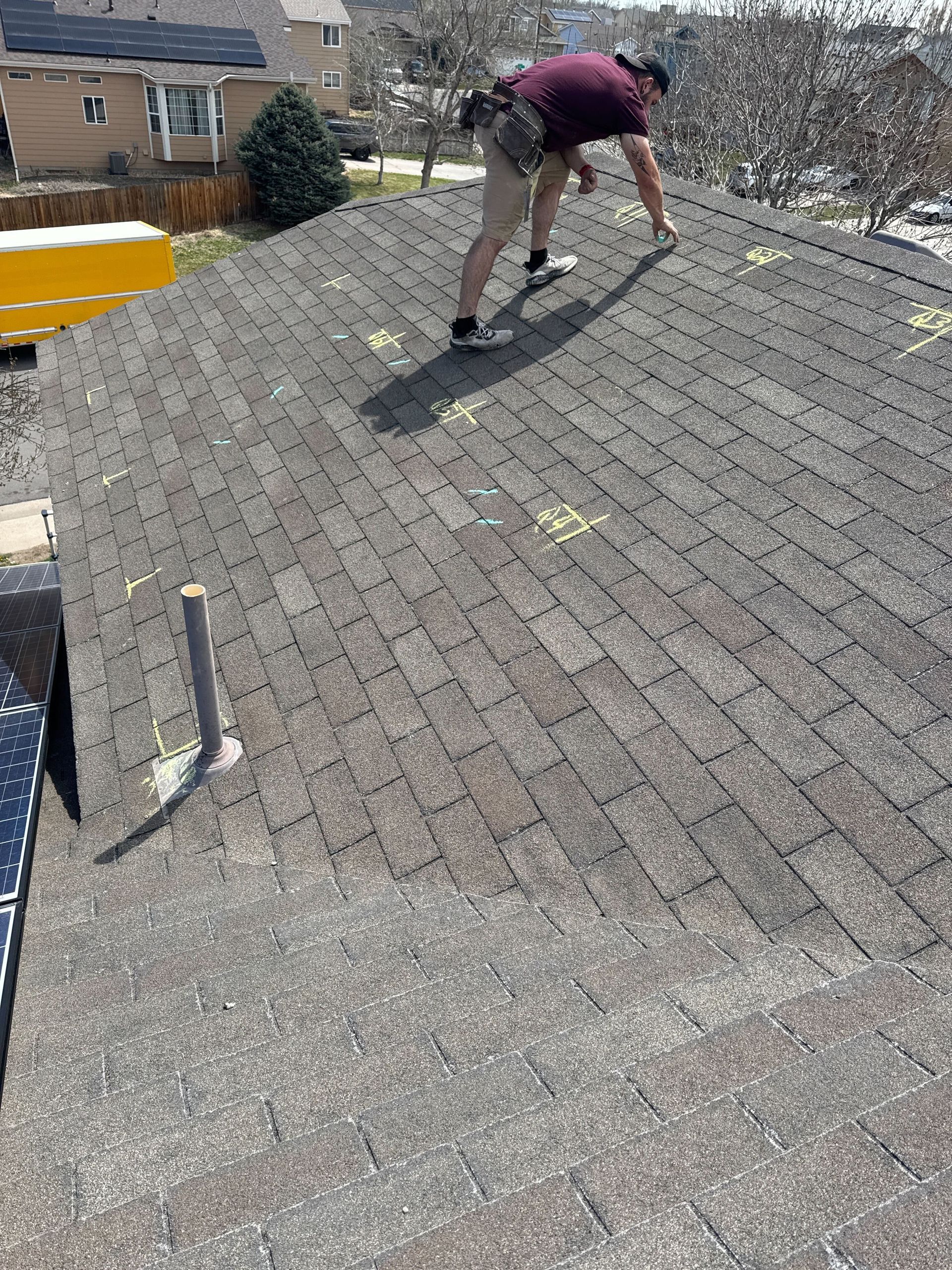 On-site inspection, Denver metro
Denver Neighborhoods We Serve
Direct answer: Precision Exteriors serves homeowners and multi-family property owners across all Denver neighborhoods including Capitol Hill, Washington Park, Cherry Creek, City Park, Park Hill, Highlands, Sloan's Lake, Berkeley, Congress Park, Baker, Platt Park, University Hills, University Park, Montbello, Green Valley Ranch, Central Park (Stapleton), Lowry, Hilltop, Mayfair, Virginia Village, Harvey Park, and Bear Valley.
Denver's housing stock spans over 150 years of construction, from Victorian-era homes in Capitol Hill and Five Points with complex rooflines and layered flashing details, to mid-century ranch construction in Harvey Park and Bear Valley, to newer infill and production builds in Central Park and Green Valley Ranch. Each era of construction has its own material performance profile and its own failure patterns under Denver's storm and climate conditions. We work across all of them.
We also serve Aurora, Lakewood, Englewood, Centennial, Wheat Ridge, Commerce City, and surrounding Front Range communities when storm exposure overlaps the metro boundary. For the full regional map, see our Colorado service area →
Protected in writing, for the long run
Every Precision Exteriors Restoration project is backed in writing, so your Denver roof stays protected long after our crew leaves. Between code-compliant permits, manufacturer warranties, and hands-on insurance help, the path forward is low risk from day one.
10-Year Workmanship Warranty
The Precision Warranty covers the quality of our installation for a full decade, in writing, backed by 20+ years of combined experience in this market.
Certified-Installer Manufacturer Warranty
As an Owens Corning Preferred Contractor and CertainTeed Shingle Master Installer, we register manufacturer-backed material warranties most contractors cannot offer, with zone-compliant installation that keeps them valid.
Licensed, Insured, Local Since 2016
Colorado License #0248041, BBB A+ accredited, NRCA member, with 3,000+ completed Front Range projects and a permanent Denver address.
Denver Contractor's Frequently Asked Questions
How do I know if a Denver roofing contractor is legitimate?
Does Denver require a permit for roof replacement?
What is the difference between RCV and ACV on a roof insurance claim?
What are Denver's three wind zones and why do they matter?
Does one storm damage multiple exterior systems?
How do I document roof damage for an insurance claim in Denver?
How long have you been working in Denver?
Do you handle insurance claims?
What areas of Denver do you serve?
Schedule a Free Denver Exterior Inspection
We assess your roof, siding, gutters, and exterior transitions and give you an honest recommendation: repair, replacement, or no action needed. Available 7 days a week. Emergency response 24 hours a day. If your Denver property has been exposed to hail, wind, or storm activity, a documented inspection is the right first step.