
Insurance claim guidance Castle Rock homeowners can use after storm damage
Precision Exteriors Restoration helps Castle Rock homeowners file and manage roof and exterior insurance claims after hail and wind storms, from the free documented inspection through the adjuster meeting to the final invoice. A licensed Colorado contractor since 2016.
Book your free inspection
Pick a time and we send a documented inspection with photos, the foundation of a well supported claim.
Storm damage and insurance claims: a Castle Rock homeowner's guide to the process
Direct answer: Precision Exteriors Restoration helps Castle Rock homeowners file and manage roof and exterior insurance claims after hail and wind storms, from the free documented inspection through the adjuster meeting to the final invoice. A licensed Colorado contractor (License #0248041) since 2016, we explain ACV vs RCV and recoverable depreciation so you know exactly what your policy pays, and most homeowners owe only their deductible.
This page provides general educational information about how storm damage and homeowner's insurance typically interact. It is not legal advice, not policy specific guidance, and does not guarantee any insurance outcome. Coverage decisions are made exclusively by your insurance provider based on your specific policy terms. When in doubt, consult your insurance agent or a licensed public adjuster. This guide sits under our storm damage hub.
Why Castle Rock claims need local documentation
Direct answer: Castle Rock sits on the Palmer Divide at roughly 6,200 feet, where hail, high wind, heavier snow, elevated UV, and rapid freeze thaw cycles can all affect the same roof system. Insurance claim guidance Castle Rock homeowners can trust starts with documenting the exact storm peril and the exact neighborhood exposure.
The Meadows and Red Hawk
Open terrain and west facing slopes can show wind lift patterns on ridge caps, hip caps, and exposed roof planes after Palmer Divide gust events.
Terrain and Founders Village
Newer and mid cycle roofs still need close hail documentation because bruising, broken sealant bonds, and soft metal dents are rarely visible from the street.
Crystal Valley Ranch and Cobblestone Ranch
Southern Castle Rock neighborhoods sit closer to the Douglas County storm track and should be assessed after significant hail, wind, or debris events.
Downtown Castle Rock and Plum Creek
Older rooflines, mature trees, chimneys, skylights, and complex flashing areas make complete photo documentation especially important before a claim decision.
Photos your Castle Rock claim file should include
Direct answer: A strong storm damage insurance claim includes close range photos of hail impact, wind damage, tree or debris damage, completed replacement scope, and inspection findings. Precision Exteriors documents these categories before you decide whether to file.
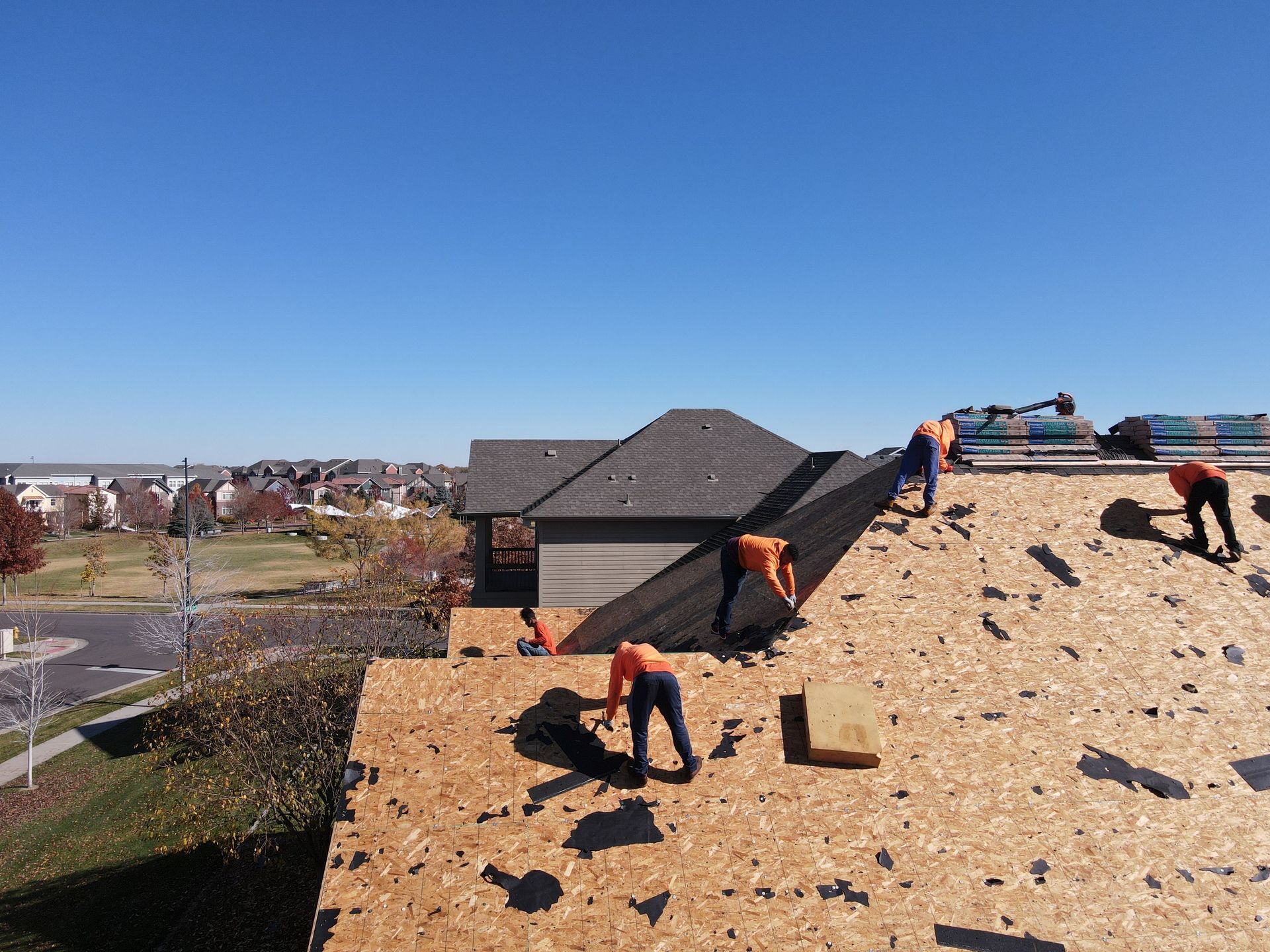
Replacement scope
Completed roof replacement photos help close RCV claims and recover depreciation.
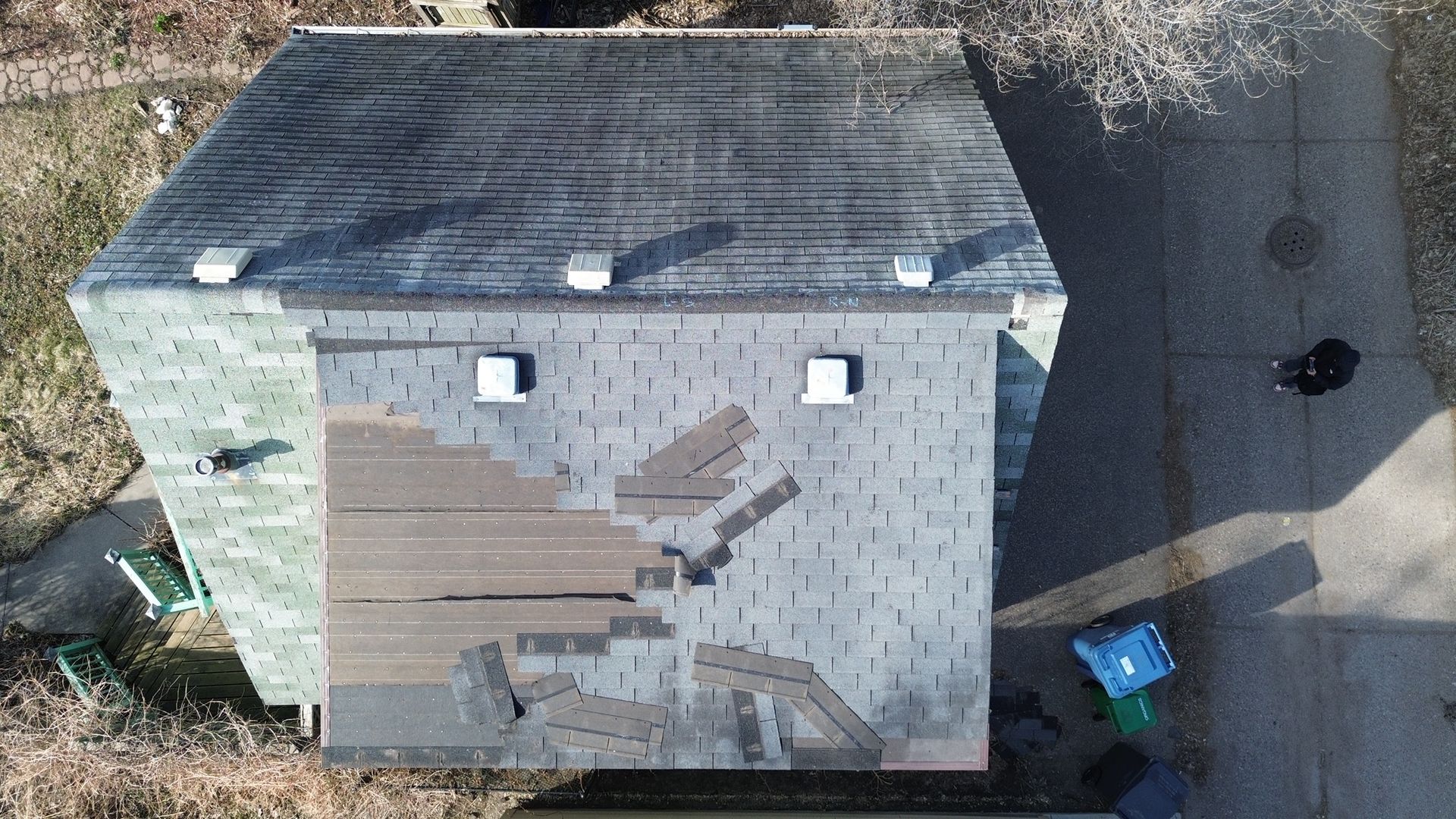
Wind damage
Lifted shingles, broken sealant bonds, ridge cap displacement, and flashing movement.
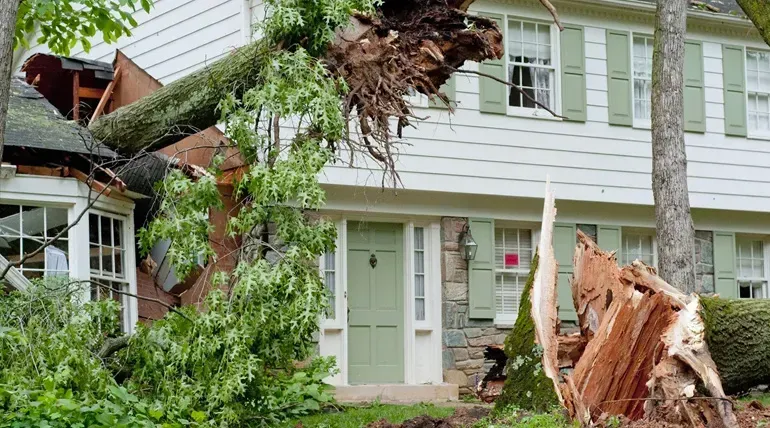
Tree and debris damage
Impact points, punctures, emergency stabilization, interior water entry, and deck damage.
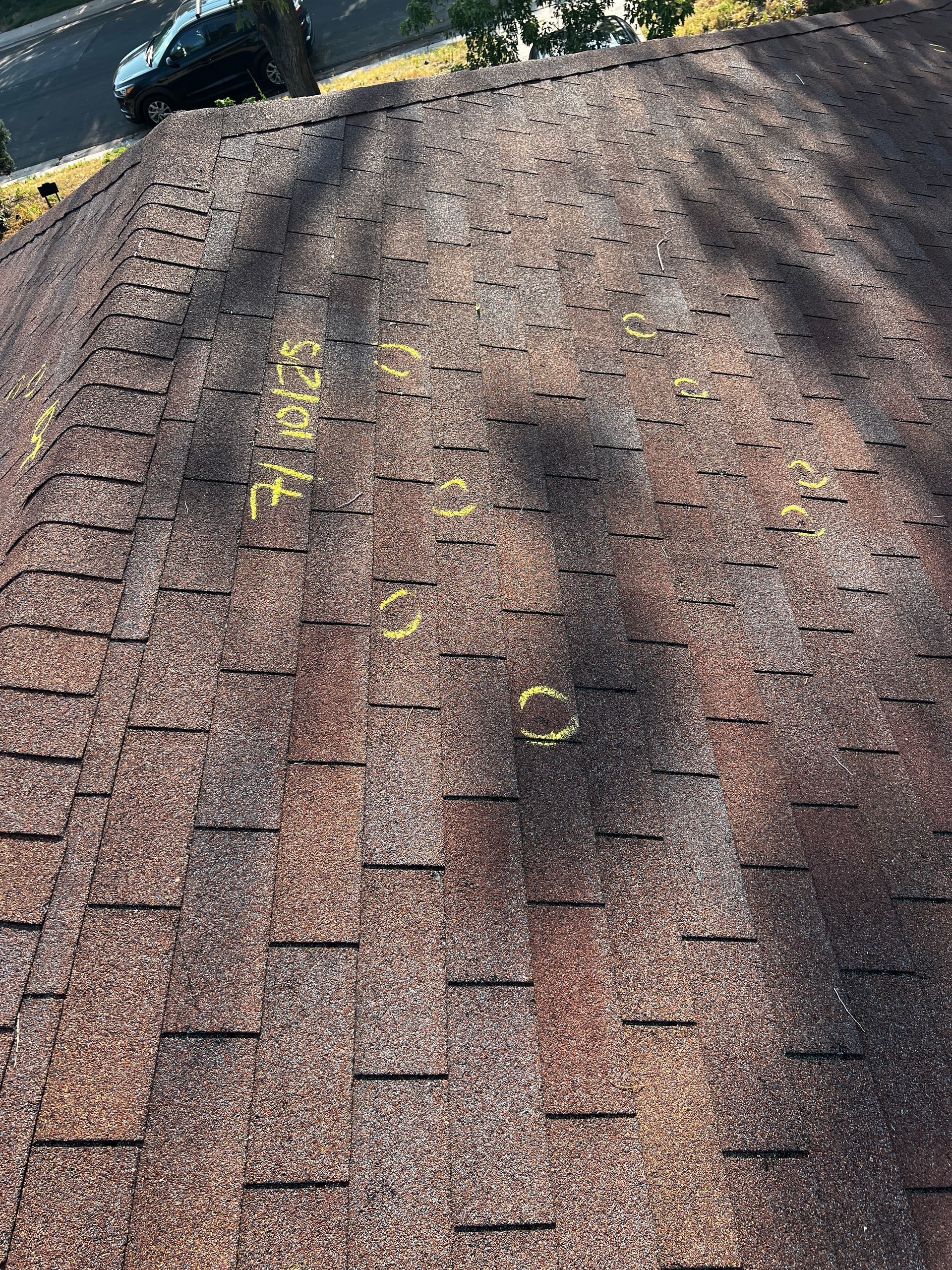
Hail damage
Bruising, fractures, soft metal dents, gutter impact, and collateral evidence.
Insurance payout: ACV vs RCV
Direct answer: ACV (Actual Cash Value) pays the depreciated value of your damaged materials upfront, with age and wear deducted, so your out of pocket is usually higher. RCV (Replacement Cost Value) pays the full cost to replace with new materials, with recoverable depreciation released after the work is completed, so you typically owe just your deductible.
| ACV (Actual Cash Value) | RCV (Replacement Cost Value) | |
|---|---|---|
| What it pays | Depreciated value, with age and wear deducted | Full cost to replace with new materials |
| When you get it | Upfront, minus depreciation | Recoverable depreciation released after work is completed |
| Your out of pocket | Usually higher | Typically just your deductible |
| Better for the homeowner | Less favorable | More favorable |
Key terms: what this page means when it says...
Understanding the language used in storm damage and insurance conversations helps homeowners ask better questions and interpret what they are being told more accurately.
Storm related damage
Damage caused by a sudden, identifiable weather event such as a hail storm, high wind event, or debris impact. Insurance policies typically treat this differently from gradual deterioration.
Wear and tear / deterioration
The progressive degradation of materials over time from age, UV exposure, and normal weather cycling. Insurance policies generally do not cover wear and tear, which is why the distinction between storm damage and aging is central to most claims.
Functional damage
Damage that reduces the performance, durability, or water shedding ability of an exterior system, even if it does not immediately cause a leak. Functional damage is the standard used in most insurance evaluations because it affects the system's ability to do its job.
Cosmetic damage
Damage that affects appearance but does not reduce performance. Some policies exclude cosmetic only damage, particularly on older roofs. Understanding whether damage is functional or cosmetic often requires professional inspection.
Actual Cash Value (ACV)
A settlement method that pays the depreciated value of damaged materials, what they are worth today, accounting for age and condition, rather than what it costs to replace them. ACV settlements frequently result in homeowner out of pocket costs beyond the deductible.
Replacement Cost Value (RCV)
A settlement method that pays the cost to replace damaged materials with new materials of like kind and quality, without deducting for depreciation. RCV coverage typically results in a two payment process: an initial ACV payment followed by a recoverable depreciation payment once repairs are completed.
Recoverable depreciation
The difference between ACV and RCV that is held back initially and released by the insurer after repairs are completed and documented. Homeowners on RCV policies need to complete repairs and submit documentation to receive this second payment. This is the most commonly uncollected payment in the entire claim process.
Scope of work
The detailed description of repairs or replacement items needed to restore the damaged exterior system to its pre loss condition. A clear, accurate scope of work is the foundation of any well documented claim.
Supplement
An update to the original scope of work that adds items discovered during the repair process that were not included in the initial estimate. Supplements are a normal part of the restoration process and do not indicate anything improper, they reflect the reality that some damage is only visible once work begins, and that initial adjuster scopes routinely omit legitimate covered items.
Deductible
The amount the homeowner pays out of pocket before insurance coverage applies. Deductibles for wind and hail claims are sometimes calculated as a percentage of the home's insured value rather than a flat dollar amount, worth confirming with your insurer before filing.
Xactimate
The industry standard software platform used by insurance adjusters to prepare damage estimates. Adjusters prepare their scopes in Xactimate format. A contractor who prepares estimates in the same format speaks the same language as the adjuster, which matters when supplements are submitted and when scope differences need to be resolved.
Public adjuster
A licensed professional who represents the homeowner's interests in an insurance claim negotiation. Distinct from a staff or independent adjuster who represents the insurer. If you believe the insurer's determination is inaccurate and want formal representation, a licensed public adjuster is the appropriate professional. Precision Exteriors is not a public adjuster and does not provide this service.
Xactimate: why it matters for your claim
Direct answer: Xactimate is the estimating software that virtually every insurance adjuster in the country uses to prepare damage scopes and calculate claim values. When your contractor prepares the estimate in the same Xactimate format, the adjuster can evaluate it line by line against their own scope, so missing items are immediately identifiable and the supplement conversation is precise rather than general.
Most homeowners have never heard of Xactimate before their first storm damage claim. By the end of the process, it is one of the most important things to understand. It is a line item database of repair and replacement costs that adjusters use as the standard reference for pricing every item in a storm damage claim, from shingle replacement to pipe boot installation to permit fees.
When a contractor prepares an estimate in a different format, a simple invoice, a flat price quote, a hand written scope, it does not translate directly into the insurer's Xactimate based evaluation. When Precision Exteriors submits a supplement, it arrives as a Xactimate estimate with specific line items, measurements, and local pricing that the adjuster can respond to directly.
NOAA wind speed documentation: On wind damage claims, Xactimate alone is not sufficient, the claim also requires establishing that a qualifying wind event occurred on the date of the loss. Precision Exteriors pulls NOAA weather station data for the event date and location and includes wind speed verification in the inspection documentation package, submitted to establish that sustained winds or gusts met the policy's covered peril threshold.
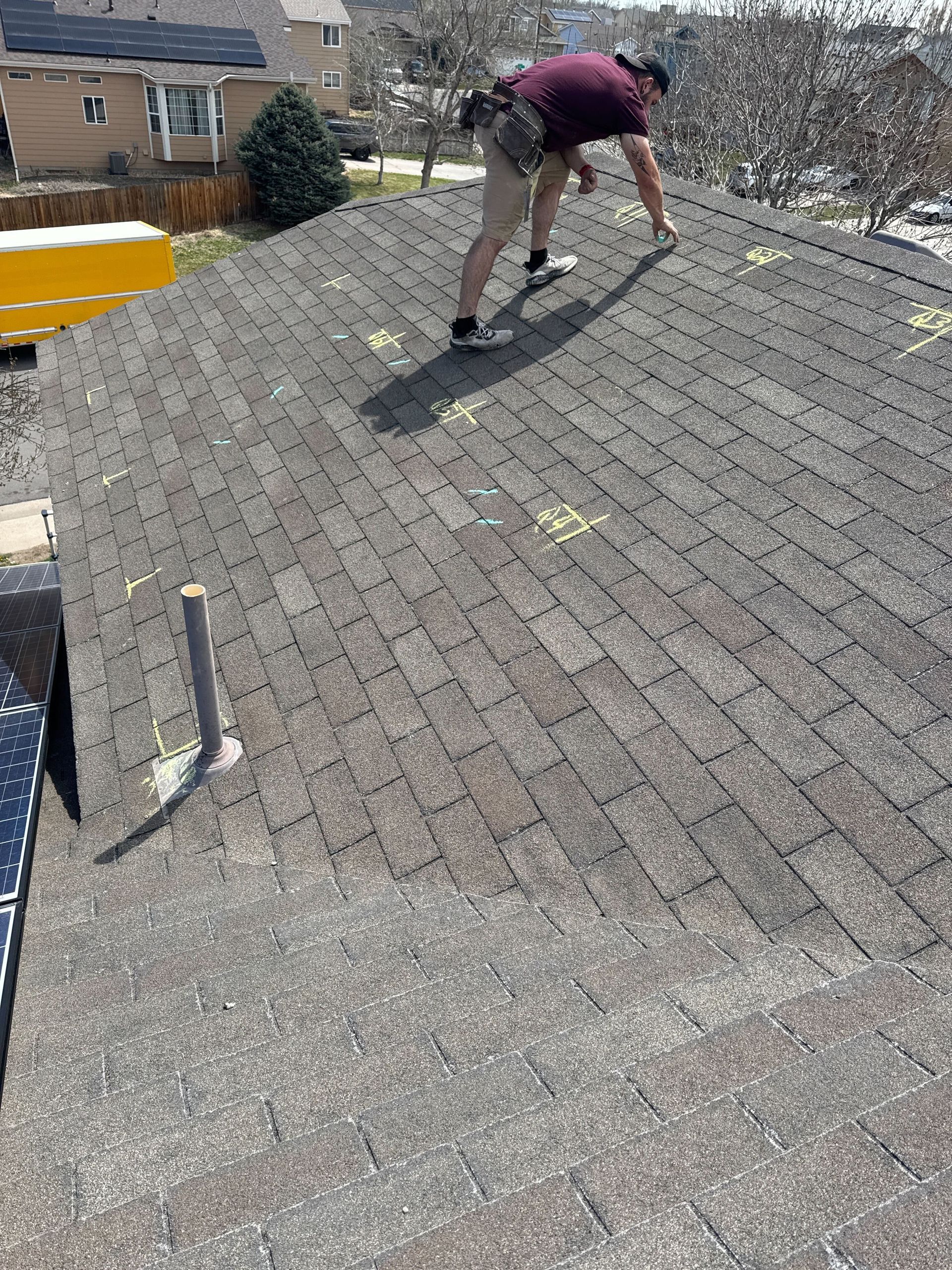 Documented inspection, Castle Rock
How storm damage insurance typically works
Direct answer: Most standard homeowner's insurance policies cover sudden damage from named storm perils, hail, wind, and falling debris being the most common for exterior claims. The process generally unfolds in seven stages, from the storm event and initial documentation through supplements and recovering depreciation.
The event and initial documentation
A storm event occurs. Ground level photos taken shortly after the event establish a timeline that is useful regardless of whether a claim is eventually filed. Note the date, photograph all sides of the home, and capture any obvious damage indicators, lifted shingles, dented soft metals, cracked siding panels, displaced gutters. Even photos that do not show obvious damage contribute to a documented timeline.
Professional inspection and documentation
Ground level observation misses most functional damage. Hail bruising, broken sealant bonds from wind, and impact damage to flashing and pipe boots are all invisible from the ground. A professional inspection evaluates every system, roofing, siding, gutters, windows, and associated components, at close range. A well documented inspection gives the adjuster organized, accurate information to work from, and inspection findings inform your filing decision.
Filing the claim
Once you decide to file, you contact your insurance carrier to report the loss. You provide the approximate date of the storm event, a description of what you observed, and any documentation gathered. The insurer opens a claim and assigns an adjuster. Keep a record of your claim number and the name of your adjuster, these become reference points for all subsequent communication.
The adjuster inspection
The insurer sends an adjuster, either a staff adjuster employed by the insurance company or an independent adjuster contracted for the inspection. Being present during the adjuster's inspection is your right and is generally advisable. Having your contractor present is also common and often beneficial. Precision Exteriors is available to meet adjusters on site for our inspection clients.
The initial estimate and ACV payment
After the adjuster inspection, the insurer issues a written estimate, the scope of work as they see it, and an initial payment. On RCV policies, this initial payment reflects the ACV of the damaged items: replacement cost minus depreciation. Review the estimate carefully against your inspection findings, items identified in your inspection but not included may need to be addressed through a supplement.
Supplements
A supplement is an updated scope of work submitted to the insurer when items are missing from the initial estimate or when additional damage is discovered during the repair process. Supplements are a standard and expected part of the restoration process. Precision Exteriors prepares and submits supplement documentation in Xactimate format when items in our agreed scope were not included in the initial insurer estimate.
Completing repairs and recovering depreciation
On RCV policies, completing repairs and submitting proof of completion to the insurer triggers the release of the held back recoverable depreciation. This is a critical step that homeowners frequently miss, failing to submit completion documentation means leaving money on the table. Precision Exteriors prepares this completion package on every RCV claim.
Peril specific supplement reference: what adjusters commonly miss
Direct answer: Initial adjuster scopes routinely omit legitimate covered items across all three major storm damage perils. The average storm damage claim increases 15-25% after full supplementing across all three perils. Each supplement is submitted in Xactimate format with supporting photos, measurements, and local building code citations.
Hail damage claims
- Pipe boot replacement , hail impact accelerates rubber boot degradation; frequently omitted despite being a functional failure item
- Drip edge replacement , required by local building code on any full replacement; routinely omitted
- Ice and water shield , required at eaves and in valleys per local building code when replacing a system that lacked it
- Ventilation corrections , required when existing ventilation does not meet current code; frequently omitted
- Permit fees , required on every replacement; routinely omitted
- Overhead and profit , required on multi trade projects; frequently challenged by adjusters
- Gutter guards , frequently omitted when the existing system had gutter guards damaged in the same event
Wind damage claims
- Ridge cap full replacement scope , frequently scoped as partial repair when full replacement is warranted by displacement extent
- Step flashing and counter flashing , frequently omitted when separation is partial rather than complete
- Gutter fascia repair , frequently omitted when gutter pullout has damaged the fascia board behind it
- Drip edge , required on any full replacement triggered by wind scope; frequently omitted
- Permit fees , required on any replacement; routinely omitted
- Overhead and profit , required on multi system wind projects
Debris and tree damage claims
- Structural repair scope , rafter and deck damage beneath the visible impact zone frequently omitted when adjuster scopes from the surface only
- Full deck replacement , partial replacement scoped when full replacement is warranted by extent of moisture or impact damage
- Drip edge , required on any full replacement; frequently omitted
- Ice and water shield , required on full replacement when system lacked it; frequently omitted
- Permit fees , required; routinely omitted
- Interior consequential damage , ceiling framing, insulation, and drywall damage from water intrusion through the breach point
- Emergency stabilization costs , tarping and boarding submitted as mitigation expense; frequently not included in the initial scope
Should you file a claim? Thinking it through
Direct answer: Filing a claim is not always the right answer, and a professional inspection helps you make this decision with information rather than guesswork. Filing generally makes more sense when damage is widespread, repair costs significantly exceed your deductible, and documentation supports a clear storm related pattern.
Filing is generally more likely to make sense when
- Damage is widespread across one or more exterior systems
- Repair or replacement costs are likely to significantly exceed your deductible
- Multiple systems are affected, roofing, siding, gutters, windows, in the same event
- Documentation supports a clear storm related damage pattern
You may want to pause before filing when
- Damage appears to be primarily cosmetic
- The estimated repair scope is close to your deductible amount
- The system is stable and monitoring is a reasonable short term approach
- You want inspection findings before making a filing decision
One practical consideration: some insurers track claim frequency, and multiple claims in a short period can affect your renewal terms or premium. This does not mean you should not file legitimate claims, it means the decision is worth thinking through rather than made reflexively. A free inspection from Precision Exteriors gives you the honest damage assessment needed to make this calculation before committing to anything.
What Precision Exteriors provides, and what we don't
Direct answer: We provide free thorough exterior inspections, Xactimate scopes, NOAA wind speed verification, adjuster meeting attendance, supplement preparation, and recoverable depreciation completion packages. We do not file claims on your behalf, negotiate with your carrier, or act as a public adjuster.
What we provide:
- Free thorough exterior inspections with close range photo documentation
- Clear findings that distinguish storm damage from wear and pre existing conditions
- Detailed scopes of work in Xactimate format accurate enough to support the claim and repair process
- NOAA wind speed verification documentation on wind damage claims
- Availability to meet adjusters on site during their inspection
- Supplement preparation in Xactimate format when items in our scope are missing
- Project completion documentation for recoverable depreciation release on RCV policies
What we do not do:
- File claims on your behalf
- Negotiate with your insurance carrier
- Act as a public adjuster or insurance representative
- Guarantee coverage outcomes
- Provide legal or policy specific advice
If you feel the insurer's determination is inaccurate and want formal representation in the claim process, a licensed public adjuster is the appropriate professional. Precision Exteriors completes the restoration work regardless of whether you use a public adjuster or handle the process yourself.
Hail damage documentation, Castle Rock
Castle Rock roof insurance claim help, by the numbers
Direct answer: Castle Rock homeowners bring a Xactimate fluent contractor into the claim from the first inspection because local storm documentation, supplement detail, and recoverable depreciation collection can materially affect the final outcome.
The Precision Warranty
A 10 year workmanship guarantee, in writing
Direct answer: Every qualifying installation is backed by the Precision Warranty, a 10 year workmanship warranty. Combined with the enhanced manufacturer warranty our Owens Corning Preferred and CertainTeed Shingle Master Installer certifications unlock, you get bumper to bumper protection on labor and materials.
10 Year Workmanship Warranty
Our installation quality is covered for a full decade, in writing.
Certified Installer Manufacturer Warranty
Owens Corning Preferred and CertainTeed Shingle Master Installer certifications enhance your material warranty.
Bumper to Bumper Peace of Mind
Labor and materials covered end to end, by a licensed Colorado contractor since 2016.
Storm damage services and learning
Direct answer: A single Castle Rock storm event can damage roofing, siding, gutters, and windows at once. Start with the Castle Rock service area page, the storm damage hub, or a sibling service page for hail damage and documented roof inspections.
Hail damage Castle Rock
Bruised or fractured shingles, dented gutters, and cracked siding from Colorado hail.
Roof inspection Castle Rock
Free documented inspection before you decide whether to file a claim.
Storm damage
Roof, siding, gutters, and windows, full storm restoration with insurance support.
Castle Rock service area
Local roofing and exterior restoration details for Douglas County homeowners.
Learning guide
Want the deeper walkthrough on coordinating roofing, siding, and gutters in one claim? Ask Precision Exteriors for the multi trade storm damage insurance claim guide during your free Castle Rock inspection.
Storm damage insurance claims: frequently asked questions
What is the difference between ACV and RCV coverage?
What is recoverable depreciation and how do I collect it?
Does scheduling an inspection mean I have to file a claim?
Can storm damage affect more than one exterior system?
Is cosmetic damage treated differently than functional damage?
Do I need to be home when the adjuster inspects?
What should I do if a contractor offers to waive my deductible?
How long does the insurance claim process typically take?
Can I use any licensed contractor or does my insurer assign one?
What should I avoid after a storm event?
Start your roof insurance claim with a free inspection
Precision Exteriors Restoration has handled storm restoration across Castle Rock, Denver, and the Front Range since 2016. We document the damage, prepare Xactimate estimates, meet your adjuster on site, and collect recoverable depreciation. Free, no pressure damage assessment.