
Castle Rock's licensed roofing contractor and exterior restoration specialist
Precision Exteriors Restoration is a licensed roofing and exterior contractor serving Castle Rock, Colorado. Palmer Divide storm, hail, and wind experts since 2016, with free, documented inspections and a written, no-obligation estimate.
Book your free inspection
Tell us about your Castle Rock property and we will document findings with photos and a plain-language report.
Castle Rock's licensed roofing and exterior restoration contractor
Direct answer: Precision Exteriors Restoration is a licensed roofing and exterior contractor serving Castle Rock, Colorado (Colorado License #0248041). We are Castle Rock's Owens Corning Preferred roofing contractor and CertainTeed credentialed installer, with 20+ years of combined experience, a 100+ person team, and more than 3,899 completed projects across the Denver Metro and Front Range.
Nearby service areas: Parker, Highlands Ranch and Centennial.
Our Castle Rock services cover every exterior system: roof inspections, roof repair, roof replacement, emergency roofing, siding repair and replacement, gutter repair and replacement, window repair and replacement, and comprehensive storm damage restoration. All work is backed by a 10-year workmanship warranty. All inspections and estimates are free with no obligation.
Castle Rock sits atop the Palmer Divide, the topographic ridge that separates the South Platte River drainage from the Arkansas River drainage, at a base elevation of approximately 6,200 feet. That elevation and geographic position create an exterior damage environment that is distinctly different from the northern Denver Metro. Castle Rock receives heavier average snow loads than Denver, experiences more severe sustained wind events from both the north and south along the Palmer Divide corridor, and sits at an elevation where UV intensity is meaningfully higher than at sea level, all on top of the same Hail Alley storm frequency that affects the entire Front Range.
The majority of Castle Rock's residential development is also relatively recent. Master-planned communities like The Meadows, Terrain, Crystal Valley Ranch, and Cobblestone Ranch represent significant newer housing stock, but newer construction is not immune to the hail, wind, and UV stressors that define this market.
How can we help you help with?
Direct answer: Not sure where to begin? Use this guide to get to the right Castle Rock service page for your situation. If you are uncertain, a free documented inspection is the cleanest first step, it tells you what your property actually needs before any commitment is made.
Why Castle Rock homeowners choose Precision Exteriors
Direct answer: Castle Rock's rapid growth has attracted a large number of roofing and exterior contractors, both local and out-of-state storm chasers who follow hail events south along the Front Range. Here is what distinguishes a licensed, permanently operating roofing contractor in Castle Rock from those operations.
Licensed and verifiable
Colorado License #0248041, verifiable through the Colorado Division of Professions and Occupations. Any contractor working on your Castle Rock home should be able to provide a license number you can independently confirm. Many cannot.
Manufacturer-credentialed installation
As an Owens Corning Preferred Contractor and CertainTeed credentialed installer, we meet manufacturer installation quality standards that unlock warranty programs not available through uncredentialed contractors, including the Owens Corning Platinum Protection warranty on qualifying full-system installations.
Locally owned, permanently here
We are a Denver Metro company with a permanent office and a permanent team. We are not chasing the storm season. When you need us after the job is done, warranty concern, follow-up inspection, new project, we answer.
Inspections first, no pressure
Every Castle Rock project begins with a free inspection. We document findings, explain what they mean, and give you a straight recommendation, including telling you when repair is the right answer instead of replacement.
10-year workmanship warranty
All completed work is covered. Every project, every time.
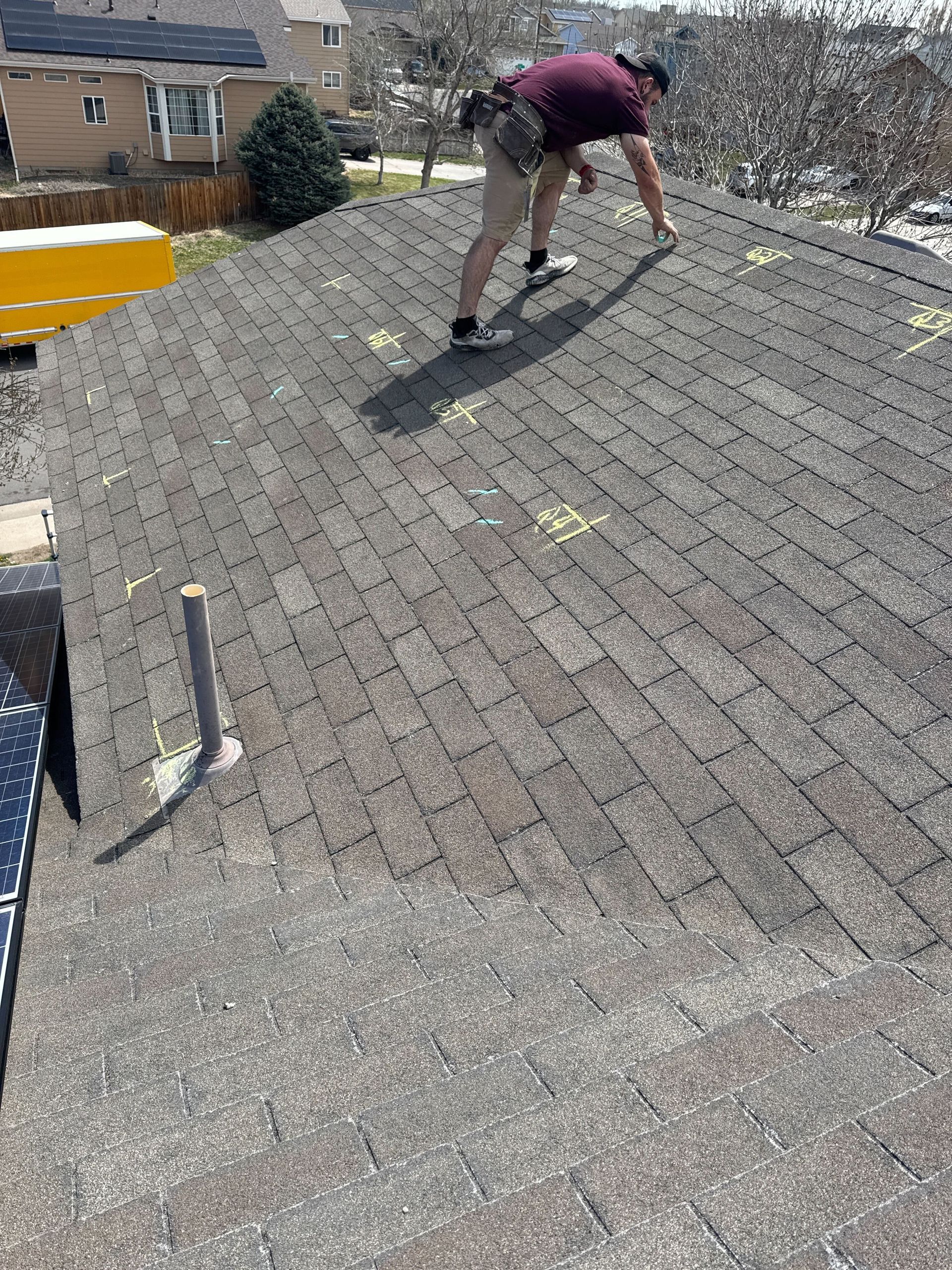 On-site inspection, Castle Rock, CO
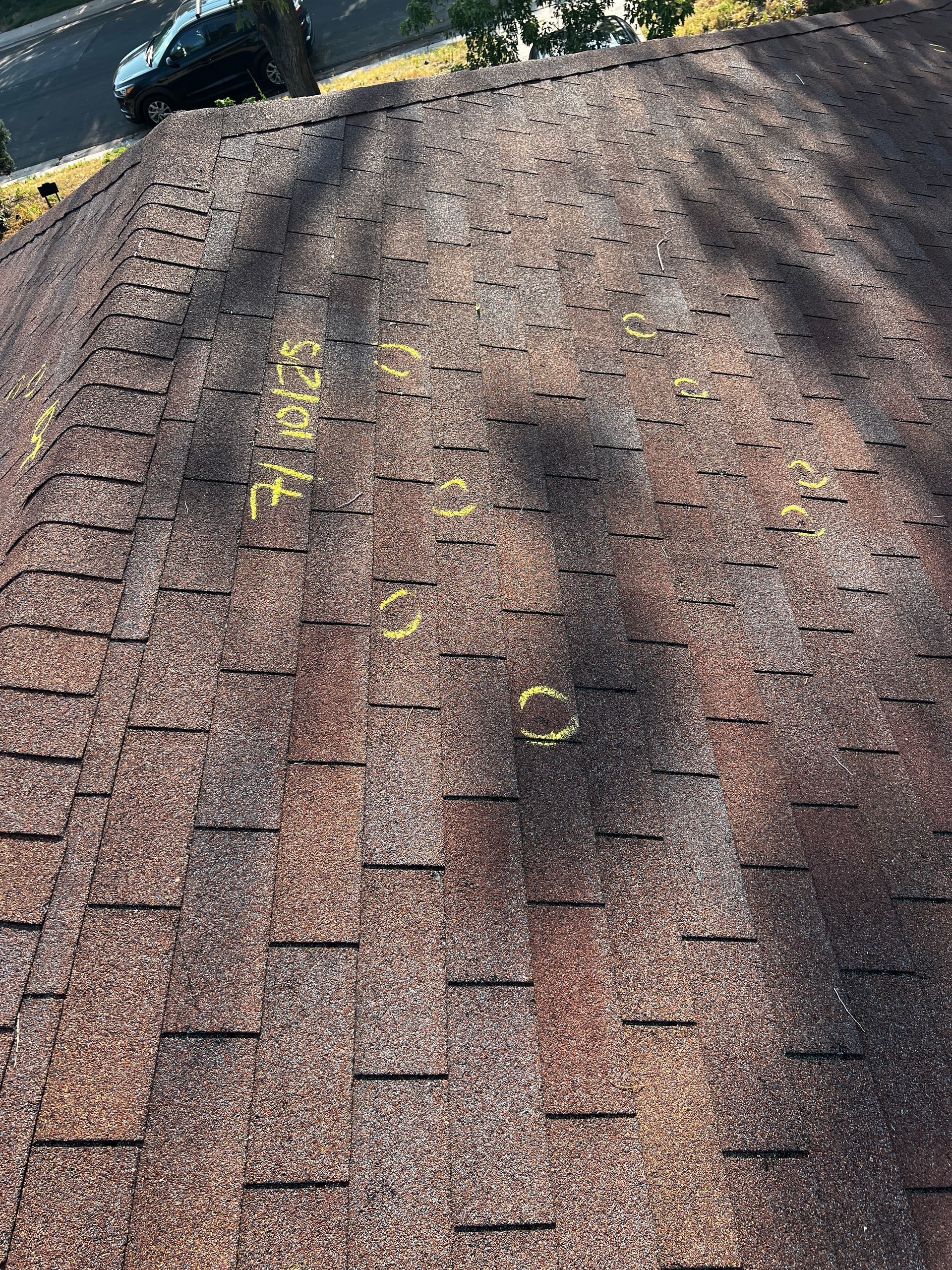 Storm exposure, Palmer Divide
Castle Rock's storm exposure, explained
Direct answer: Castle Rock's position on the Palmer Divide creates exterior damage conditions that are more demanding than most Denver Metro communities in several specific ways: higher-elevation UV, a wind corridor running both directions, heavier snow loads, and full Hail Alley frequency.
Castle Rock's base elevation is nearly 1,000 feet higher than Denver. At that elevation, UV intensity is approximately 30% higher than at sea level. Every exterior material degrades faster than manufacturer ratings assume; practical roofing system lifespan in Castle Rock is closer to 18 to 20 years.
The Palmer Divide runs roughly east-west through Douglas County. Castle Rock experiences both strong northerly winds from cold fronts and southerly winds from Palmer Divide-influenced circulation. Sustained high wind events are more frequent and severe than in northern Metro communities.
Castle Rock's elevation and Palmer Divide position produce heavier average annual snowfall than Denver. Snow load stress, particularly on lower-pitch roofs common in newer Castle Rock construction, is a relevant factor in long-term structural performance.
Castle Rock sits within the Hail Alley storm corridor. The Front Range storm track that produces the Denver Metro's most significant hail events extends south through Douglas County, compounded by the elevation, wind, and snow load factors above.
Roofing services in Castle Rock, CO
Direct answer: Castle Rock roofing systems face a demanding combination, Palmer Divide wind exposure, elevated UV at 6,200 feet, Hail Alley hail frequency, heavier snow loads, and significant freeze-thaw cycling. As Castle Rock's Owens Corning Preferred roofing contractor, every project begins with a free inspection covering all components: shingles, underlayment, flashings, pipe boots, ridge caps, gutters, fascia, soffit, and ventilation. Wind-exposed ridge lines and south- and west-facing slopes are the first areas we evaluate closely on every Castle Rock inspection.
Roofing Castle Rock
Full roofing systems built for the Palmer Divide's multi-stressor environment.
Roofing Service Castle Rock →Roof inspection Castle Rock
Free, documented, no obligation. Photo documentation and plain-language findings.
Roof Inspection Castle Rock →Roof repair Castle Rock
Targeted fixes for verified issues: flashing, pipe boots, ridge caps, leak diagnosis.
Roof Repair Castle Rock →Roof replacement Castle Rock
Full system installation with a Class 4 impact-resistant shingle option.
Roof Replacement Castle Rock →Emergency roofing Castle Rock
Tarping and immediate stabilization for active leaks and storm-created openings.
Storm Damage Castle Rock →Hail damage Castle Rock
Full Hail Alley assessment with documentation for your insurance claim.
Hail Damage Castle Rock →Wind damage Castle Rock
Palmer Divide wind exposure is the area's defining damage pattern.
Wind Damage Castle Rock →Debris & tree damage
Fallen tree and debris impact response and documentation.
Debris & Tree Damage Castle Rock →Full system installation, Class 4 option
Direct answer: Full roofing system replacement from tear-off through final inspection: deck verification, ice and water shield, synthetic underlayment, drip edge, complete flashing work, pipe boot replacement, Owens Corning or CertainTeed shingle installation, ridge cap, and ventilation assessment. Both standard architectural shingles and Class 4 impact-resistant shingles are available.
On Class 4 shingles for Castle Rock specifically: given Castle Rock's position at the convergence of Hail Alley frequency, elevated UV, and significant wind exposure, Class 4 impact-resistant shingles are the material upgrade most worth discussing at every Castle Rock replacement. Tested under UL 2218 for hail resistance and rated for better wind performance than standard architectural shingles, Class 4 is the right choice for Castle Rock's specific multi-stressor environment. The cost premium is modest (typically 10 to 20%), Colorado insurance carriers frequently offer premium discounts that offset a meaningful portion of that, and the long-term benefit is greater here than in lower-elevation, lower-wind-exposure Metro communities. Owens Corning Platinum Protection warranty available on qualifying installations. For a full breakdown, see our roof replacement in Castle Rock guide.
Roof Replacement Castle Rock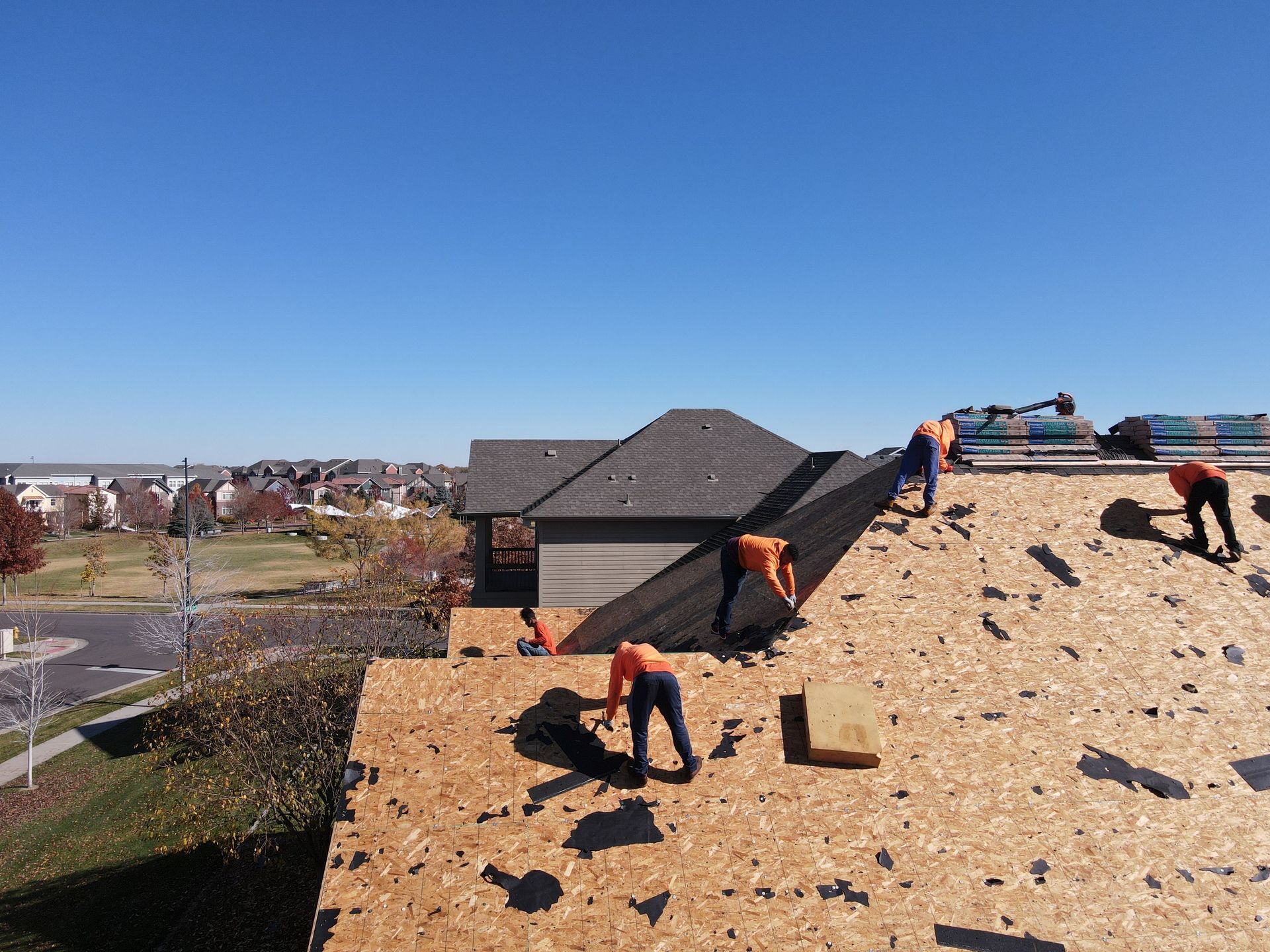 Completed roof replacement, Front Range
After a Castle Rock hail storm or wind event, what to do
Direct answer: Storm damage restoration in Castle Rock involves the full range of Front Range damage patterns, Hail Alley hail events, Palmer Divide wind exposure, and in winter, snow load and ice dam scenarios that are less common in lower-elevation Metro communities. Here are the five steps to take after a storm.
- 1
Document from the ground. Walk the perimeter of your home and photograph all four sides, roof lines, ridge caps, gutters, downspouts, siding, window frames, AC unit, and soft metals. Pay particular attention to south- and west-facing elevations, which receive the most direct hail and wind exposure in Castle Rock's storm pattern.
- 2
Do not climb on the roof. Leave close assessment to a licensed roofing contractor.
- 3
Schedule a free inspection promptly. Inspections conducted close to the event document conditions with a clear date relationship, important for insurance. Castle Rock's active storm season means waiting creates risk of additional weathering before documentation.
- 4
Don't commit under pressure. Legitimate licensed contractors do not require same-day decisions. Castle Rock's growth trajectory makes it an attractive market for out-of-state storm chasers, any contractor applying same-day pressure is a red flag.
- 5
Understand your coverage before filing. An inspection tells you the scope of damage and lets you decide whether filing makes sense given your deductible before committing to anything.
Castle Rock roof facts every homeowner should know
Castle Rock sits on the Palmer Divide, where elevation, a two-way wind corridor, heavier snow, and Hail Alley frequency put exterior systems under more stress than most of the Denver Metro.
Castle Rock roof insurance claims, what to know
Direct answer: Insurance-supported roof replacement is a regular part of the Castle Rock market given the frequency and severity of storm events in Douglas County. The three points below matter most for Castle Rock homeowners.
ACV vs. RCV coverage
Coverage determines whether your insurer pays depreciated or full replacement value. On RCV policies, the depreciation holdback is released after work is completed and documented, a step many homeowners miss, leaving money uncollected.
Wind damage documentation
Castle Rock's elevated wind exposure means wind-only damage claims, without accompanying hail, are more common here than in northern Metro communities. A professional inspection that clearly identifies wind-related damage patterns (ridge cap displacement, directional shingle lift on windward slopes, flashing disturbance at transitions) provides the documentation foundation for a supportable wind damage claim.
Deductible waiving is illegal in Colorado
Any contractor offering to waive your deductible is creating legal exposure for you, this is a Colorado statute.
Siding, gutters, and windows in Castle Rock
Direct answer: Castle Rock's combination of Hail Alley hail, Palmer Divide wind, heavier snow, and elevated UV stresses every exterior system, not just the roof. We evaluate siding, gutters, and windows on every comprehensive storm assessment.
Siding Castle Rock
Vinyl siding is common across Castle Rock's newer construction and is vulnerable to hail cracking and wind-driven displacement. James Hardie fiber cement is a common upgrade for south- and west-facing elevations.
Siding services →Gutters Castle Rock
Hail dents aluminum gutters, wind pulls sections from fascia, and heavier snowmelt places high spring drainage demand. Ice dam formation is more prevalent at Castle Rock's elevation.
Gutter services →Windows Castle Rock
Wide temperature swings, including rapid warming from chinook-influenced conditions, accelerate seal failure between panes. Window evaluation is included in every storm assessment.
Window services →Multi-family Castle Rock
We serve all Castle Rock neighborhoods and surrounding Douglas County communities for residential and multi-family exterior restoration.
Multi-family services →Castle Rock neighborhoods, storm exposure by area
Direct answer: Castle Rock's neighborhoods have different storm exposure profiles based on their elevation, terrain openness, proximity to the Palmer Divide ridgeline, and construction era. Here is how the major communities compare.
The Meadows
One of Castle Rock's largest and most established master-planned communities, sitting on elevated terrain with relatively open lot layouts in many sections. The Meadows' elevation and limited natural windbreaks make it one of the higher wind-exposure neighborhoods in Castle Rock. Roof inspections after Palmer Divide wind events are particularly warranted here.
Terrain
Terrain's position on elevated ground east of I-25 exposes it to the prevailing storm approach from the southwest and south. Newer construction means roofing systems are mid-lifecycle, but the open terrain amplifies hail and wind impact on exposed elevations.
Crystal Valley Ranch
Located in the southern portion of Castle Rock, Crystal Valley Ranch sits squarely in the Palmer Divide wind corridor with full exposure to storm systems moving north from the south. Both wind and hail events are prominent here.
Cobblestone Ranch
Among Castle Rock's most southern communities, Cobblestone Ranch sits at the southern edge of the Douglas County storm track. The Palmer Divide influence is fully present, and homes here should be assessed after every significant Front Range hail and wind event.
Downtown / historic Castle Rock
The original Castle Rock neighborhoods near the butte and downtown core have older housing stock with more complex roofline configurations, brick construction, steep pitches, multiple chimney penetrations, and mature trees. Older flashing systems and pipe boots in these homes are common sources of water intrusion.
Founders Village, Plum Creek
Mid-cycle housing stock in these neighborhoods. Consistent hail and wind exposure with somewhat more sheltering than the fully exposed newer developments. Annual inspection is still the appropriate maintenance cadence.
Cost of roof replacement in Castle Rock, what drives the number
Direct answer: The accurate answer to "how much does a roof replacement cost in Castle Rock?" comes from a free inspection of your specific property. The factors below determine the actual number.
Roof size and pitch
Castle Rock's newer master-planned communities include many homes with varied pitches, steeper pitches require more safety measures and slower installation. Custom homes near the butte and in older neighborhoods often have more complex configurations.
Complexity
Every chimney, valley, skylight, dormer, and plane change adds flashing work and cut waste. Castle Rock's custom and semi-custom construction in many communities means complexity varies significantly property to property.
Material selection
Standard architectural shingles vs. Class 4 impact-resistant shingles, typically a 10 to 20% cost difference. For Castle Rock, the multi-stressor environment (hail plus wind plus UV at elevation) makes Class 4 the right material conversation at every replacement.
Deck repairs
Identified after tear-off and priced on actual area. Castle Rock's higher snow loads mean deck moisture damage from ice dams is more common than in lower-elevation Metro communities.
Insurance coverage
ACV vs. RCV policy terms, deductible, and recoverable depreciation collection all affect actual out-of-pocket cost. We walk through this at the estimate stage for every storm-related project.
We take the risk off your shoulders
Every Castle Rock project begins with a free inspection and is backed in writing. Between manufacturer warranties, hands-on insurance help, and a straight recommendation, the path forward is low risk from day one.
10-year workmanship warranty
All completed work is covered, every project, every time, in writing.
We handle your insurance claim
We document the damage, identify wind and hail patterns, and walk through the insurance process at every stage of storm-related Castle Rock projects.
Inspections first, no pressure
We document findings, explain what they mean, and tell you when repair is the right answer instead of replacement.
Rated 4.6 stars by Front Range neighbors
Real, verified Google reviews from Precision Exteriors Restoration customers. We are proud of an honest 4.6 stars rating built one roof at a time. Read our reviews.
"The Precision team was great and provided me with great customer service and results. Special thanks to Anthony for helping me through the insurance process in making sure the details were covered."
"Great quality work, friendly service. Fast and clean service."
"They showed up on time, they knew their stuff, they did the work, and they did it well."
"Could not give Precision Exteriors a higher recommendation. Professional, timely, and great to work with."
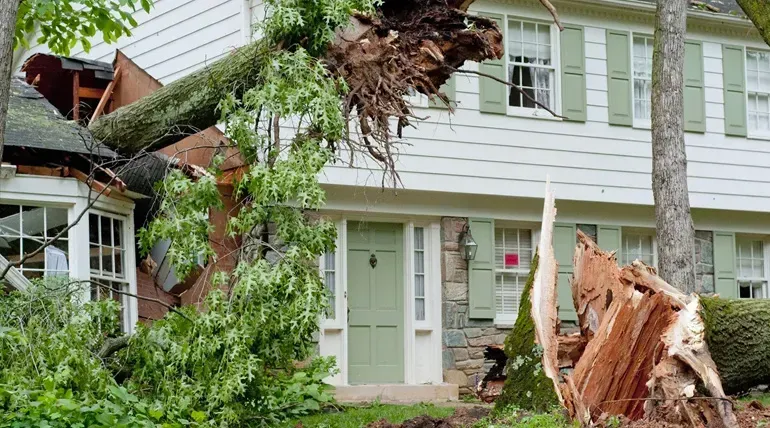 Storm response, Douglas County
Castle Rock and the Front Range
Direct answer: Precision Exteriors Restoration serves all Castle Rock neighborhoods and surrounding Douglas County communities, and the broader Denver Metro and Front Range, from our downtown Denver office at 999 18th St Unit 3000.
We proudly serve the Denver Metro Area and Front Range communities. License #0248041.
The Precision Warranty
Protected in writing, for the long run
Every Precision Exteriors Restoration project is backed in writing, so your Castle Rock home stays protected long after our crew leaves.
10-Year Workmanship Warranty
The Precision Warranty covers the quality of our installation on every completed Castle Rock project, in writing.
Manufacturer-Backed Warranty
As an Owens Corning Preferred Contractor and CertainTeed credentialed installer, we register manufacturer warranties most contractors cannot offer, including Owens Corning Platinum Protection on qualifying installations.
Licensed, Insured, Local Since 2016
Colorado License #0248041, BBB A+ accredited, with 3,899+ completed Denver Metro and Front Range projects.
Castle Rock exterior restoration FAQs
How is Castle Rock's storm exposure different from Denver or Aurora?
Do I need a roof inspection if I don't see damage from the ground after a Castle Rock storm?
How long does a roof last in Castle Rock, CO?
Are Class 4 shingles worth it for Castle Rock homes?
Does homeowner's insurance cover roof replacement in Castle Rock?
Are inspections and estimates free?
Start with a free Castle Rock inspection
Precision Exteriors Restoration is Castle Rock's licensed, locally owned roofing and exterior restoration contractor. Whether you need a post-storm inspection, a repair estimate, or a replacement quote, start with a free inspection. No pressure. No obligation.