
Insurance claims for multi-trade storm damage : roof, siding, gutters, and windows in Denver
When a Colorado hailstorm hits, damage rarely stops at the roof. This guide shows Denver homeowners how to file one coordinated insurance claim across roofing, siding, gutters, and windows, so nothing covered gets left behind. Free inspection with a written report in 24 hours.
Book your free inspection
Pick a time and we send a written report with photos within 24 hours, ready for your insurer.
Understanding insurance claims for multi-trade storm damage
Direct answer: When a Colorado hailstorm or high-wind event damages your roof, siding, gutters, and windows in the same event, file one coordinated insurance claim for all systems rather than several separate claims. Homeowners who coordinate multi-trade restoration under a single claim see faster settlements, better coverage coordination, one deductible instead of several, and more efficient repair timelines.
Precision Exteriors Restoration is a licensed roofing contractor specializing in insurance claim coordination and multi-trade storm damage restoration serving Denver, Aurora, and the Front Range. Founded in 2016, we have completed over 3,000 exterior restoration projects, with 200+ in 2024 alone following severe hailstorms in the Denver metro area. We hold Owens Corning Preferred Contractor and CertainTeed Shingle Master Installer certifications, maintain BBB A+ accreditation, and are NRCA members.
When your home is damaged by hail, wind, or storm, understanding how to navigate insurance claims for multiple exterior systems, roofing, siding, gutters, and windows, is critical to maximizing your settlement and restoring your property efficiently. Typically all of these systems are damaged in the same event, which creates a unique opportunity: filing one coordinated insurance claim for all systems rather than managing multiple separate claims with different adjusters and contractors.
The May 2024 Denver metro hailstorm resulted in approximately $1.9 billion in losses across Colorado. The May 2017 event caused $2.3 billion in damage. Many homeowners mistakenly believe insurance will only pay for repair of visible damage, or treat each system as a separate claim. Understanding the mechanics of multi-trade claims, how RCV and ACV work, why permit pulling matters, how recoverable depreciation functions, can mean the difference between a settlement that covers full restoration and one that leaves homeowners $5,000 to $15,000 or more short.
This guide explains multi-trade insurance claim mechanics, documentation requirements, and strategies to maximize your settlement while coordinating roofing, siding, gutter, and window repairs under one efficient restoration project. For the broader picture, start with our insurance and storm damage guidance hub.
RCV vs ACV: replacement cost value versus actual cash value
Direct answer: Replacement Cost Value (RCV) pays the full cost to replace damaged materials with new like-kind materials at current prices. Actual Cash Value (ACV) is the replacement cost minus depreciation for age and wear. Most RCV policies pay in two stages: an initial ACV payment at approval, then recoverable depreciation after the work is completed and documented.
RCV pays for new, like-kind materials
If your roof, siding, gutters, or windows warrant replacement, RCV pays the full cost of new Class 4 shingles, new fiber cement siding, new gutters, and new impact-resistant windows, without deducting for age or wear. This is the coverage that funds a complete restoration.
ACV deducts depreciation for age
ACV is replacement cost minus depreciation based on the age of the materials. An older roof, siding, or gutter system may be valued at significantly less than the cost of new materials, which is why an ACV-only outcome can leave a large gap between your check and the real repair bill.
Permit pulling and Colorado insurance law
Direct answer: Colorado law and insurance policies require building permits for roofing, siding, window, and gutter replacements. If your contractor pulls every required permit, your settlement stays at full RCV. If permits are skipped, carriers may downgrade your claim from RCV to ACV, reducing your settlement by $5,000 to $15,000 or more depending on scope.
When you replace these systems, the work must be permitted and inspected by your local jurisdiction. Precision pulls the required permits on every replacement, which protects your RCV settlement and keeps your claim compliant. Skip the permit, and you risk both the RCV downgrade and the loss of valuable Colorado incentives.
Colorado Revised Statute § 10-4-110.8 mandates that homeowners receive a 20 to 30% insurance discount when they install Class 4 impact-resistant shingles, the Denver standard. This discount is automatically applied when your roof replacement is permitted and certified. Skip the permit, lose the discount.
Colorado Revised Statute § 6-22-105 explicitly prohibits deductible waivers on insurance claims. Many storm-chasing contractors offer to waive your deductible as an incentive. This is illegal in Colorado. Always verify your contractor is Colorado-licensed at dora.colorado.gov before engaging.
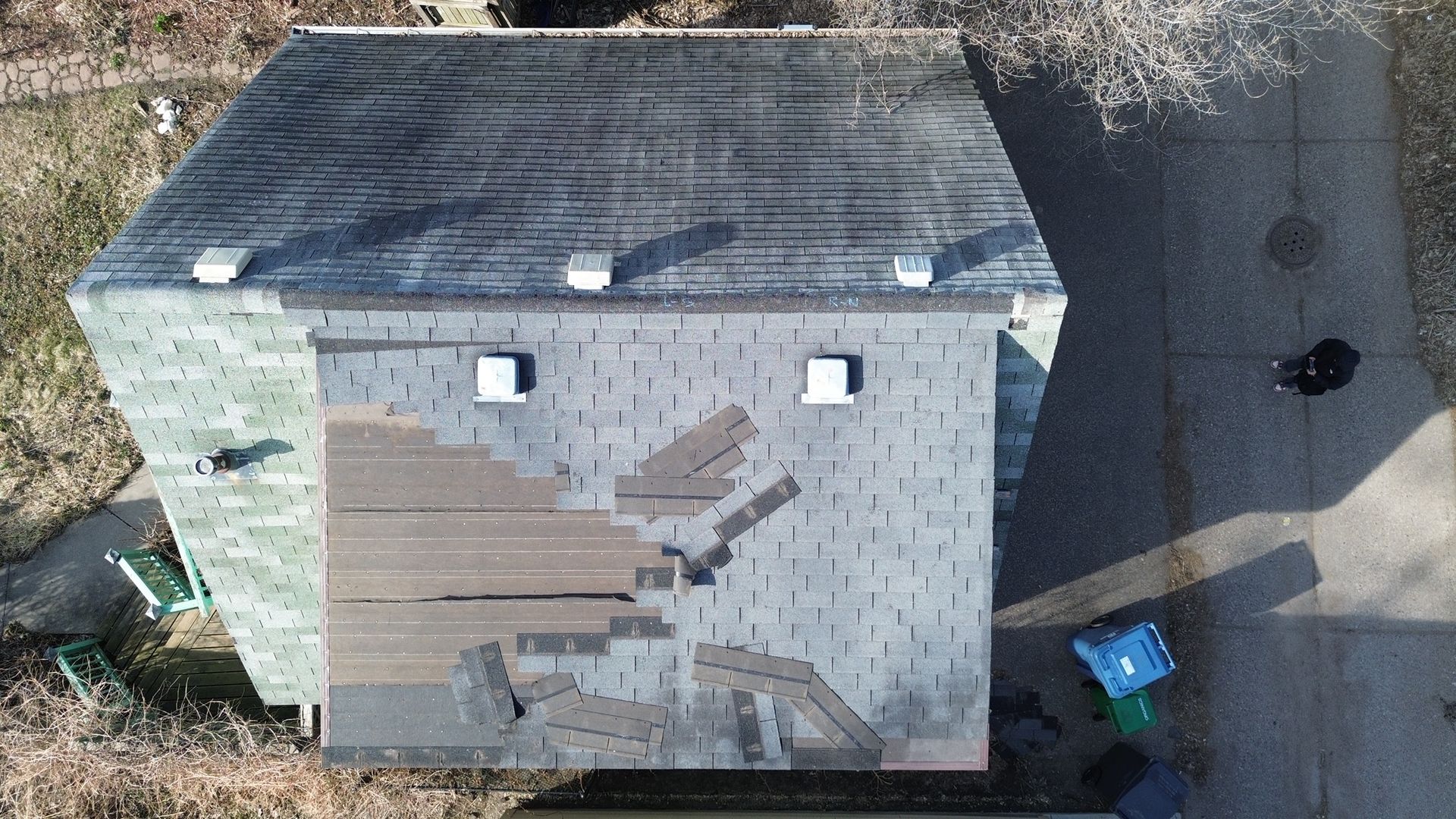 Documented storm damage, Denver metro
Why Denver homes file multi-trade claims
Denver sits in Hail Alley, where storm frequency and high-altitude conditions damage several exterior systems at once, which is exactly what makes a single coordinated claim so valuable.
How to file a multi-trade storm damage claim
Direct answer: Move quickly and document everything. In the first 24 to 48 hours, photograph all damage and notify your insurer. In days 2 to 7, hire a licensed contractor for a professional inspection and Xactimate estimate. In weeks 1 to 2, prepare for the adjuster meeting. In weeks 2 to 4, the claim is processed and the initial settlement is authorized.
Safety, documentation, and insurer notification
Check for downed power lines and structural hazards before assessing. Take clear photos and videos of all visible damage to roof, siding, gutters, and windows from multiple angles and distances. Notify your insurer with your policy number, the storm date and time, and a brief damage description. Record the call date, the adjuster name, and any reference numbers.
Professional inspection and Xactimate assessment
Before the adjuster visits, schedule a professional inspection from a licensed roofing contractor. A professional assessment documents damage not visible from the ground, creates a detailed Xactimate estimate that supports your claim, and positions you to advocate at the adjuster meeting. Verify Colorado licensing at dora.colorado.gov.
Adjuster meeting preparation
Bring your policy and declarations page, your contractor Xactimate estimate and inspection report, your photographs, notes on any emergency mitigation such as tarping, and a list of coverage questions. The adjuster will walk the property, inspect each system, and provide their assessment. Do not sign anything until you fully understand it. If their estimate is significantly lower than your contractor estimate, you can request a supplement or appeal.
Claim approval and settlement
Once the adjuster completes the inspection, your claim moves to processing and you receive a settlement check or authorization. Most RCV policies issue an initial ACV payment, with recoverable depreciation paid after the repair work is completed and invoices are submitted.
Repair, supplements, and final inspection
Repair commencement depends on material availability, with lead times of 2 to 4 weeks for premium materials. Repairs proceed across all trades, supplemental claims are filed for any hidden damage found during tear-off, and the project closes with a final inspection. Full restoration typically spans 4 to 12 weeks depending on scope, permits, materials, and seasonal weather windows.
How roofing, siding, gutters, and windows affect your claim
Direct answer: Each exterior system plays a specific role in your claim and affects both the settlement amount and the timeline. Insurance covers functional damage that affects the integrity of your home, not purely cosmetic damage, so professional assessment that clearly distinguishes the two is essential across every trade.
| System | How storms damage it | What adjusters assess | Claim and Denver note |
|---|---|---|---|
| Roofing | Impact marks and granule loss from hail, lifted or missing shingles from wind, and compromised functional layers. | Damage that appears minor from the ground can be significant functional damage from the roof surface, which is why a professional inspection matters. | Class 4 impact-resistant shingles, the Denver standard, qualify for a 20 to 30% homeowner discount under C.R.S. 10-4-110.8. |
| Siding | Hail impact marks and wind stress, often occurring at the same time as roof damage. Fiber cement (James Hardie) and vinyl both sustain damage. | Functional damage such as cracks that allow water penetration or seal compromise is covered; purely cosmetic dents may not be. | Material selection should coordinate with your roofing choice, pairing Class 4 shingles with premium siding for performance and aesthetic cohesion. |
| Gutters | Hail dents and wind stress. Colorado freeze-thaw cycles compound the damage as water in dented gutters expands when frozen, stressing seams and fasteners. | Dents that reduce drainage capacity qualify for replacement; cosmetic dents without drainage impact may not. | Gutter replacement should be coordinated with roof replacement to protect proper slope, drainage capacity, and your foundation. |
| Windows | Often seal compromise rather than broken glass. Hail impact can stress frames and damage seals, leading to future leaks even if the window appears intact. | Professional inspection identifies seal failures, frame stress, and hidden damage that may develop into leaks during future weather events. | Impact-resistant upgrades often qualify for discounts, and Energy Star compliance under Colorado HB 23-1161, effective January 2026, can affect incentive eligibility. |
 Siding restoration, coordinated with the roof
Xactimate estimates and professional damage assessment
Direct answer: Xactimate is the industry-standard damage assessment software used by contractors and insurance adjusters throughout North America. A detailed Xactimate estimate is objective documentation of damage and repair costs, carries significant weight in claim negotiations, and is often required for supplemental claims.
When your contractor prepares a Xactimate estimate, they create a line-item breakdown that accounts for every element of damage across all systems, roofing, siding, gutters, windows, and emergency mitigation such as tarping and boarding. This level of detail demonstrates professional expertise and provides a foundation for negotiating with your adjuster if their initial estimate is significantly lower than your contractor assessment.
A professional Xactimate estimate also becomes critical if your adjuster underestimates damage. You can request a supplemental claim based on additional damage discovered during the repair process, or by requesting a second assessment. Thorough professional documentation supports these supplemental requests and increases approval likelihood.
Common multi-trade claim challenges, and how to solve them
Direct answer: The four most common multi-trade claim problems are documentation gaps, adjuster underestimation, hidden damage discovered during repair, and the complexity of coordinating multiple contractors. Each is solved by a single licensed contractor with full exterior capacity who documents comprehensively and manages the whole restoration as one project.
Documentation gaps
Incomplete photos, missing inspection reports, or unclear damage descriptions lead to denials or underpayment. Solution: a professional contractor documents damage comprehensively with multi-angle, distance, and close-up photos that link damage to the storm event and quantify repair costs precisely.
Adjuster underestimation
Adjusters sometimes underestimate scope, particularly roofing functional damage and siding or window seal compromise. Solution: have your contractor present at the adjuster meeting to advocate for accurate assessment, and request a supplemental claim if more damage is found during repairs.
Hidden damage at tear-off
When repairs begin, contractors often discover damage not visible during the initial inspection: compromised roofing layers, siding water intrusion, gutter seam failures. Solution: document the additional damage with photos and notes and file a supplemental claim, which is standard and often approved when documentation is thorough.
Multi-contractor coordination
Managing separate contractors for each trade creates communication gaps, scheduling delays, and scope disputes. Solution: engage a single contractor with full exterior capacity to coordinate all trades as one restoration, eliminating handoff delays.
One licensed team, every trade, one coordinated claim
As a licensed roofing contractor with full exterior capacity, we handle every aspect of insurance claim coordination for multi-trade storm damage, from assessment through final inspection, all under a single 10-year workmanship warranty.
Damage assessment and Xactimate
We conduct comprehensive inspections documenting visible and functional damage across roofing, siding, gutters, and windows, then prepare industry-standard Xactimate estimates with a line-item breakdown of every cost.
Adjuster advocacy and claim coordination
We attend adjuster meetings on your behalf, present professional findings, manage communication with your insurer, submit supplemental claims, and coordinate all required permits and inspections.
One coordinated restoration
Once approved, we manage the entire multi-trade restoration, roofing, siding, gutters, and windows, as one project under a single 10-year warranty. We offer free comprehensive damage assessments with no obligation.
Rated 4.6 stars by Denver neighbors
Real, verified Google reviews from Denver-area homeowners, including those we guided through the insurance process. Read our reviews.
"The Precision team was great and provided me with great customer service and results. Special thanks to Anthony for helping me through the insurance process in making sure the details were covered."
"Great quality work, friendly service. Fast and clean service."
"They showed up on time, they knew their stuff, they did the work, and they did it well."
"Could not give Precision Exteriors a higher recommendation. Professional, timely, and great to work with."
The Precision Warranty
Protected in writing, for the long run
Every Precision Exteriors Restoration project is backed in writing, so your full exterior restoration, roof, siding, gutters, and windows, stays protected long after our crew leaves.
10-Year Workmanship Warranty
The Precision Warranty covers the quality of our installation for a full decade, in writing, across every trade in your restoration.
Certified-Installer Manufacturer Warranty
As an Owens Corning Preferred Contractor and CertainTeed Shingle Master Installer, we register manufacturer-backed material warranties most contractors cannot offer.
Licensed, Insured, Local Since 2016
Colorado License #0248041, BBB A+ accredited, with 3,000+ completed Front Range projects and full permit pulling on every replacement.
Multi-trade insurance claim questions, answered
What is RCV and why is it better than ACV?
How does permit pulling affect my insurance settlement?
What is recoverable depreciation and when do I receive it?
Can insurance cover Class 4 shingle installation costs?
What documentation do I need for a successful multi-trade claim?
How long does the multi-trade insurance claim process take?
What is a supplemental claim and when might I need one?
Can my contractor waive my deductible?
What should I do if my claim is denied or significantly underpaid?
Schedule your free multi-trade damage assessment
We evaluate your home exterior, explain the insurance claim process specific to your situation, and give transparent recommendations: repair, replace, or no action needed. Written report with photos in 24 hours, and we handle the claim so you do not have to.