
Insurance claims guidance in Denver for storm damaged exteriors
Navigating an insurance claim after storm damage can be overwhelming especially when damage isn't obvious or the process feels unclear. Professional insurance claim guidance in Denver, CO helps homeowners understand next steps, document damage properly, and avoid costly mistakes during the claims process.
Book your free inspection
Get photo documentation and a clear next step plan before you make claim decisions.
Insurance claims guidance Denver: what we do first
Direct answer: Precision Exteriors Restoration provides insurance claims guidance in Denver, CO: licensed (CO #0248041), insured, and serving the Front Range since 2016 with 3,000+ completed projects. We document every claim inspection with photos and provide free, no obligation inspections.
Denver roofs and exterior systems take repeated hits from hail corridors moving across Sloan's Lake, Park Hill, Lowry, Central Park, Washington Park, Baker, Green Valley Ranch, and the Interstate 25 corridor. The first step is not guessing. The first step is a close range inspection and clean documentation.
Insurance Claims Guidance in Denver
Direct answer: Precision Exteriors Restoration provides inspection first, documentation driven guidance to help Denver homeowners move through storm related insurance claims with clarity and confidence.
Precision Exteriors Restoration provides inspection first, documentation driven guidance to help Denver homeowners move through storm related insurance claims with clarity and confidence.
Our downtown Denver office at 999 18th St Unit 3000 gives homeowners a local team that understands Colorado hail patterns, Denver permitting realities, and the way storm damage shows up on roofs, siding, windows, and gutters after Front Range weather.
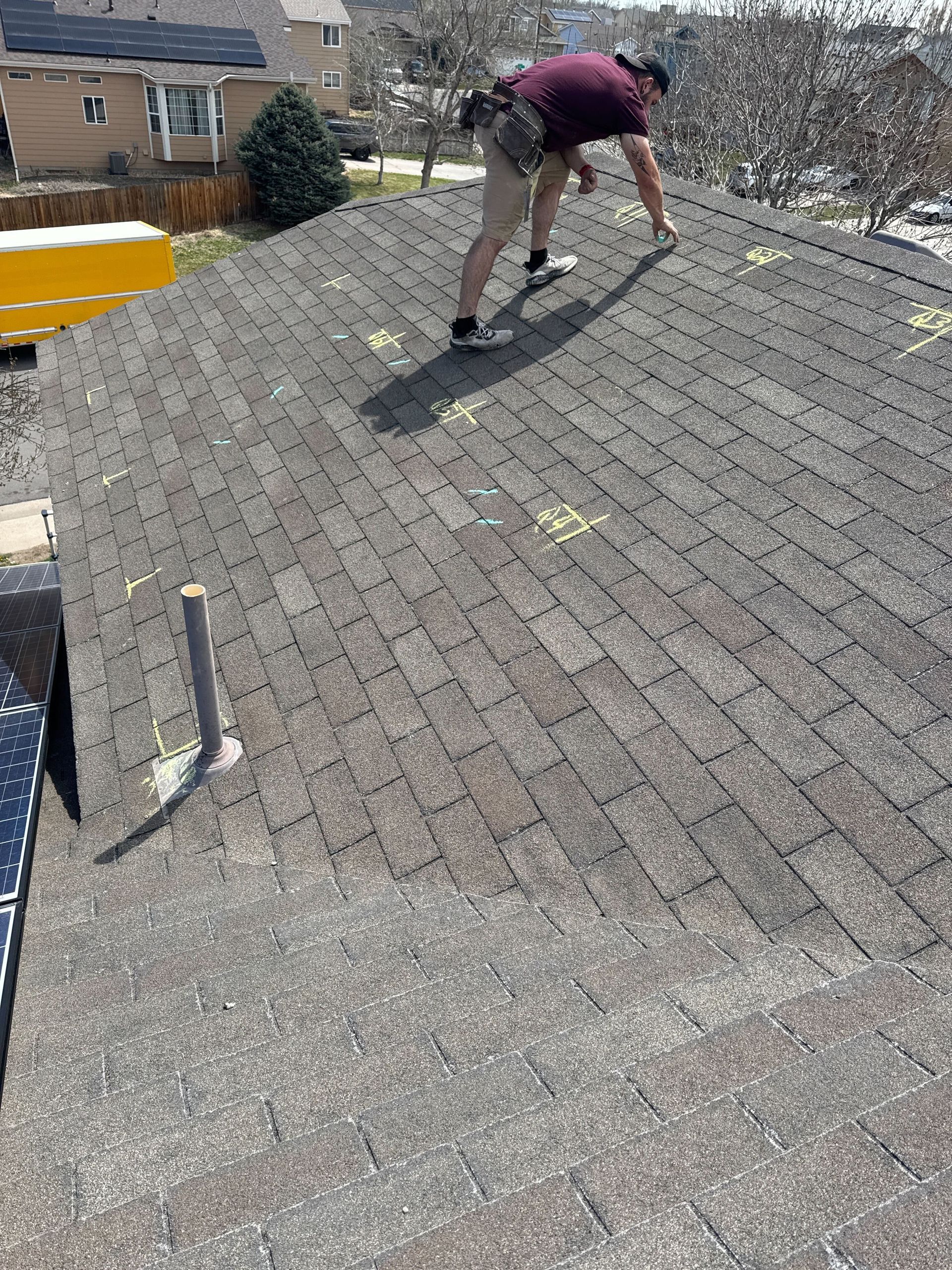 Photo documented roof inspection, Denver
When Do You Need Insurance Claim Guidance?
Direct answer: Insurance claim guidance is most useful when hail, wind, debris, or hidden exterior damage may affect your roof, siding, windows, or gutters, especially before filing or when a scope feels incomplete.
Many homeowners contact their insurance company without fully understanding the extent of damage or how documentation impacts outcomes. Insurance claim guidance is especially helpful if:
- Your home was impacted by hail, wind, or debris
- Damage isn't clearly visible from the ground
- You're unsure whether damage qualifies as storm related
- An adjuster has already inspected, but the scope feels incomplete
- Multiple exterior systems were affected
- You want clarity before filing a claim
Proper timing and documentation are critical in storm related claims.
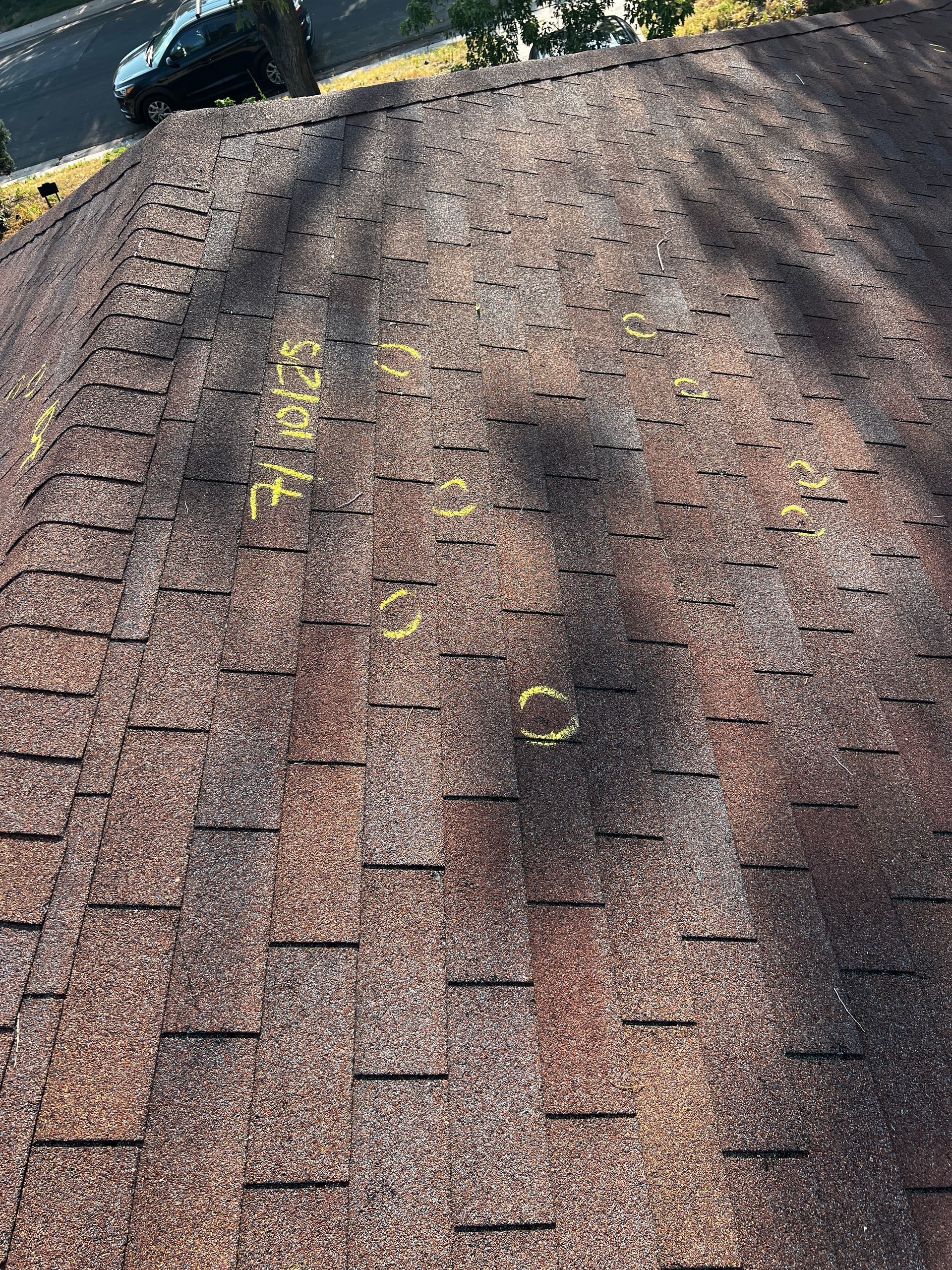 Hail damage inspection, Denver
Storm Damage Commonly Covered by Insurance in Denver
Direct answer: Coverage depends on your policy and the cause of loss, but Denver storm claims commonly involve hail damage, wind damage, debris impact, and water intrusion caused by exterior storm failure.
Coverage depends on your policy and the cause of loss, but storm related damage in Denver may include:
- Hail damage to roofing, siding, windows, and gutters
- Wind damage causing lifted shingles or detached materials
- Debris or tree impact damage
- Water intrusion resulting from storm related exterior failure
Insurance decisions often depend on whether damage is considered functional, not just cosmetic.
Related services:
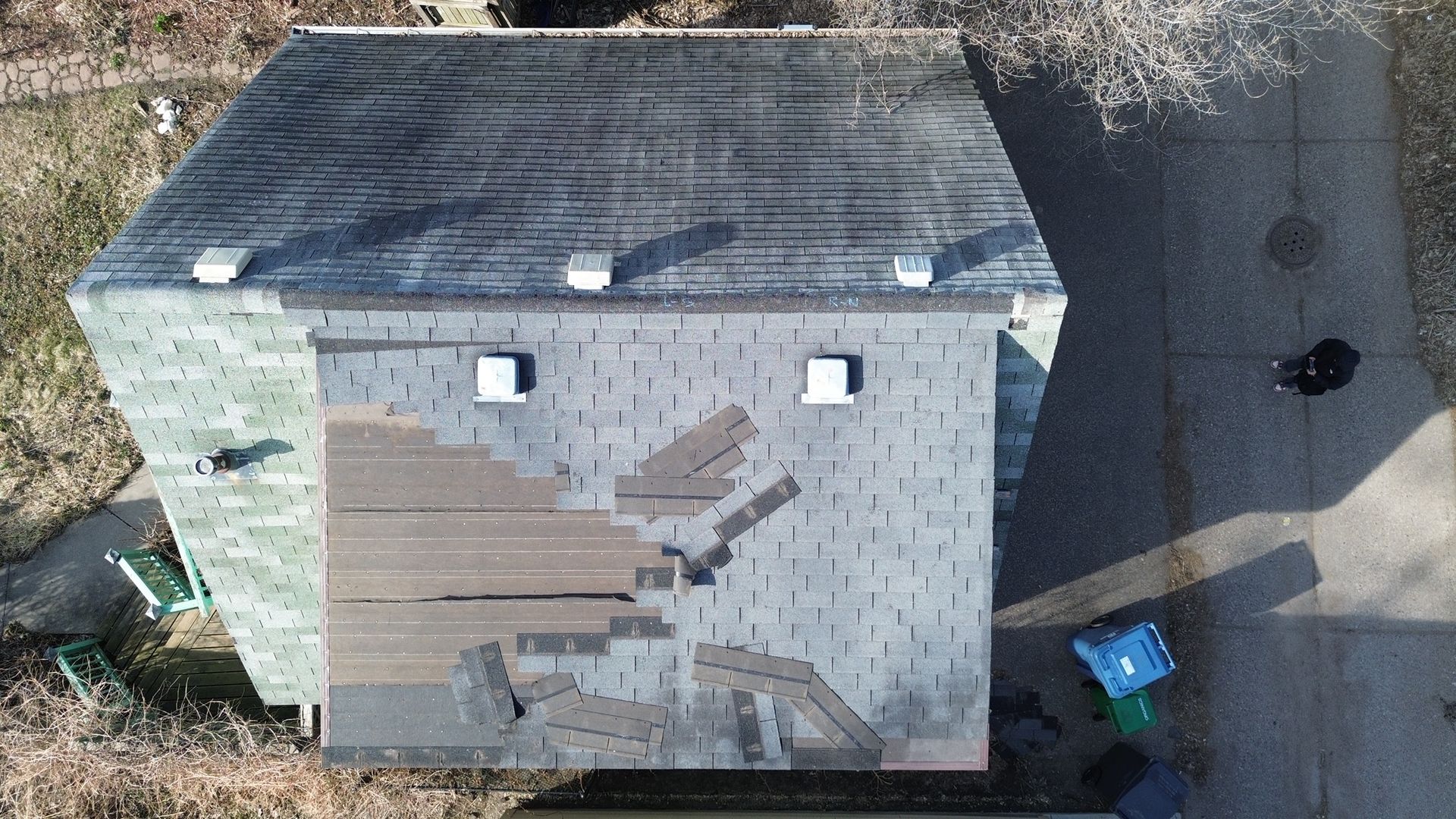 Wind damage documentation
The Denver hailstorms that still shape claims today
Denver claim conversations are anchored by real storms, not hypotheticals. On May 8, 2017, a hailstorm tracked across the west and northwest metro and became Colorado's costliest insured catastrophe: about $2.3 billion in insured losses, with roughly 167,000 auto claims and 100,600 homeowners claims according to the Rocky Mountain Insurance Information Association. Northwest Denver neighborhoods including Berkeley and the area around Regis University took direct hits alongside Edgewater and Lakeside.
Then on May 30, 2024, a late night storm dropped some of the largest hail the metro had seen in decades, with baseball size stones reported nearby and an estimated $1.9 billion in damage, the second costliest storm in state history. If your roof predates either storm and has never been inspected, damage from those events may still be sitting undocumented on your slopes. That is exactly the situation a free photo documented inspection is built for.
Our Insurance Claim Guidance Process
Direct answer: We inspect, document findings, help you prepare for the adjuster process, and coordinate approved repairs across roofing, siding, windows, and gutters when applicable.
We follow a structured process designed to protect homeowners and ensure accuracy without acting as the insurance company.
Storm Damage Inspection
We perform a detailed exterior inspection to identify visible and hidden storm related damage.
Documentation and Findings
Photos, measurements, and notes are collected to clearly document damage and support the claim process.
Claim Preparation Guidance
We help homeowners understand what information is needed, what to expect during adjuster inspections, and how to prepare.
Repair Coordination
Once a claim is approved, we coordinate repairs across roofing, siding, windows, and gutters when applicable.
What gets documented in a Denver storm claim inspection
Direct answer: We document the damaged exterior system, the visible storm pattern, photos, measurements, and repair scope details so homeowners can make informed decisions with their insurer.
| Exterior system | Common Denver storm finding | Why documentation matters |
|---|---|---|
| Roofing | Hail bruising, fractured shingles, lifted shingles, damaged flashing | Close range photos show functional damage that is often invisible from the street. |
| Siding | Impact marks, cracking, punctures, displaced panels | Wall elevations in neighborhoods like Park Hill, Lowry, and Central Park can show directional hail patterns. |
| Gutters | Denting, pulled fasteners, damaged downspouts | Gutter marks can support storm direction and severity findings across the full exterior. |
| Windows | Broken glass, damaged frames, failed wraps | Window and wrap damage can be part of a multi system storm scope. |
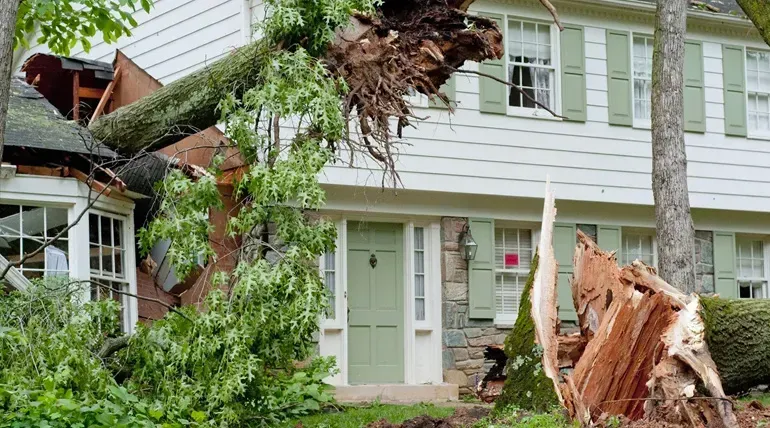 Debris and tree impact damage
Built for Denver exteriors and Colorado weather
Direct answer: Denver homes need claim guidance built around Front Range hail, sudden wind, high sun exposure, snow load, and fast weather shifts that can damage more than one exterior system in the same storm.
Hail and wind restoration
Roof, siding, windows, and gutters inspected as one exterior system.
Documented damage
Photo verified assessment with the visible storm pattern captured clearly.
Insurance claim support
One contractor, full scope guidance, and repair coordination after approval.
How roof permits work in the City and County of Denver
Roof replacement in Denver runs through Community Planning and Development, and most like for like residential reroofs qualify for a quick permit: a permit issued without plan review, with code compliance verified by field inspection instead. That keeps approved insurance work moving quickly, but it also means the inspection on your roof is the real quality gate, so the installing contractor needs to get the details right the first time.
Applications go through Denver's online e-permits system (Community Planning and Development). As a licensed Colorado contractor (License #0248041), Precision Exteriors Restoration pulls the permit, schedules the inspection, and closes it out as part of the job, so the permit record on your property is clean if you ever sell the home.
Common Insurance Claim Challenges in Denver
Direct answer: Denver homeowners often need help when storm damage is mislabeled, a scope misses repair needs, initial inspections overlook damage, or deductible and depreciation terms are confusing.
Denver homeowners often encounter issues such as:
- Damage labeled as "wear and tear" instead of storm related
- Partial approvals that don't address full repair needs
- Missed damage during initial inspections
- Confusion around deductibles and depreciation
Clear documentation and professional guidance can significantly reduce these issues.
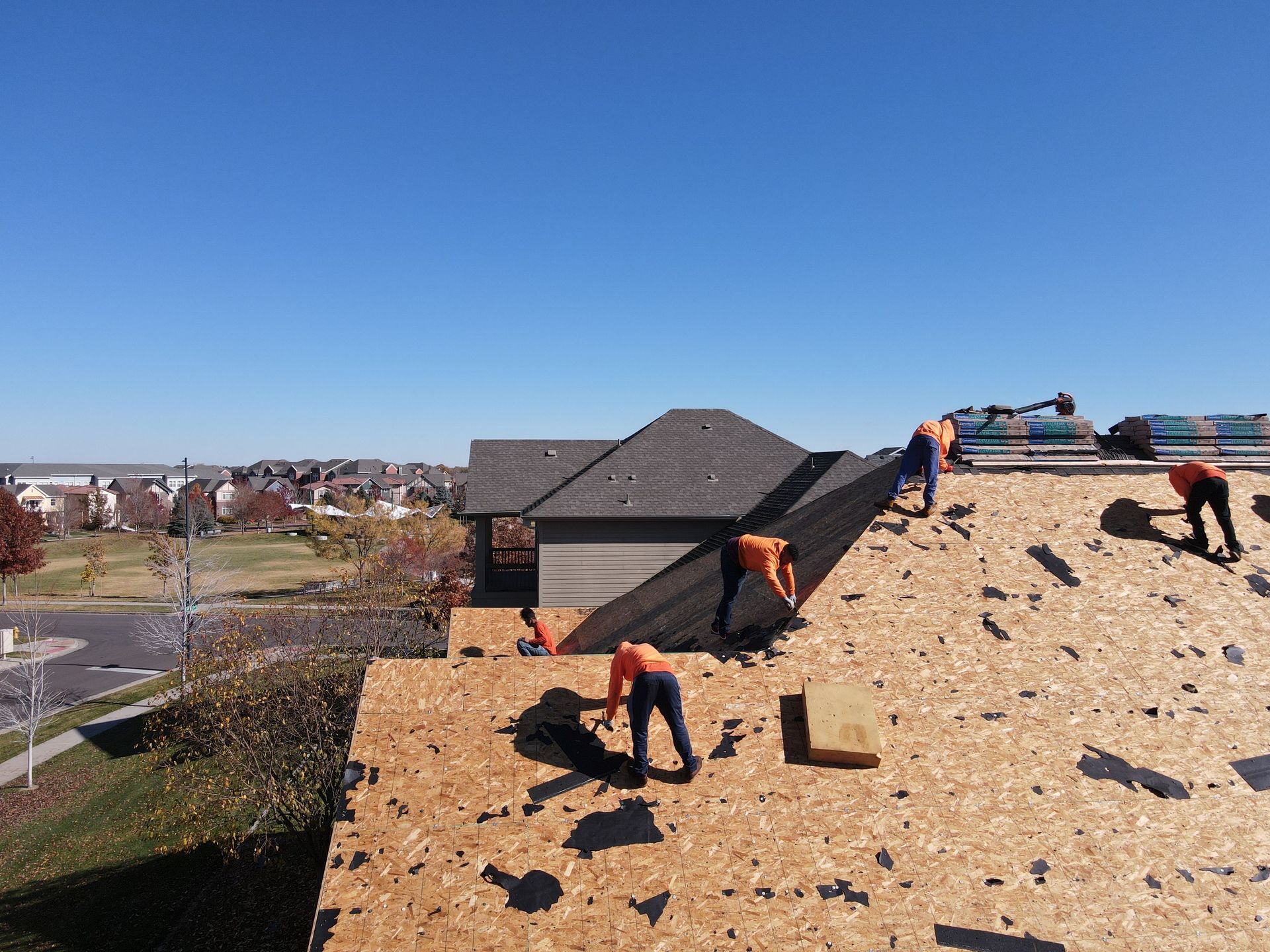 Completed Colorado roof restoration
Working with the carriers Denver homeowners actually have
Most Denver storm claims we see involve a handful of large carriers. State Farm, Allstate, USAA, American Family, and Farmers are consistently among the biggest homeowners insurers operating in Colorado, and State Farm is the largest homeowners insurer in the country with about 18 percent of the national market per NAIC market share data.
In practice the process differs by carrier. Some commonly send their own staff adjusters, while others assign independent adjusters, especially in the weeks after a large metro hail event. Supplement handling varies too: some carriers commonly review a contractor's photo documentation on paper, while others reinspect on site before approving added scope items. We do not interpret policy language or make coverage decisions. What we do is deliver documentation organized the way adjusters need it, so whichever carrier you have, the file speaks for itself.
What Insurance Claim Guidance Is and Isn't
Direct answer: We inspect and document storm damage, provide repair scopes, and help you prepare for adjuster visits. We do not act as the insurance company, interpret policy language, make coverage decisions, or file claims on your behalf.
We DO:
- Inspect and document storm damage
- Provide clear findings and repair scopes
- Help homeowners prepare for adjuster visits
We DO NOT:
- Act as the insurance company
- Interpret policy language or make coverage decisions
- File claims on your behalf
Our role is to ensure storm damage is accurately identified and documented so homeowners can make informed decisions.
Why Denver homeowners choose Precision Exteriors Restoration
- Experience with Denver storm patterns and insurance workflows
- Thorough, honest inspections
- Clear documentation and communication
- Ability to complete approved repairs in house
- Support across roofing, siding, windows, and gutters
Protected in writing, for the long run
Every Precision Exteriors Restoration project is backed in writing, so your Denver exterior restoration stays protected long after our crew leaves.
10 Year Workmanship Warranty
The Precision Warranty covers the quality of our installation for a full decade, in writing.
Certified Installer Manufacturer Warranty
As an Owens Corning Preferred Contractor and CertainTeed Shingle Master Installer, we register manufacturer backed material warranties most contractors cannot offer.
Licensed, insured, local since 2016
Colorado License #0248041, BBB A+ accredited, with 3,000+ completed Front Range projects.
Free inspection, Denver
Schedule a Free Insurance Claim Inspection in Denver
Direct answer: If your home was impacted by a storm and you're unsure how to proceed with an insurance claim, a professional inspection is the best first step.
If your home was impacted by a storm and you're unsure how to proceed with an insurance claim, a professional inspection is the best first step. We'll assess your exterior and provide clear guidance on next steps.
Schedule your free insurance claim inspection in Denver today.
Denver insurance claim guidance questions, answered
Should I get a roof inspection before filing an insurance claim in Denver?
Do you file insurance claims for homeowners?
What storm damage may be included in a Denver claim?
What if my adjuster scope feels incomplete?
Are you licensed and insured in Colorado?
What areas of Denver do you serve?
Schedule insurance claims guidance in Denver
Get a free, photo documented insurance claims guidance assessment from a licensed, local Denver contractor serving Denver and the Front Range.