
Residential exterior restoration in Denver: the complete storm guide
How your roof, siding, gutters, and windows work together as one building envelope, and how to restore them after Colorado hail and storm damage. Coordinated, single-contractor restoration with a free inspection and a written report in 24 hours.
Book your free inspection
Pick a time and we send a written report with photos covering every exterior system within 24 hours.
What residential exterior restoration means in Denver
Direct answer: Residential exterior restoration is the coordinated repair or replacement of all four exterior systems, roofing, siding, gutters, and windows, after a single storm event, managed by one licensed contractor under one insurance claim. In Denver, where one hailstorm routinely damages multiple systems at once, this approach is both more cost effective and more durable than hiring separate trades for each part of the home.
Residential exterior restoration is not just about fixing your roof. When a Colorado hailstorm or high-wind event strikes your home, damage typically affects multiple systems at the same time. Roofing, siding, gutters, and windows all require coordinated assessment and repair, and understanding how these systems work together as an integrated building envelope is essential to making informed restoration decisions.
The exterior of your home functions as a unified protective system. Your roof sheds water and protects against UV exposure. Your siding blocks weather while providing insulation. Your gutters manage drainage to protect your foundation. Your windows seal the building envelope while providing light and ventilation. When even one system fails, it can compromise the entire exterior, which is why coordinated restoration matters in a climate like Denver's.
The scale of these storms is real. May 2024 brought a severe hailstorm to the Denver metro that produced roughly $1.9 billion in losses, and the May 2017 hailstorm caused $2.3 billion in damage across Colorado. In 2024 alone, our team assessed and restored 2,000+ homes across Denver, Aurora, and Montbello following severe hail. In our experience, coordinated full restoration completed by a single contractor under one insurance claim produces better outcomes than piecing together separate contractors for each system.
Which exterior systems should be checked after a Denver storm?
Direct answer: A Denver building envelope has four exterior systems that must work as one: roofing, siding, gutters, and windows. Each section below links to the full guide for that system, so you can go as deep as you need on any single trade.
Roofing
Your first line of defense against hail, wind, and high-altitude UV. Class 4 impact-resistant shingles are the Denver standard.
Roofing guideSiding
Weather resistance plus insulation. Fiber cement and impact-rated options that coordinate with your roof.
Siding guideGutters
Manage roof runoff and protect your foundation through Colorado's freeze-thaw cycles. Repair, replacement, and guards.
Gutters guideWindows
Seal the envelope and meet Colorado efficiency standards. Impact-resistant and Energy Star compliant options.
Windows guideWhy does roofing drive the rest of the restoration plan?
Direct answer: Your roof is your home's first line of defense, and material selection drives how well the entire exterior performs. Class 4 impact-resistant shingles are the Denver standard, engineered to withstand hail with minimal damage and to qualify your home for a 20 to 30% insurance discount under Colorado Revised Statute 10-4-110.8.
Material selection does not exist in isolation. When you choose Class 4 shingles, you also set the installation standard for siding, gutters, and windows. Fiber cement siding pairs naturally with premium roofing, aluminum gutters coordinate with architectural shingles, and impact-resistant windows complete the weather-resistance system. A home with Class 4 roofing but standard vinyl windows or undersized gutters still leaves vulnerabilities, which is why a professional assessment considers all four systems together. For the full breakdown of materials, costs, and tear-off, see our Denver roof replacement guide and our Denver roofing contractor overview.
Get a free roof and exterior assessment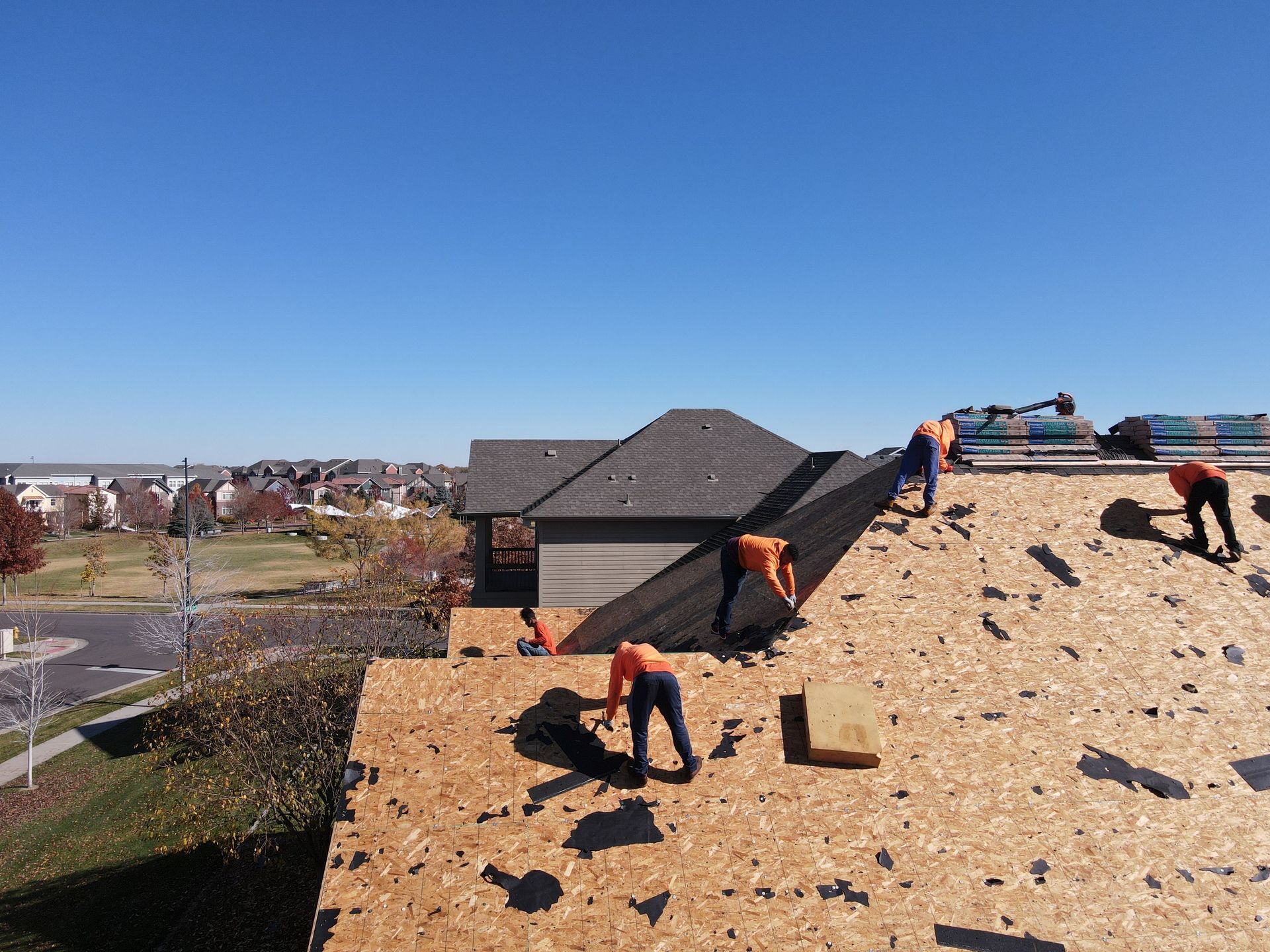 Class 4 roof replacement, Denver metro
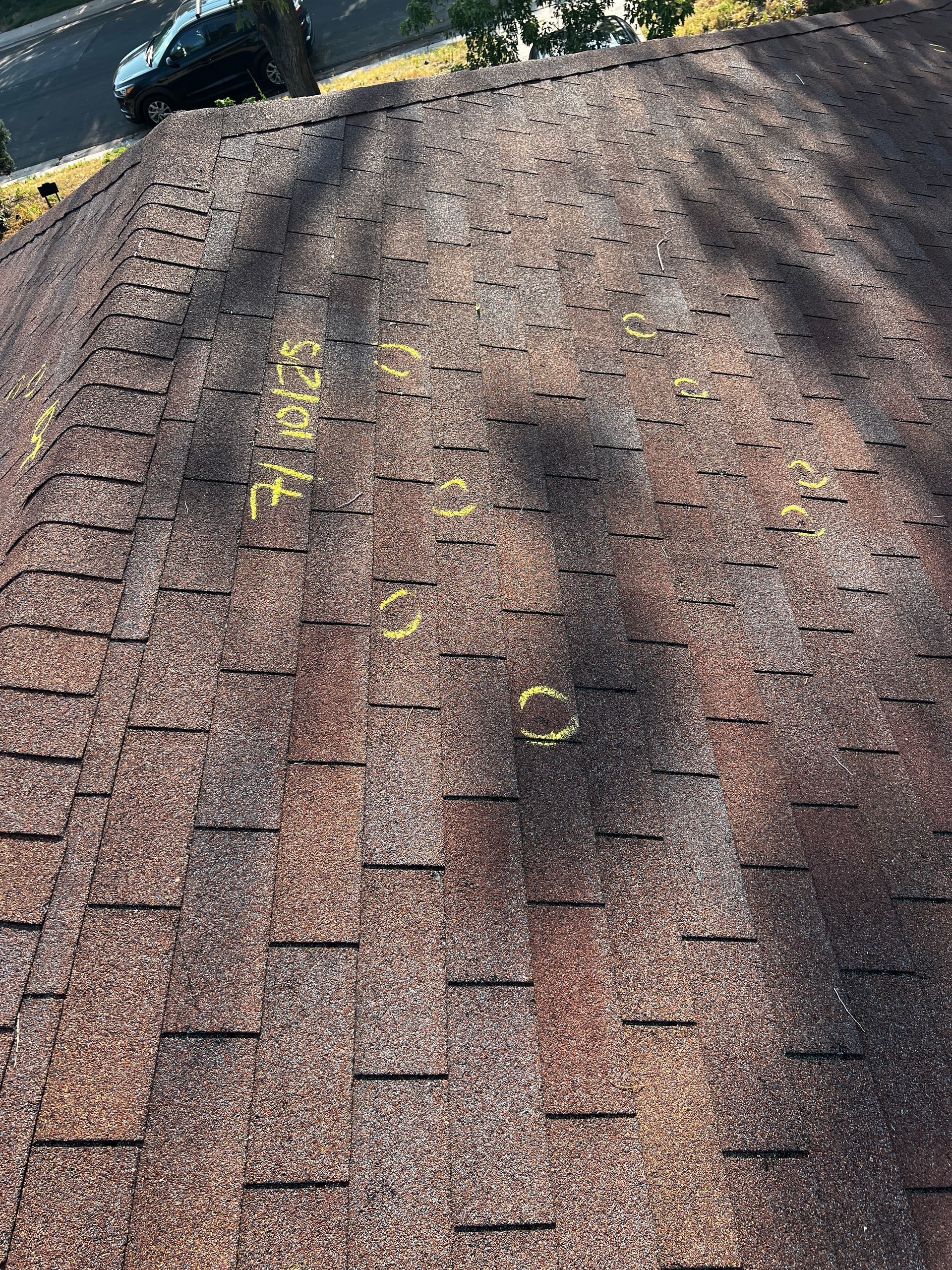 Hail damage, Denver metro
How can one storm damage multiple exterior systems?
Direct answer: Denver sits in three wind-design zones, 115, 125, and 140 mph depending on location, and hail rarely damages only one system. A single storm can mark and de-granulate your roof, dent and micro-fracture siding, stress gutter seams, and break window seals at the same time, and much of that damage is invisible from the ground.
When hail strikes, it does not discriminate between systems. Roofing loses protective granules and exposes the underlying asphalt. Siding develops dents, cracks, and micro-fractures that compromise weather resistance. Gutters develop dents and seam stress that reduce drainage efficiency. Windows take impact stress that may not crack the glass but quietly compromises the seal. Because so much of this is not visible from street level, professional storm-damage assessment across all four systems is the only reliable way to document the full scope your insurance claim needs.
How should insurance coverage be coordinated?
Direct answer: When several systems are damaged in one storm, a single coordinated claim almost always beats separate claims. The two concepts that decide your settlement size are Replacement Cost Value versus Actual Cash Value, and whether your contractor pulls permits. Skipping permits can shift your claim from RCV to ACV and cost you $5,000 to $15,000 or more.
RCV vs ACV
RCV policies cover the full cost of replacing damaged materials with new, like-kind materials at current prices. Most pay in two stages: an initial ACV payment at approval, then recoverable depreciation after the work is done. Many homeowners wrongly believe the first payment is the total settlement. It rarely is.
Permits protect your RCV
Colorado requires building permits when you replace roofing, siding, or other exterior systems. When your contractor pulls permits on every replacement, as Precision does, your settlement stays at full RCV. Skip them, and carriers may shift you to ACV, cutting the settlement by thousands.
One scope, one adjuster
One comprehensive Xactimate estimate covering roofing, siding, gutters, and windows, prepared by a single contractor, is far more efficient than three or four separate estimates. One adjuster meeting with one contractor over one integrated scope prevents the gaps and scope disputes that drag claims out for months.
Deductibles and discounts
Colorado Revised Statute 6-22-105 prohibits deductible waivers, and each system often carries its own deductible. Coordinated claims often let an adjuster apply a single deductible to the full scope, saving thousands. And under C.R.S. 10-4-110.8, Class 4 shingles qualify for a 20 to 30% homeowner's insurance discount.
How do siding, gutters, and windows complete the system?
Direct answer: While roofing dominates attention, siding, gutters, and windows finish the building envelope, and each one only works well when it is coordinated with the others. Siding resists weather and insulates, gutters move roof runoff away from your foundation, and windows seal the envelope while meeting Colorado efficiency law.
- Siding serves two functions, weather resistance and insulation. After hail, fiber cement (James Hardie) offers superior durability and looks, while vinyl is a cost-effective option. Premium roofing pairs well with premium siding for consistency. See the siding guide.
- Gutters manage the water shed from your roof. Colorado's 150+ annual freeze-thaw cycles stress seams and fasteners, and hail dents reduce slope efficiency. Roof pitch, drainage slope, and gutter capacity must align. See the gutters guide.
- Windows seal the building envelope. Impact-resistant, double or triple-pane windows coordinate with roofing and siding upgrades, and Energy Star compliance is required in Colorado under HB 23-1161, effective January 2026. See the windows guide.
When all four systems are selected and installed as a coordinated unit, your home gains a weather-resistant envelope. Water sheds from the roof, flows through properly pitched gutters, does not penetrate siding seams, and does not infiltrate around window frames. Each system supports the others.
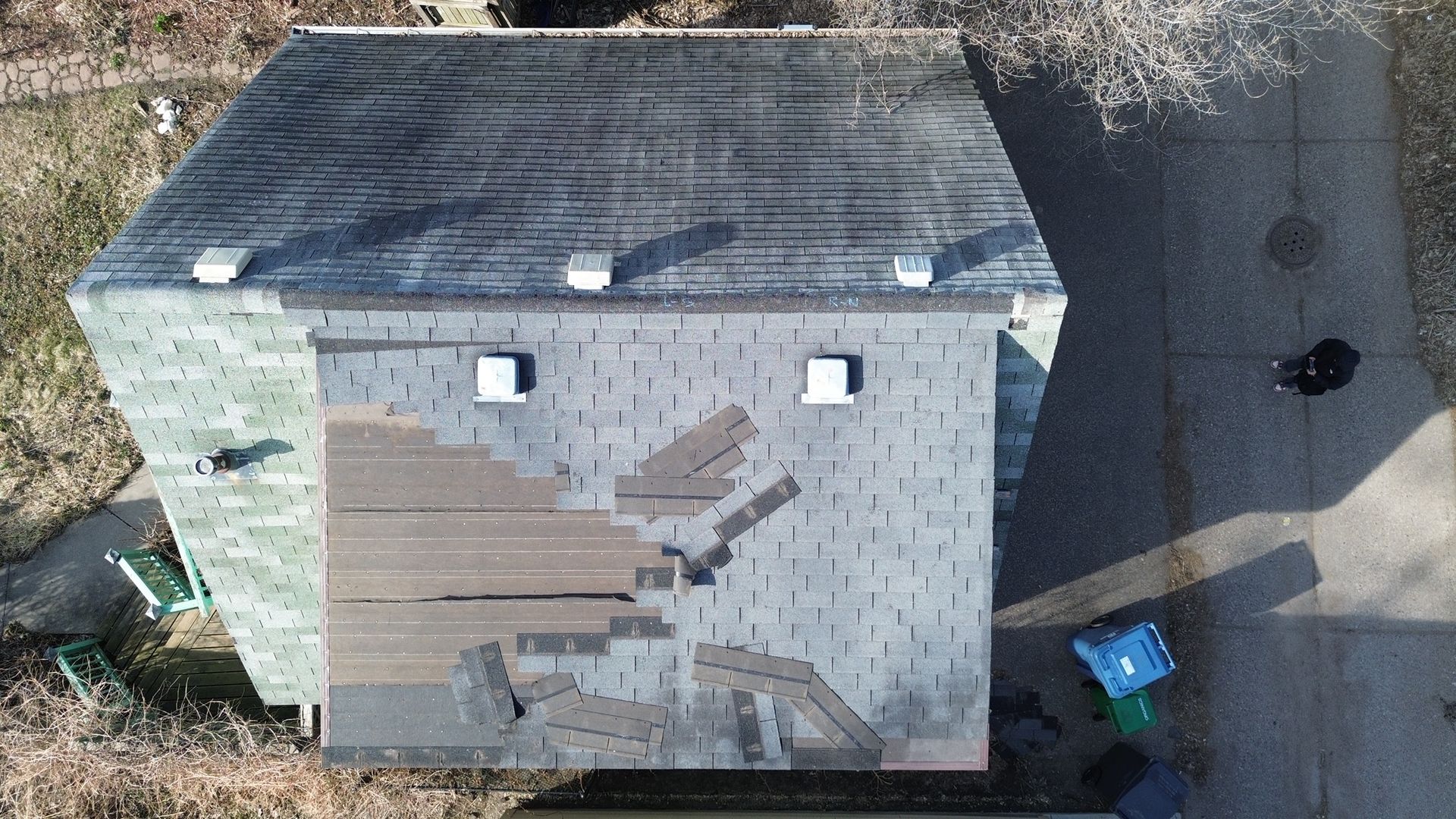 Wind damage inspection, Denver metro
What does residential exterior restoration cost in Denver?
Direct answer: Costs vary by system and material, but the figures below give realistic Denver ranges. When storm or hail damage is the cause, an approved RCV insurance claim often covers most of the cost beyond your deductible, especially when permits are pulled and the scope is documented as one coordinated claim.
| System | Common Denver materials | Typical range |
|---|---|---|
| Roofing | Class 4 asphalt shingle, standing-seam metal, tile | $4 to $18 per sq ft |
| Siding | Fiber cement (James Hardie), vinyl | Varies by wall area and material |
| Gutters | Seamless aluminum, gutter guards | Priced by linear foot and slope |
| Windows | Impact-resistant, double or triple-pane, Energy Star | Priced per opening and frame type |
Why Denver homes need coordinated restoration
Denver sits in Hail Alley, on the Front Range, where storm frequency and high-altitude conditions put every exterior system under more stress than almost anywhere in the country.
Should you repair or replace after storm damage?
Direct answer: The repair-versus-replace decision depends on material age, damage severity, and cost analysis, and it should be made consistently across all systems. Repair when damage is genuinely isolated, replace when age, damage patterns, or cost favor it, and if you are replacing your roof, consider whether siding, gutters, and windows merit replacement too.
A 15-year-old roof with localized hail damage might be repairable, while a 20-year-old roof showing wear elsewhere is often better replaced entirely, especially when the replacement qualifies for insurance coverage. The same logic applies to siding: isolated damage to one wall may warrant repair, but if multiple walls show damage, full replacement creates material consistency and aesthetic cohesion.
The most cost-effective approach often involves whole-system replacement rather than piecemeal repair, because material consistency, aesthetics, and long-term durability favor it. Coordinated full replacement eliminates mismatched materials and ongoing maintenance problems, and provides a single 10-year workmanship warranty across every system. For a closer look at this trade-off, see our repair vs replacement guide.
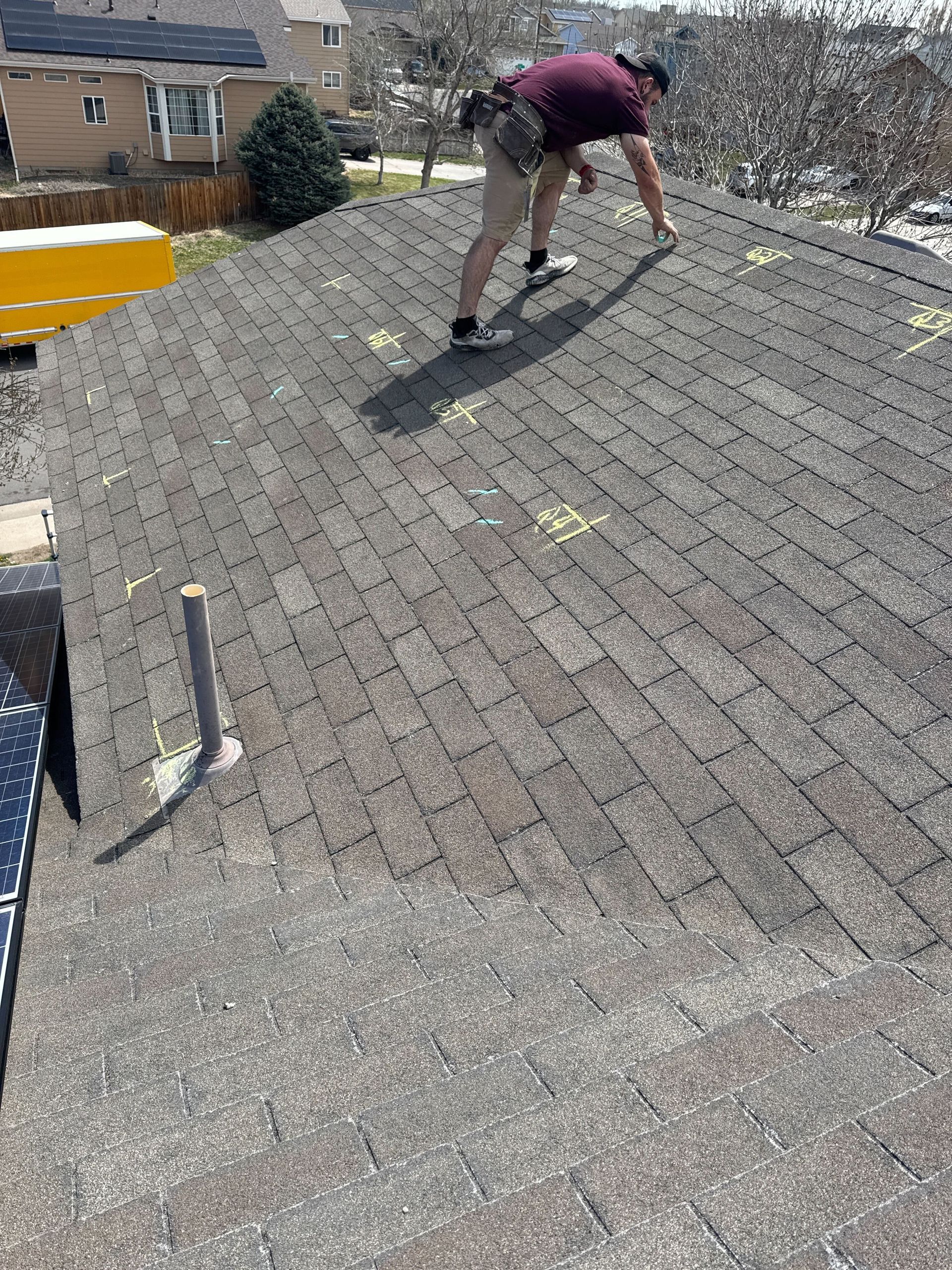 Free exterior inspection, Denver metro
How long does residential exterior restoration take?
Direct answer: Coordinated residential exterior restoration typically spans 4 to 12 weeks from inspection to completion. A single contractor managing permits, materials, crews, and insurance usually finishes faster than multiple contractors, because sequencing is unified, communication is centralized, and there are no handoff delays.
Free inspection and assessment
Insurance claim and Xactimate scope
Permits and material ordering
Coordinated installation
Final walkthrough and warranty
What affects your timeline
Coordinated, single-contractor restoration keeps these moving in parallel where possible.
- Scope of damage: roof only vs roof plus siding, gutters, and windows
- Permit requirements: Denver permits for roofing, siding, and windows add 1 to 2 weeks
- Material lead times: premium materials may require 2 to 4 weeks
- Insurance coordination: claim approval can add 1 to 3 weeks
- Weather windows: spring and fall offer optimal conditions
- Unified sequencing: roof, then siding, gutters, and windows, concurrent where possible
Why use one contractor, one claim, and one warranty?
Coordinated restoration should feel safe. Between manufacturer warranties, hands-on insurance help, and a single point of contact for all four systems, the path forward is low risk from day one.
One warranty across systems
Coordinated full replacement provides a single 10-year workmanship warranty covering roofing, siding, gutters, and windows, plus the certified-installer manufacturer warranties on your materials.
We handle your insurance claim
We document the full multi-system scope, prepare one Xactimate estimate, pull permits to protect your RCV, and meet your adjuster on site so nothing covered gets left behind.
Flexible financing available
Ask about financing options that let you protect your whole exterior now and spread the cost into manageable payments.
Rated 4.6 stars by Denver neighbors
Real, verified Google reviews from Denver-area homeowners. We are proud of an honest 4.6 stars rating built one home at a time. Read our reviews.
"The Precision team was great and provided me with great customer service and results. Special thanks to Anthony for helping me through the insurance process in making sure the details were covered."
"Great quality work, friendly service. Fast and clean service."
"They showed up on time, they knew their stuff, they did the work, and they did it well."
"Could not give Precision Exteriors a higher recommendation. Professional, timely, and great to work with."
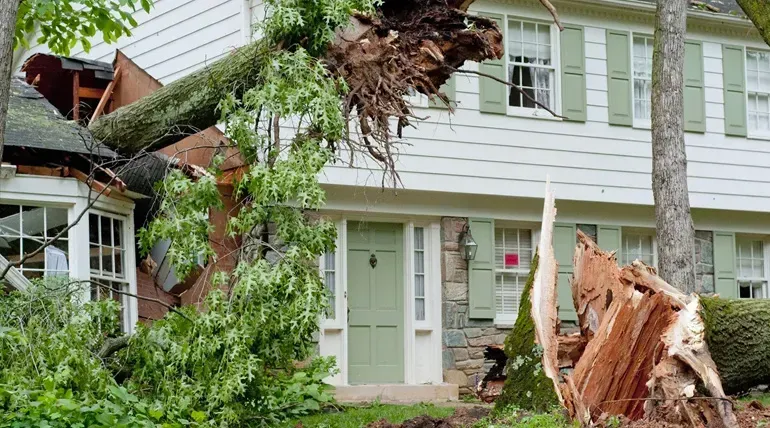 Storm response, Denver metro
Denver and Front Range service area
Direct answer: Precision Exteriors Restoration provides exterior restoration across Denver and the Denver metro, including Aurora, Lakewood, Arvada, Westminster, Thornton, Centennial, Littleton, Highlands Ranch, Brighton, Golden, and Castle Rock, serving Front Range communities in Jefferson, Arapahoe, Adams, and Douglas counties.
The Precision Warranty
Protected in writing, for the long run
Every Precision Exteriors Restoration project is backed in writing, so your entire Denver exterior stays protected long after our crew leaves.
10-Year Workmanship Warranty
The Precision Warranty covers the quality of our installation across roofing, siding, gutters, and windows for a full decade, in writing.
Certified-Installer Manufacturer Warranty
As an Owens Corning Preferred Contractor and CertainTeed Shingle Master Installer, we register manufacturer-backed material warranties most contractors cannot offer.
Licensed, Insured, Local Since 2016
Colorado License #0248041, BBB A+ accredited, with 3,000+ completed Front Range projects.
Residential exterior restoration questions, answered
What is residential exterior restoration?
Why coordinate roofing, siding, gutters, and windows together?
What is the difference between RCV and ACV on my claim?
How do permits affect my insurance settlement in Colorado?
Why are Class 4 shingles the Denver standard?
How long does residential exterior restoration take?
Should I repair or replace after storm damage?
Do you serve the full Denver metro and Front Range?
Book a free, no-obligation exterior inspection
Get a written report with photos covering your roof, siding, gutters, and windows in 24 hours. We inspect, we document, we pull permits, and we handle your insurance claim so you do not have to.