
Hail damage roof repair in Centennial, Colorado
Centennial sits inside the south-metro hail corridor, perched just north of the Palmer Divide where storms reload and drop their hardest hits across Arapahoe County. A storm can bruise the asphalt mat under your shingles without ever splitting a shingle or starting a drip, so the damage hides while the roof quietly loses years of life.
A photographed hail evaluation tells you whether a recent Hail Alley storm actually struck your Centennial roof, what that does to its remaining service life, and whether the repair scope clears your percentage wind and hail deductible before you open a claim.
Book your free inspection
Get a photo documented hail damage evaluation for your Centennial home.
Last updated: June 17, 2026
Quick answerHail damage roof repair in Centennial, CO
Direct answer: Hail damage roof repair in Centennial, CO starts with a documented inspection from a licensed Colorado contractor, because the Palmer Divide loads this part of Arapahoe County with severe hail that fractures shingle mats and erodes granules long before a leak appears. Precision Exteriors Restoration photographs the field, soft metals, gutters, and siding, then walks you through repair, replacement, or claim options against your percentage deductible and your ACV or RCV settlement terms.
Nearby hail damage areas: Highlands Ranch, Littleton, Englewood and Aurora.
Centennial is not an average Denver suburb when hail rolls in. The city sits in Colorado's Hail Alley, immediately north of the Palmer Divide ridge that lifts warm, moist air and breeds the afternoon and evening supercells that hammer the south metro. Arapahoe County carries a near-maximum hail-risk score, with researchers estimating roughly $78.8 million in expected hail loss across the county every year. That is verifiable local geography, not generic Colorado weather, and it is the reason a swap-the-city inspection misses what a Centennial roof actually takes.
We evaluate homes across the city, from Willow Creek, Piney Creek, and the Homestead communities to Smoky Hill, Foxridge, The Knolls, Heritage Greens, and Walnut Hills. Much of this stock dates to the 1970s through the 1990s, so many roofs carry both storm bruising and natural age at the same time, and that mix changes how an adjuster reads a claim.
Most Centennial hail damage stays quiet. From the driveway the roof can look untouched while the mat beneath each shingle is already bruised and shedding granules into the downspouts. Documentation is the line between a covered storm claim and an aging-roof denial.
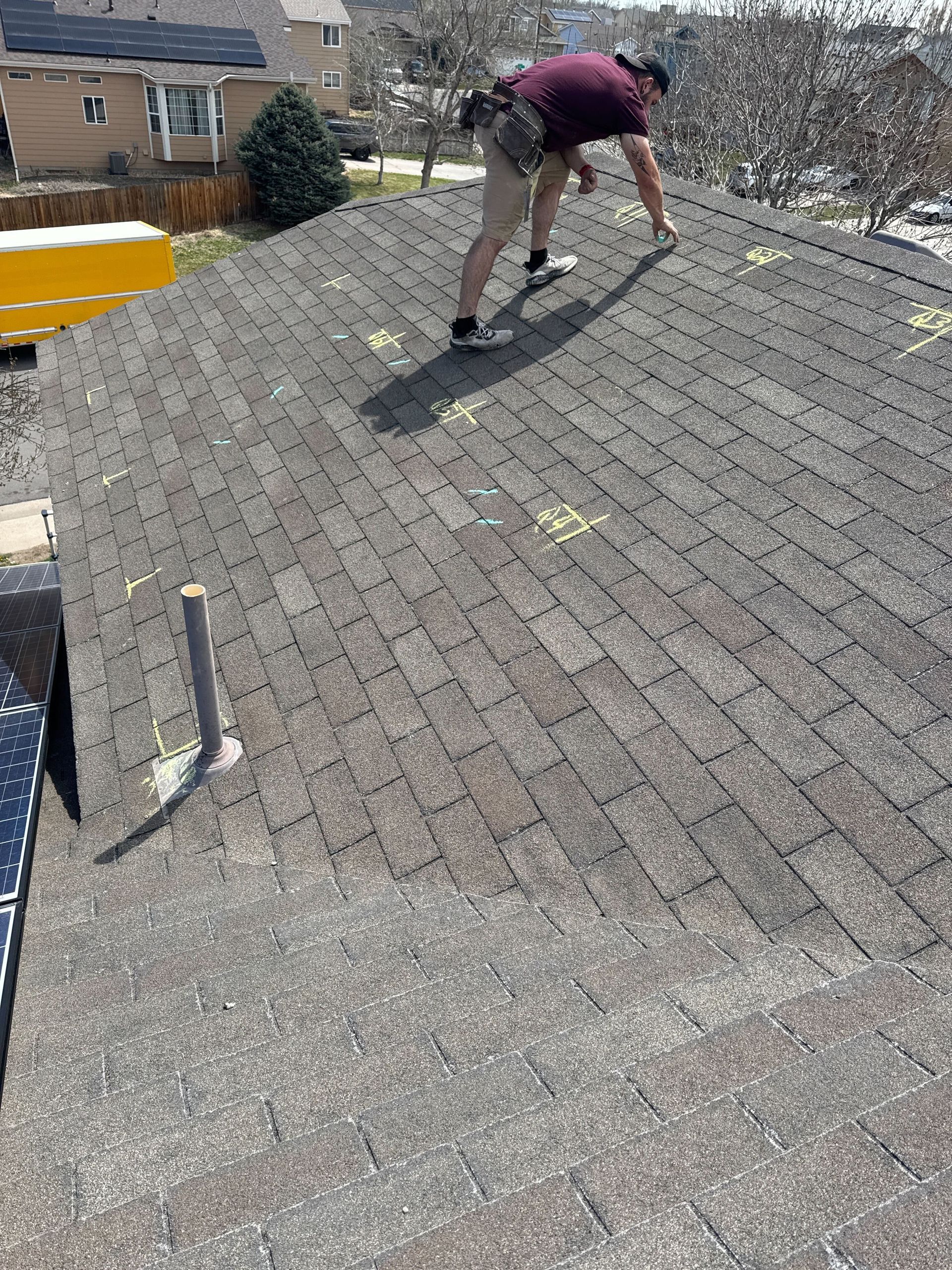 Hail damage evaluation, Centennial
Why does Centennial get more hail than downtown Denver?
Direct answer: Centennial sits just north of the Palmer Divide, the high ridge that runs between Denver and Colorado Springs. As warm, humid air rises over that elevated terrain and collides with cooler air, supercells fire again and again across the south metro, so Centennial sees bigger and more frequent hail than the lower neighborhoods near downtown Denver.
Colorado's hail season runs from roughly mid-April through mid-September and peaks across May, June, and July. The Palmer Divide stretches and sharpens that exposure for the south-metro corridor, which is why a Centennial roof ages on a faster clock than a roof ten miles north of the ridge. Most roofs here are expected to absorb at least one insurance-relevant hail hit during their service life.
On the roof itself, that recurring exposure shows up as:
- Bruising under the shingle that softens the mat and the asphalt layer
- Granule loss that leaves shingles exposed to faster UV aging at altitude
- Fractures and hairline cracks invisible from ground level
- Impacts clustered on the slopes that faced the storm cell
- Compounding decline after several Hail Alley seasons in a row
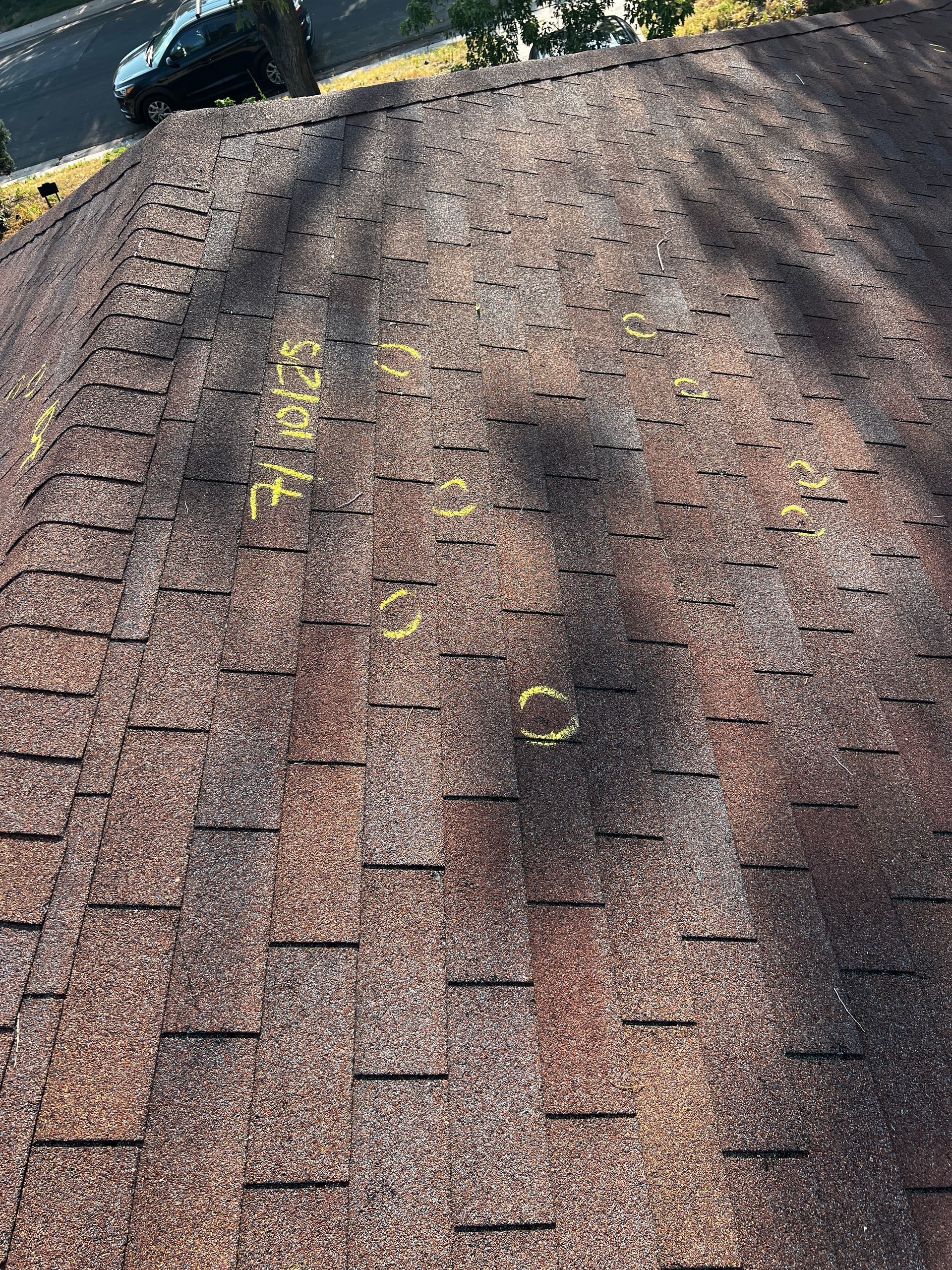 Hail impact on shingles
Recent severe weather across Centennial and Arapahoe County
A dated weather record helps homeowners and adjusters tie roof damage to a specific event. These are documented south-metro and Arapahoe County hail patterns near Centennial.
When should a Centennial homeowner suspect hail damage?
Direct answer: Book a Centennial roof inspection after a confirmed Hail Alley storm, when neighbors in Willow Creek, Smoky Hill, or Piney Creek start getting roofs looked at, when granules pile up by the downspouts, or when one slope looks noticeably more worn than the rest.
Homeowners picture hail damage as something obvious. In practice it is usually subtle and cumulative, especially on roofs that have weathered several seasons in the south-metro corridor.
Hail damage may be present when:
- A hailstorm recently crossed Centennial or south Arapahoe County
- Neighboring homes are being inspected or re-roofed
- Granules gather at downspouts or along the foundation
- Shingles look intact but feel soft or bruised in the impact zones
- Storm-facing slopes show uneven wear
- The roof has not been checked since a known hail event
A documented inspection confirms whether hail damage is real and whether it actually degrades performance, which is exactly the evidence an insurer expects to see.
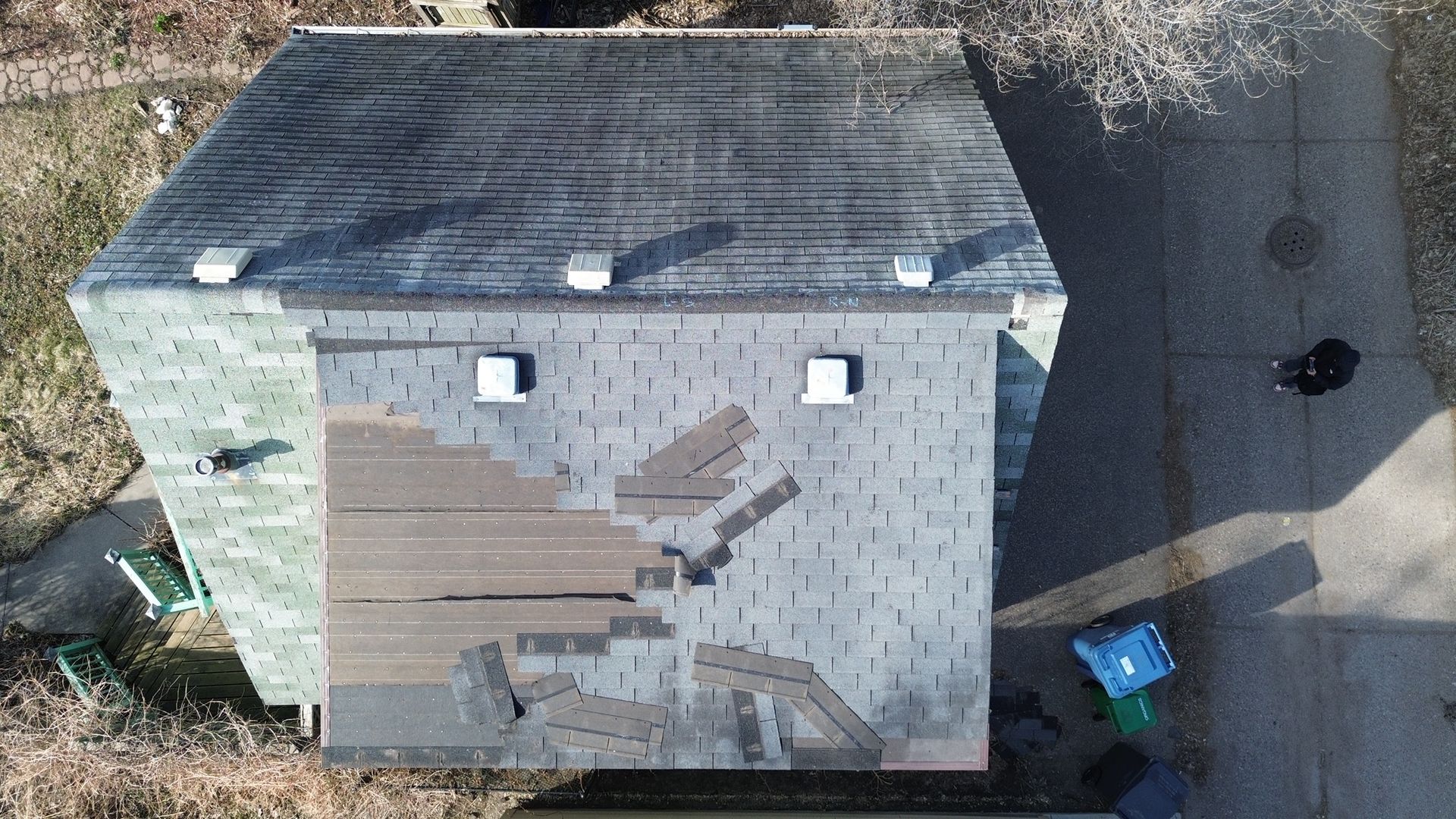 Storm related roof damage
Is it hail damage or just an aging Centennial roof?
Direct answer: Hail damage is sudden, pattern based, and tied to a documented Hail Alley storm, while ordinary wear is gradual and tied to age. On Centennial's many 1970s to 1990s roofs, the two routinely overlap, and that distinction drives both the repair plan and how the carrier settles the claim.
Not every worn roof is a hail roof. With so many Foxridge, Smoky Hill, Walnut Hills, and Piney Creek roofs now decades old, separating storm impact from end-of-life aging is the single most important judgment on a Centennial claim. Many original wood-shake roofs across these neighborhoods have already been converted to impact-resistant asphalt after past hail seasons, which adds another layer to the read.
| Evaluation point | Hail damage pattern | Normal wear pattern |
|---|---|---|
| Timing | After a known Centennial or Arapahoe County storm | Builds slowly across many seasons |
| Distribution | Clustered on storm-facing slopes and soft metals | Broad, gradual, tied to age |
| Roof age factor | Can still be claimable on an older roof when functional damage is present | Aged roofs often settle at depreciated ACV |
| Next step | Document and weigh repair or claim options | Monitor, maintain, or plan replacement by age |
How do Colorado deductibles and SB 38 shape a Centennial hail claim?
Direct answer: Many Colorado policies in this hail-prone region carry a percentage wind and hail deductible, often 1 to 5 percent of dwelling coverage, so 2 percent on a $600,000 Centennial home is $12,000 out of pocket before coverage starts. Older roofs are frequently settled at depreciated actual cash value rather than full replacement cost value, and Colorado SB 38 makes it illegal for any roofer to pay, waive, or rebate your deductible.
Before you file, three Colorado realities shape how a Centennial hail claim plays out:
- Percentage deductibles: Wind and hail deductibles in this corridor commonly run 1 to 5 percent of dwelling coverage, so your out-of-pocket scales with the home value rather than a flat $1,000.
- ACV versus RCV: Many roof policies pay depreciated actual cash value up front and release the recoverable depreciation only after the replacement is finished and invoiced, so the timing of money matters.
- SB 38 protections: Colorado's residential roofing law (C.R.S. 6-22-101 et seq.) bars deductible waiving, requires written contracts for roofing work of $1,000 or more to disclose the deductible, the shingle type and color, and your cancellation rights, and lets a carrier disregard the estimate of a contractor who breaks the rule.
A documented hail inspection lets you weigh the likely scope against your deductible before you ever open a claim. If you want to verify the storm and the damage first, start with a roof inspection in Centennial, then move to roof repair or roof replacement as the findings warrant.
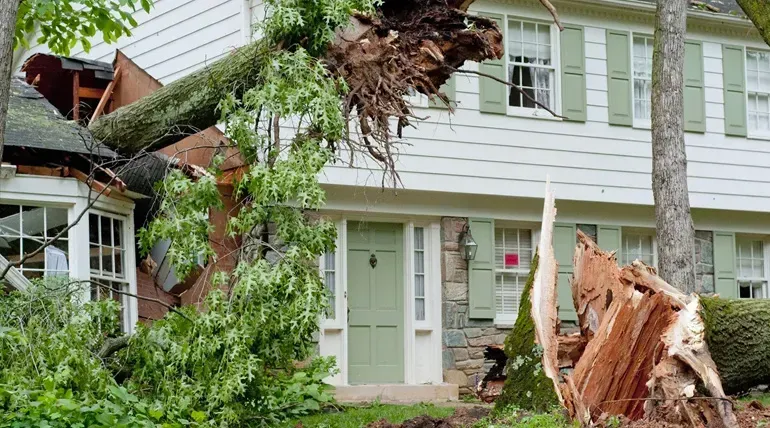 Storm documentation support
What to expect from a Centennial hail damage evaluation
Direct answer: A Precision hail evaluation covers every roofing component, separates hail damage from age-related wear, captures photo documentation, delivers plain-language findings, and guides you toward repair, replacement, or monitoring with your Colorado deductible kept in view.
The evaluation is built to give you clarity without pressure. Homeowners can expect:
- A full inspection of roofing components for impact patterns
- A clear split between hail-related and age-related issues
- Photo documentation for your records and any claim
- An honest explanation of what was found and why it matters
- Guidance on repair, replacement, or monitoring
No work is assumed. The evaluation exists to support an informed decision, not to push a scope.
Some Homestead and higher-end homes still carry concrete tile or original shake, which hail bruises differently than asphalt and calls for a separate inspection approach.
Older Smoky Hill and Foxridge roofs often show both fresh storm bruising and end-of-life aging that has to be documented apart from one another.
Impact tends to cluster on the slopes that faced the cell, so the gutters, soft metals, and downspouts carry much of the documentation story.
How hail damage fits Centennial exterior restoration
Direct answer: Hail rarely ends at the shingles. A Centennial evaluation should also cover gutters, vents, siding edges, window trim, and other soft metals so the full exterior scope is documented and coordinated under one claim.
The same Hail Alley storm that bruises a roof in Heritage Greens often dents the gutters and cracks the siding on the same elevation. For the broader framework of how exterior systems work together locally, visit the Centennial exterior restoration hub, which ties roofing, gutters, siding, and storm work into one coordinated scope.
Roof inspection Centennial
Photo documented hail assessment with repair or replacement guidance.
Hail damage roof repair Centennial
Targeted repairs for functional storm damage when the system is still sound.
Centennial storm damage
Hail, wind, gutter, siding, and soft-metal documentation after storms.
Insurance support
Documentation to help you weigh a claim against your percentage deductible.
Protected in writing, for the long run
Direct answer: The Precision Warranty protects qualifying Centennial roof work with written workmanship coverage, registered manufacturer warranties, and local licensed accountability from a Colorado contractor founded in 2016.
Precision Exteriors Restoration backs qualifying roof work with written protection, manufacturer credential strength, and local accountability.
10 Year Workmanship Warranty
The Precision Warranty covers the quality of our installation for a full decade, in writing.
Certified Installer Manufacturer Warranty
As an Owens Corning Preferred Contractor and CertainTeed SELECT ShingleMaster, we register manufacturer-backed warranties most contractors cannot offer.
Licensed, Insured, Local Since 2016
Colorado License #0248041, BBB A+ accredited, NRCA member, with 3,000+ completed Front Range projects.
Answers for Centennial homeowners
Why does Centennial get hit by hail more than downtown Denver?
Can a Centennial roof have hail damage with no leaks or missing shingles?
Is my older Centennial roof still claimable after hail?
What will my deductible be on a Centennial hail claim?
Does hail damage always mean a full roof replacement in Centennial?
Schedule a hail damage evaluation in Centennial
If a Hail Alley storm rolled over your Centennial home, or you simply want clarity about possible hail damage, a documented evaluation tells you the real condition of your roof and what makes sense next, including whether a claim beats your deductible.