
Roof inspection in Centennial, CO, every finding backed by photos
An inspection is the surest way to catch trouble on a Centennial roof while it is still cheap to fix. Tucked into Hail Alley just north of the Palmer Divide, roofs here soak up frequent hail, hard wind, spring snow, and brutal altitude sun, the kind of wear you cannot judge standing in the driveway. Precision Exteriors gives Arapahoe County homeowners a careful, no-spin look and a dated record of exactly where the roof stands.
Book your free inspection
Choose a time and we document your Centennial roof with photos and findings you can actually understand.
Last updated: June 17, 2026
The short versionWhat our Centennial roof inspection covers
Short version: Precision Exteriors inspects roofs across Centennial under Colorado License #0248041, fully insured, with 3,000-plus south-metro jobs behind us since 2016. Every visit is photographed and free, with no obligation, and the report tells you where your roof honestly stands.
Nearby roof inspection areas: Highlands Ranch, Littleton, Englewood and Aurora.
The inspection answers one question: does the roof need watching, a repair, or a full replacement? It is also the cleanest move right after hail, wind, a heavy snow, or a leak, because it pins down the roof's condition on a dated record before the next storm scrambles the evidence, which is precisely what an adjuster leans on for an ACV versus RCV settlement.
What we look at
- Shingles and the rest of the roof covering
- Flashing at vents, chimneys, and skylights
- Ridge caps and the roof edges
- Telltale hail bruising or wind-lifted tabs
- Soft decking or structural red flags
- Attic airflow and signs of trapped moisture
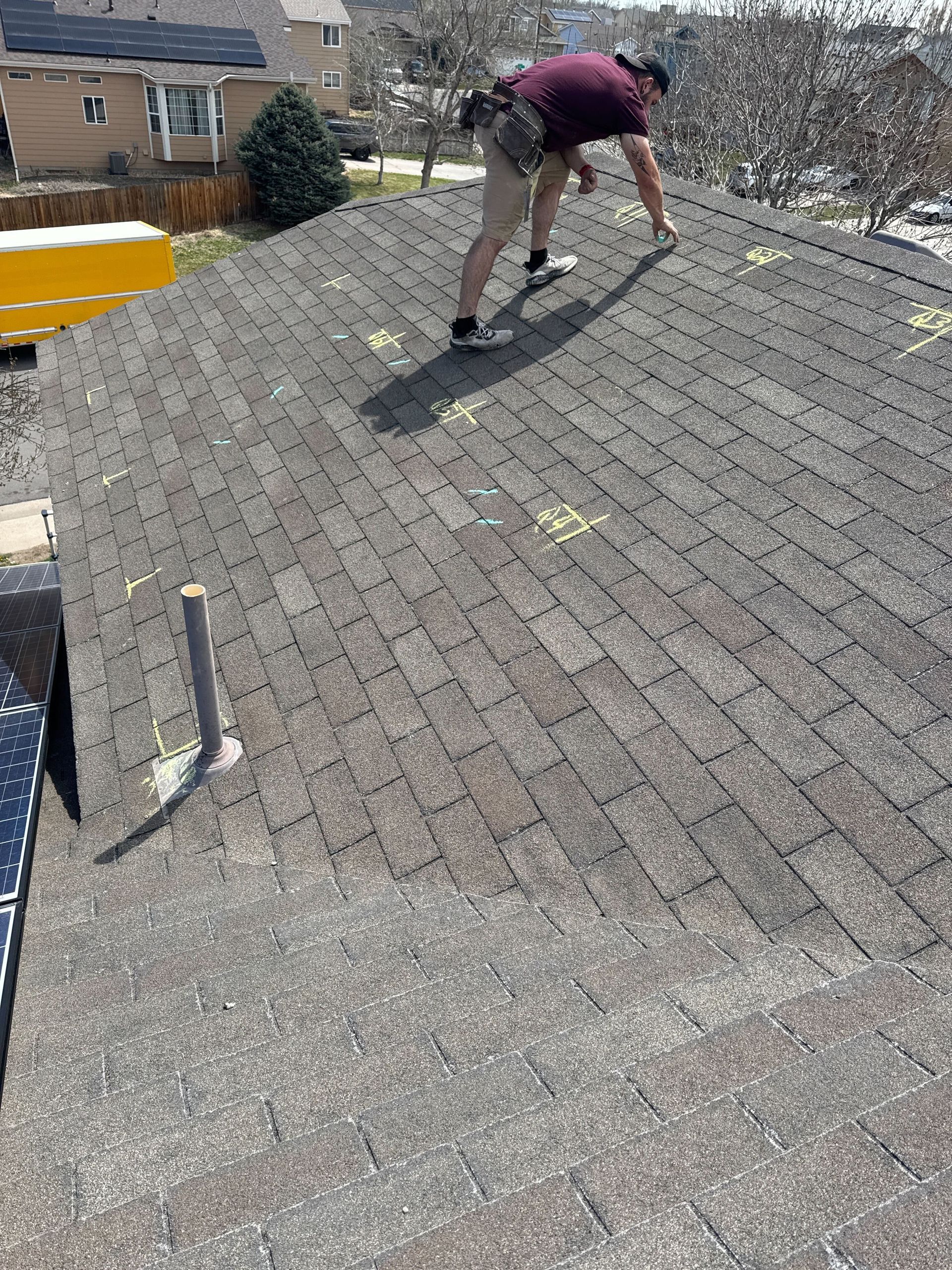 Photographing a Centennial roof
Why a Centennial roof inspection is worth it
Short version: Roof trouble almost always starts out of sight. By the time water drips through a ceiling, the damage has usually spread. Getting an inspection makes sense after hail or wind, when you spot shingle damage or a stain, when the roof is getting on in years, or when a home is changing hands in the busy south-metro market.
- A recent hail, wind, or severe-weather hit on your home
- Missing shingles, washed-out granules, or lifted edges
- Water stains on a ceiling or across the attic insulation
- A roof at mid-life or older, the norm on 1970s through 90s homes
- A Centennial home you are buying, selling, or refinancing
- Plain peace of mind after a Palmer Divide storm rolls through
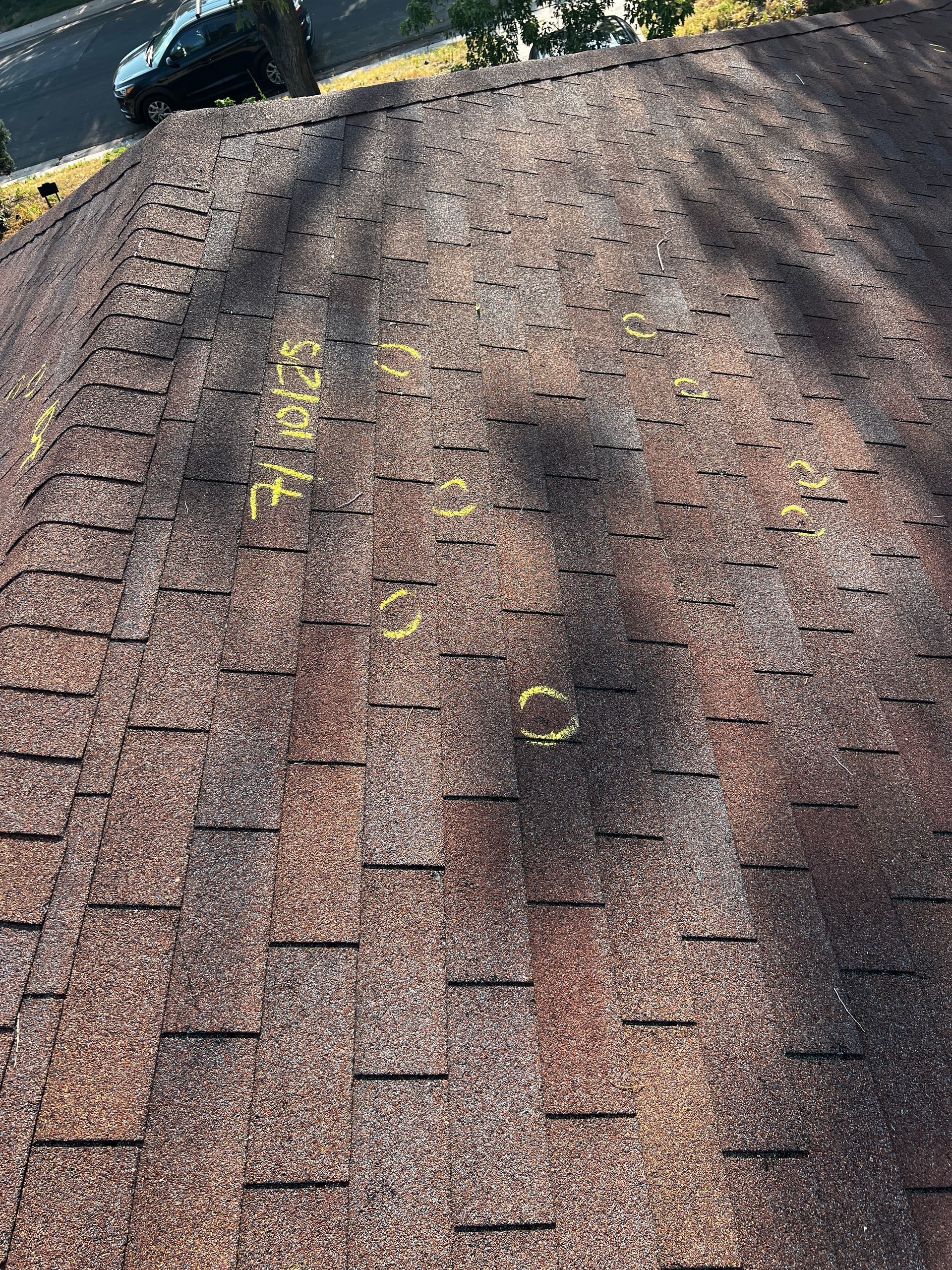 Hail bruising spotted on inspection
The damage we find most on Centennial roofs
Short version: Inspect enough roofs here and the same findings keep surfacing, hail bruising, wind working shingles and flashing loose, tired flashing and valleys on 1980s and 1990s homes, ice backing up from freeze-thaw, and sun aging the roof faster than the label promised.
Hail bruising
Soft spots where hail has fractured the mat hide easily from the ground, yet they matter, a cracked mat cuts the roof's life short and can carry an insurance claim once it is documented right.
Worth checking after any storm cell that crosses Arapahoe County.Wind-worked shingles
Gusts that break the seal on shingles and flashing leave their mark on exposed walls and ridge lines, usually with nothing showing from the driveway.
Shows up often in Smoky Hill, Piney Creek, and Walnut Hills after fast cells.Failing flashing and valleys
Original metal on Centennial's many 1980s and 1990s homes splits open at penetrations and valleys, then funnels water under the field shingles.
Look hard at Foxridge and Homestead roofs still wearing their original detail.Sun and sealant wear
The thin-air UV and the caulk drying out around penetrations show up earlier than ratings written for lower, milder markets would suggest.
Roofs at this altitude need a closer eye as they get older.| Why you called | What we hunt for | What it tends to mean |
|---|---|---|
| Fresh hail storm | Fractured shingles, lost granules, dented soft metals, banged-up gutters | The record for a Centennial hail claim, ACV versus RCV evidence included |
| Strong wind event | Lifted shingles, shifted ridge caps, disturbed flashing, moved siding panels | Wind damage can be real even when the view from the curb looks fine |
| Signs of a leak inside | Attic moisture, ceiling stains, cracked pipe boots, bad valley and chimney flashing | A focused repair may settle it if the damage is isolated and caught early |
| An older roof | Brittle, cracking, or bald shingles, worn ridge caps, ventilation issues | Watch, repair, or replace, depending on the roof's true condition |
Numbers every Centennial homeowner should know
Sitting in Hail Alley just north of the Palmer Divide, Centennial pairs one of the country's steepest hail risks with a housing stock built mostly between the 1970s and 1990s. That pairing is exactly why a documented inspection earns its place on the calendar.
The way a Centennial inspection runs
Short version: We keep it methodical and out in the open, a top-side roof review, an attic and interior check when we can get to it, findings written up with photos, and a plain recommendation to watch it, fix it, or replace it.
Top-side review
We go over the roof covering, flashing, penetrations, and any storm damage we can see.
Attic and interior
When access allows, we look for moisture coming through, ventilation faults, and structural worries.
Findings on record
You get a clear rundown of what we found, with photos for your file and any claim.
What to do next
If something needs handling, we spell out the move, whether that is monitoring, a repair, or a re-roof.
How an inspection feeds your Centennial claim
Short version: Once storm damage turns up, the documented inspection is the backbone of the claim. We photograph the damage, write the report, and get you ready for the adjuster, all while keeping your Colorado percentage deductible and the ACV versus RCV terms front of mind so you can judge whether filing is even worth it.
Whether you are covered turns on your policy and what caused the damage, which is why the paperwork matters. A lot of policies in this hail-prone stretch carry a percentage wind and hail deductible of 1 to 5 percent of the dwelling coverage, and many roof policies hand you the depreciated actual cash value first, releasing the recoverable depreciation only once the job is done and invoiced. On top of that, Colorado SB 38 makes it illegal for any roofer to waive or rebate that deductible.
- Photograph the hail, wind, or debris damage from the storm
- Hand your insurer a detailed inspection report
- Get you ready for the adjuster visit when it applies
- Tell you straight whether filing beats your deductible
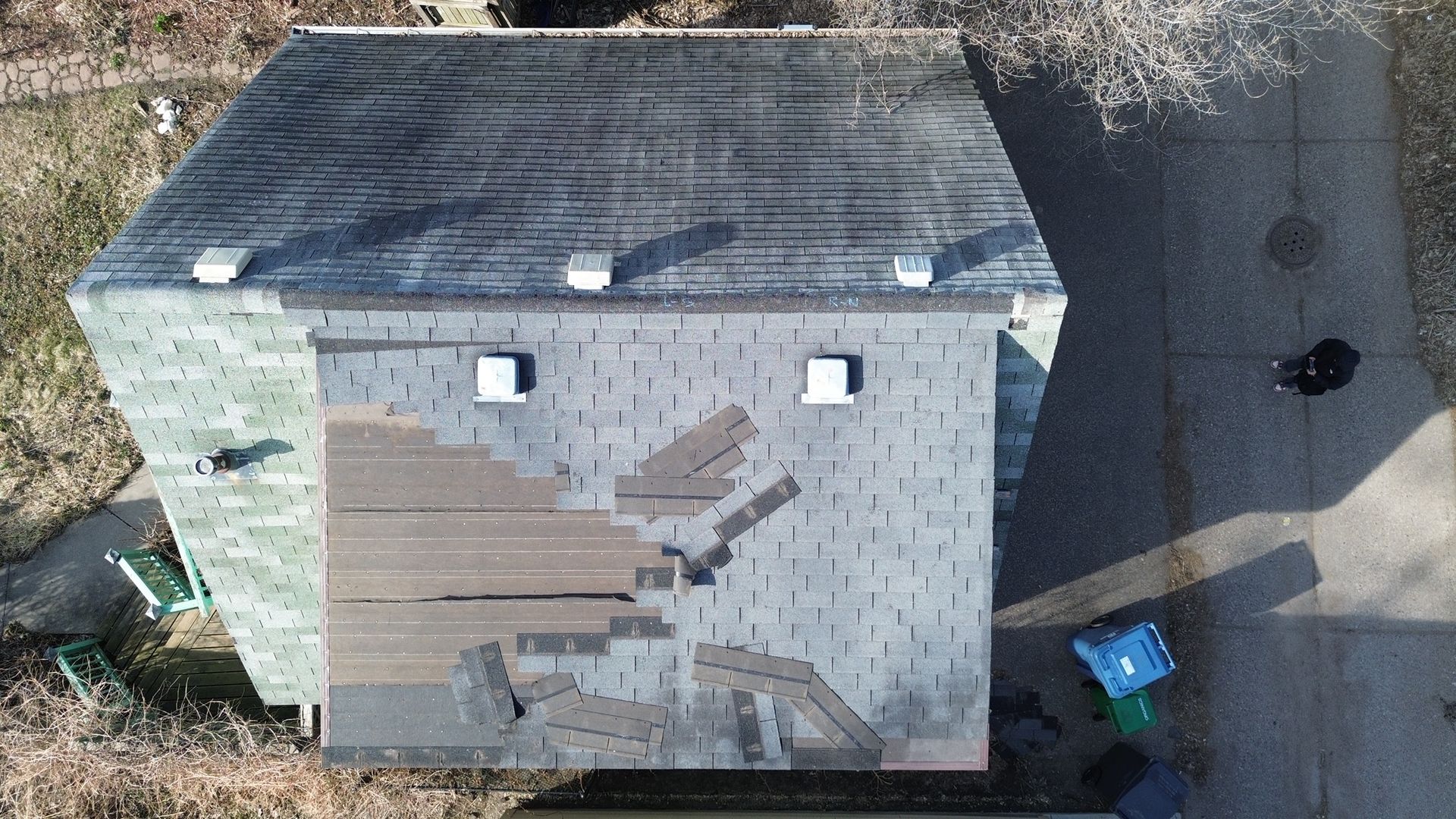 Wind damage documentation
Roof exposure changes across Centennial
Short version: Not every Centennial neighborhood carries the same roof risk. Housing era and HOA rules shift it street to street, and knowing where you sit helps you line up the right kind of inspection.
Older wide-lot streets
Foxridge, The Knolls, the Homestead communities, Cherry Knolls. These settled, large-lot blocks run mostly 1970s into the early 1980s, with original flashing, original valleys, and here and there original concrete tile or wood shake. A real hail event on a roof that is already this old often opens up legitimate replacement scope.
Inspect after hail, and keep an eye on chimney and valley flashing as the usual leak points.1990s master-planned blocks
Walnut Hills, Piney Creek, Smoky Hill. Built heavily through the 1990s under strict HOAs. These roofs are now mid-to-late in their lifecycle, and plenty of the original wood-shake has already been switched to impact-rated asphalt after earlier hail claims.
HOA color and material rules apply, so an inspection helps map out a conforming re-roof.Two-story homes and access
Two-story single-family houses are the norm in Centennial, and steeper pitches come with them. That shapes how we inspect, since the city allows ladder access on a one-story while two-story and steeper roofs call for a careful, safe approach.
A licensed crew documents these roofs properly instead of squinting from the lawn.Shared ZIPs, one city hall
Several Centennial ZIPs (80015, 80016, 80111, 80112, 80121, 80122) overlap with Aurora, Englewood, Greenwood Village, and Littleton. Homes inside the Centennial limits permit through the City of Centennial, not Arapahoe County, which matters the moment an inspection turns into a re-roof.
We pin down the jurisdiction so any follow-up work is permitted to the right office.A careful read, zero sales pressure
Short version: Every south-metro storm packs the local roofing market overnight, and storm chasers ride the Hail Alley cells right into Arapahoe County. The floor you should hold any inspector to is simple: a licensed, locally grounded exterior contractor with a real Denver office and a Colorado license you can verify (#0248041).
- Real knowledge of how Centennial storms hit a roof
- A thorough, honest look with nobody pushing you
- Plain communication and photos to back it
- A smooth handoff to repair or re-roof if it comes to that
- Respect for your home and your time
We are here to give you a clear picture, not to talk you into work you do not need.
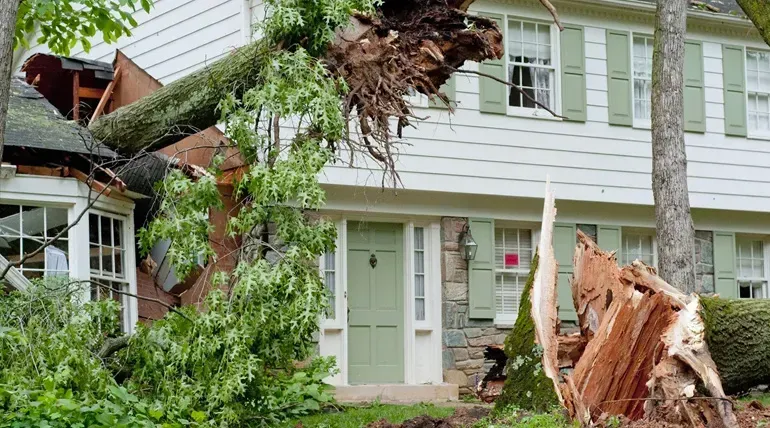 Reviewing storm and debris damage
Coverage you can hold in your hand
Anything we install gets put in writing, so your Centennial roof stays covered well after the crew packs up and heads out.
Ten years on our workmanship
We stand behind how the work was installed for a full decade, spelled out on paper.
Manufacturer-backed materials
Our Owens Corning Preferred and CertainTeed SELECT ShingleMaster status lets us register product warranties most roofers cannot.
Colorado-rooted since 2016
Licensed under #0248041, insured, BBB A+, NRCA member, and 3,000-plus metro roofs in the books.
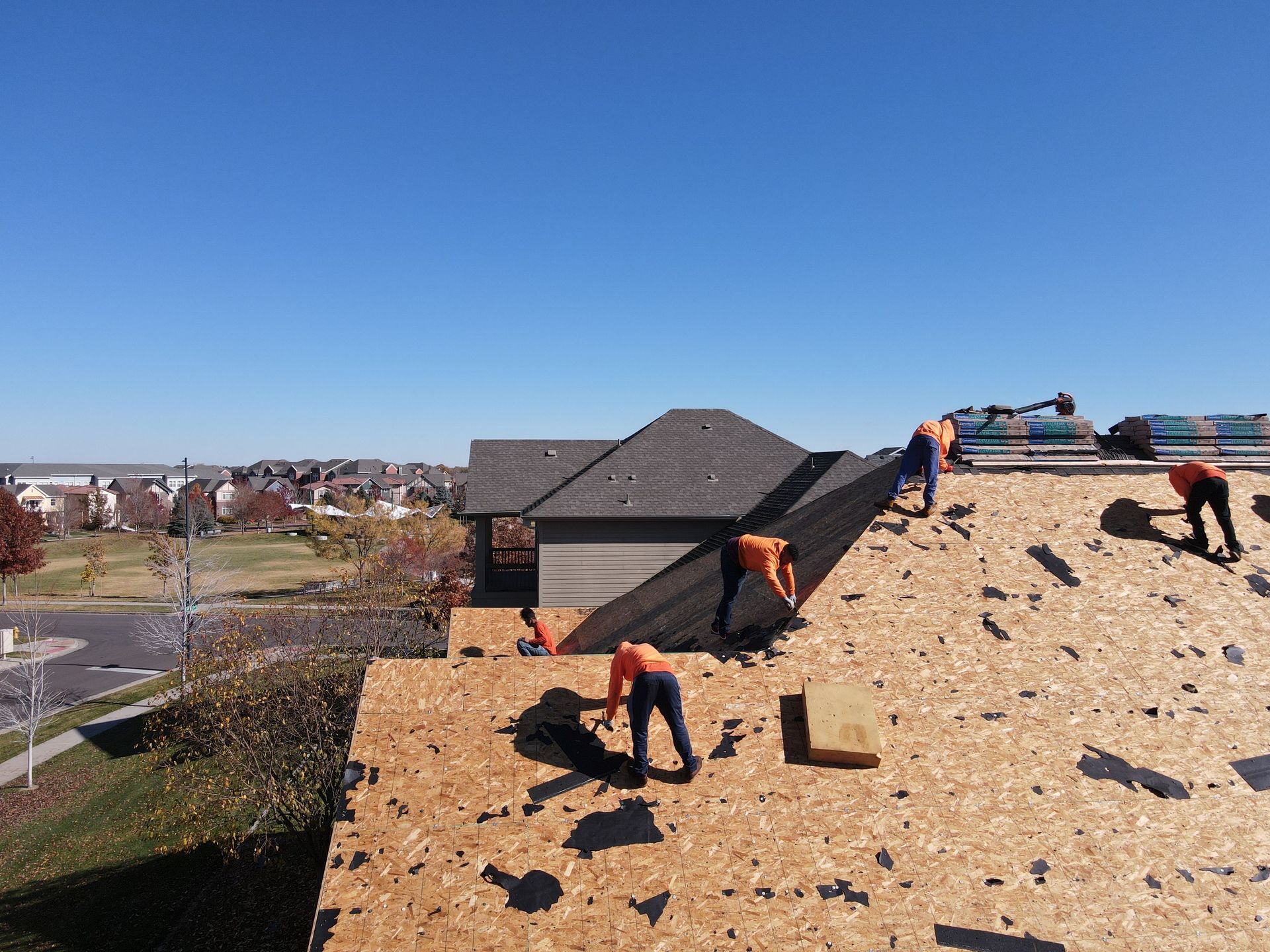 From inspection to a finished roof
Inspect first, then pick the right next move
Short version: Find isolated damage and a repair usually settles it. Find damage spread across the roof, or a system near the end of its life, and a replacement is the wiser long-term call.
Centennial roof inspection, answered
Does the inspection cost anything?
Should I have my roof checked after a Hail Alley storm?
Is a pre-sale inspection worth it on a Centennial home?
Will my insurance cover hail or wind damage here?
How do I pick a roofer I can trust in Centennial?
Book your free Centennial roof inspection
Not sure where your roof stands, or just sat through a Hail Alley storm? An inspection is the cleanest place to start. We read the roof and help you make sense of your options.