
Storm damage repair in Denver: hail, wind, and full insurance claim support
A licensed Denver storm damage contractor since 2016, with 3,000+ Front Range projects completed. We inspect roof, siding, gutters, and windows after hail and wind events, document every system for your claim, and deliver a written report with photos in 24 hours.
Book your free storm inspection
Pick a time and we send a written report with photos within 24 hours, documented for your insurer.
What to do after a Denver storm, right now
Direct answer: After a Denver hail or wind event, wait until conditions are safe, photograph all four roof lines and elevations from the ground, then call for a professional inspection before you call your insurer. Filing with your own contractor documentation in hand gives you a reference point when the adjuster sets the scope. Do not sign anything with a door-to-door contractor first.
Denver storm services: wind damage repair, debris and tree damage cleanup, storm insurance claim help, and a free roof inspection in Denver, CO.
Wait for safe conditions
Stay off the roof until the storm has fully passed.
Photograph from the ground
All four roof lines, siding, gutters, windows, and the AC unit.
Inspect before you file
An inspection before the claim sets an independent baseline.
Do not sign at the door
Colorado gives a 72-hour right to cancel storm-chaser contracts.
Verify the contractor
Confirm the license at dora.colorado.gov and a permanent Denver office.
Every storm-damaged system, assessed by one licensed team
Direct answer: Hail and wind rarely damage only the roof. Precision Exteriors Restoration assesses roofing, siding, gutters, windows, and soft metals on every Denver storm inspection, then handles repair, replacement, emergency tarping, and the insurance claim from documentation through recoverable depreciation.
Hail damage inspection
Fiberglass mat fracture is not visible from the ground. We find and document it.
Wind damage repair
Lifted shingles, broken sealant bonds, and displaced ridge cap, verified against Denver wind zones.
Debris and tree impact
Punctures, broken decking, and crushed gutters, scoped beyond the visible impact point.
Emergency roof tarping
24-hour response and tarping to stop water before it reaches your ceilings.
Siding storm damage
Cracked vinyl and chipped fiber cement on the exposed elevation, a frequently missed line item.
Gutters and soft metals
Dented gutters, vent caps, drip edge, and condenser fins, documented for your claim.
Window storm damage
Screen punctures, frame impact, and glass cracking on the storm-facing side.
Insurance claim support
Pre-adjuster documentation, supplement submission, and recoverable depreciation.
Denver sits at the peak of Hail Alley
Direct answer: Denver and the Front Range experience more significant hail per year than virtually any other metro in the country. The May 2024 storm produced $1.9 billion in insured losses in a single event, and the May 2017 supercell produced $2.3 billion. Most Denver ZIP codes see two to four qualifying hail events per decade, on top of severe wind and freeze-thaw stress.
Metro-wide insured losses from a single Denver-area hailstorm, the most recent in a pattern of billion-dollar events back to 1990.
Mile-high elevation means less UV filtration, so asphalt shingles lose granule coverage and mat integrity earlier than the manufacturer ratings assume.
Denver formally classifies three wind zones. Contractors who ignore them install underspecified materials, failing city inspection and voiding warranties.
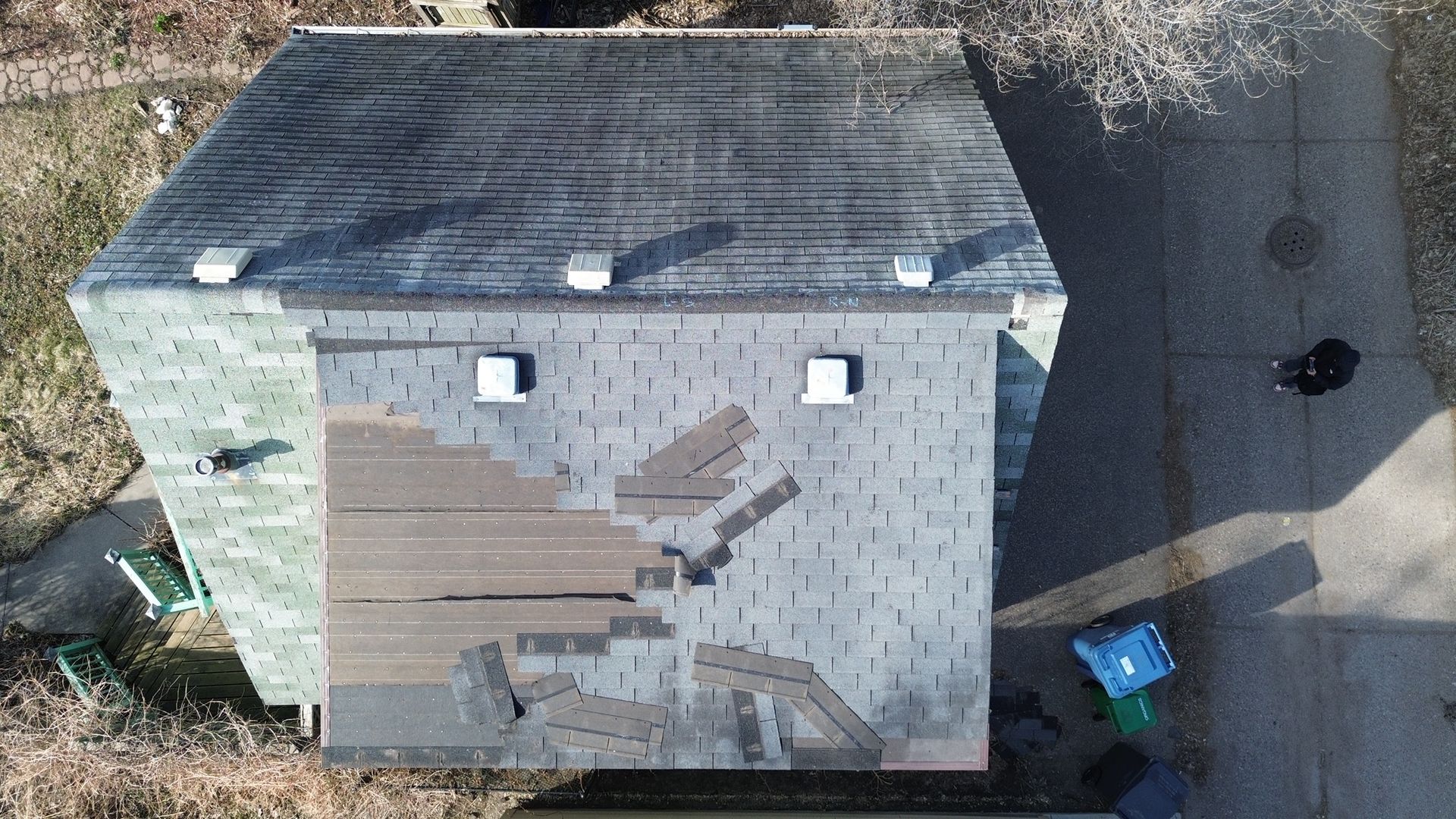 Wind damage, Denver metro
The numbers behind a Denver storm claim
Colorado consistently ranks among the top five states for hail-related insurance claims, and Denver's elevation and wind zones make the same storm hit harder here than almost anywhere else.
Why a Denver storm claim is more than just the roof
Direct answer: A single Denver hail or wind event hits every exposed surface at once. Insurance covers storm damage as a single-event claim, so if you only request a roof assessment, siding, gutter, and soft-metal damage from the same storm may never be scoped, and what is not assessed is not paid. We assess every system before the adjuster sets the baseline.
Roofing
Granule displacement, fiberglass mat fracture, pipe boot cracking, and ridge cap impact, often with no immediate visible leak.
Highest consequence: most likely to go undetected until it causes interior damage.Siding
Direct impact marks, cracked vinyl, chipped fiber cement, and seam disruption on the most exposed elevation.
Aged vinyl cracks rather than dents, opening moisture paths into the wall assembly.Gutters and soft metals
Dented gutters, vent caps, drip edge, pipe boot flashing, and HVAC condenser fins.
Dented gutters are the most reliable ground-level sign a hail event was significant.Windows
Screen punctures, aluminum frame denting, and glass cracking on the storm-facing side.
Characteristic screen hole patterns are direct impact evidence for the claim.How we tell storm damage from ordinary aging
Direct answer: Insurance covers sudden damage from a documented weather event, not gradual aging or deferred maintenance. Storm damage occurs at a defined date, affects materials consistently across the exposed elevation, and matches the event pattern. Normal wear develops slowly, concentrates at ridges and valleys, and shows uniform dulling rather than impact patterns. We document accurately, including when findings are wear-related and a claim should not be filed.
Hail damage
Mat fracture beneath the shingle surface and random granule displacement across every exposed slope. Dented gutters confirm it from the ground.
Wind damage
Sealant bond failure, where shingles look intact but the strip has separated, plus visibly displaced shingles and ridge cap. Both create water entry risk.
Normal wear
Granule loss at edges and valleys, curling tabs, and uniform surface dulling with no triggering event. Not a covered claim, and we say so.
See storm damage become a finished roof
Drag the slider to compare a storm-damaged Denver roof with the completed Precision Exteriors Restoration result. Every project is documented this way for your records and your insurer.
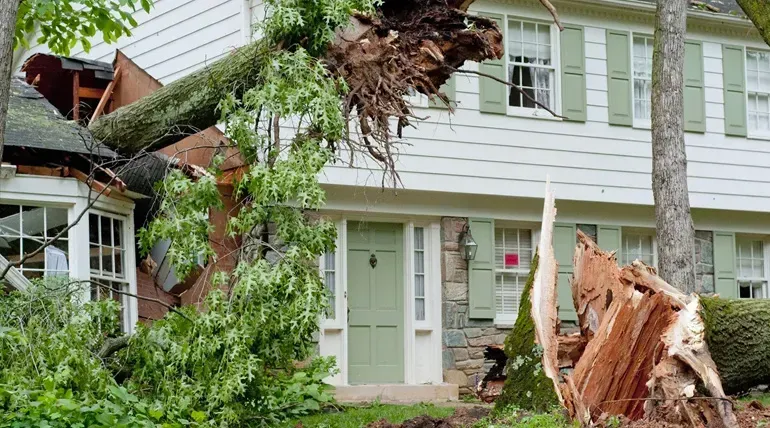
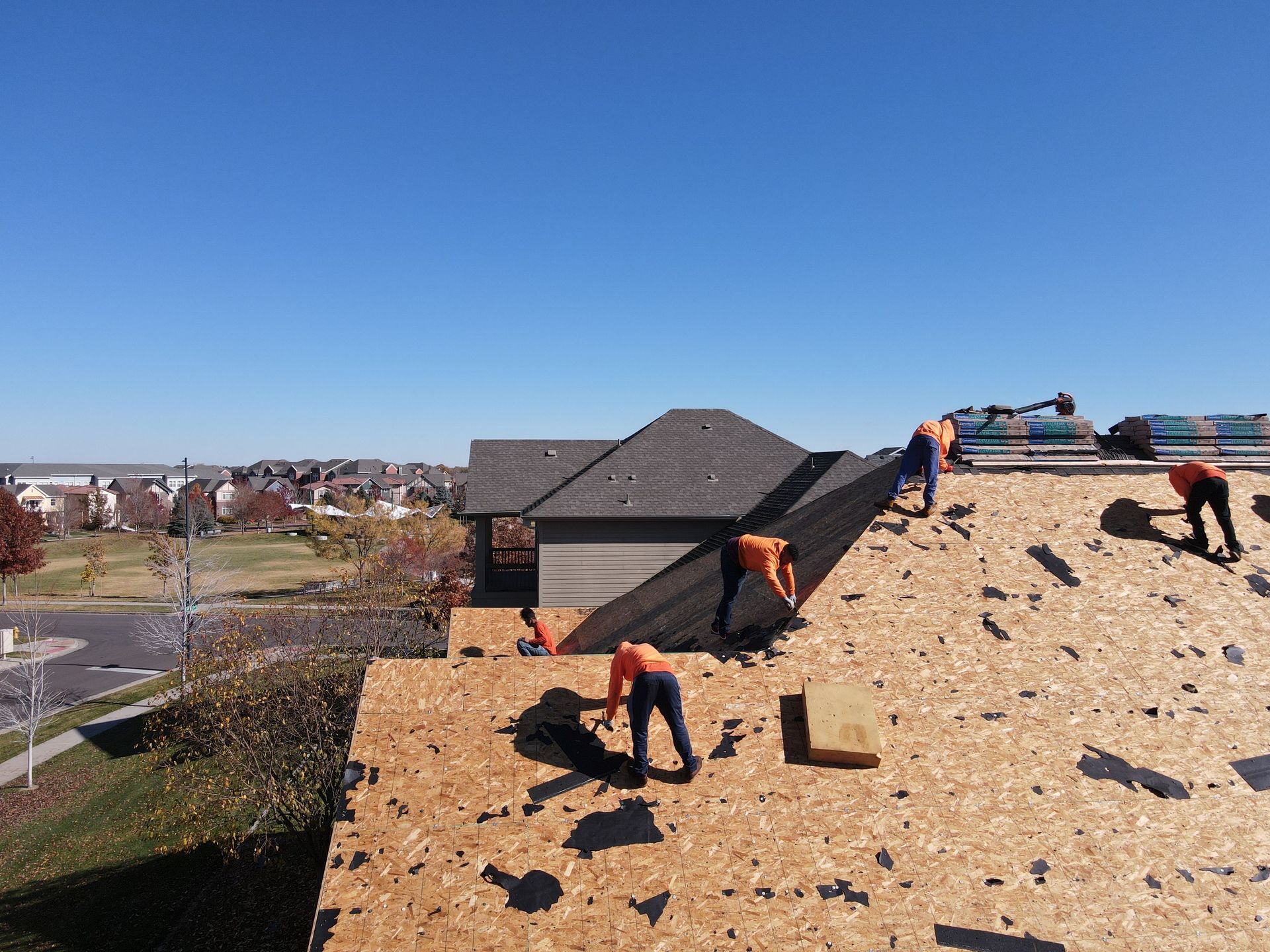
Drag to reveal the restoration. Real Colorado job, completed by Precision Exteriors Restoration.
What Denver storm claims most often miss
Direct answer: Homeowners who manage Denver storm claims alone consistently leave covered money uncollected: emergency tarping costs, soft-metal line items, full siding scope, and recoverable depreciation on RCV policies. We meet your adjuster on site with our documentation, prepare supplements when the initial scope misses items, and handle completion documentation so depreciation is released.
- Pre-adjuster inspection report so you set the baseline, not just the adjuster
- Emergency tarping billed as covered mitigation, not deducted from your repair
- Supplement documentation when the first scope omits legitimate items
- ACV versus RCV explained, with recoverable depreciation collected on completion
- Honest reporting when damage is wear-related and a claim should not be filed
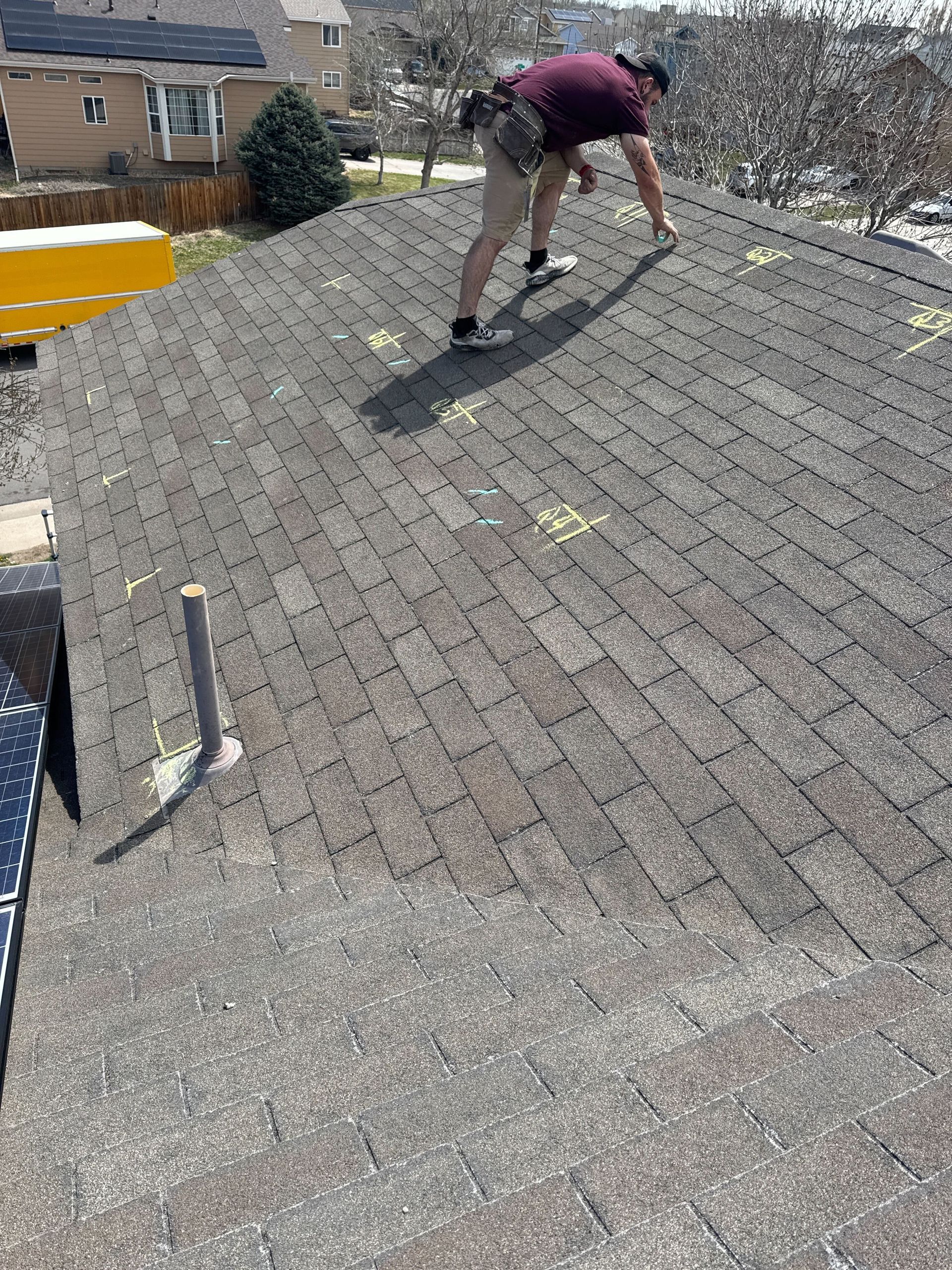 On-site documentation, Denver metro
How to vet a Denver storm damage contractor
Direct answer: Every significant Denver hail event draws out-of-state storm chasers within 24 to 72 hours. Before anyone accesses your property, confirm the Colorado license at dora.colorado.gov, verify a permanent Denver Metro office, and require a written warranty with a specific term. Precision Exteriors holds CO License #0248041 and is permanently headquartered at 999 18th St Unit 3000, Denver, CO 80202.
Confirm the license
Colorado contractor licenses are searchable at dora.colorado.gov. Ours is License #0248041, on file and insured.
Require a permanent office
Storm chasers leave after the season. We are permanently headquartered at 999 18th St Unit 3000 in downtown Denver, local since 2016.
Demand a written warranty
Ask for a specific term in writing. We back installation with a 10-year workmanship warranty plus certified-installer manufacturer coverage.
The Precision Warranty
Protected in writing, for the long run
Every Precision Exteriors Restoration storm repair is backed in writing, so your Denver roof stays protected long after the storm season ends and our crew leaves.
10-Year Workmanship Warranty
The Precision Warranty covers the quality of our storm repair and installation for a full decade, in writing.
Certified-Installer Manufacturer Warranty
As an Owens Corning Preferred Contractor and CertainTeed Shingle Master Installer, we register manufacturer-backed material warranties most contractors cannot offer.
Licensed, Insured, Local Since 2016
Colorado License #0248041, BBB A+ accredited, NRCA member, with 3,000+ completed Front Range projects.
We take the risk off your shoulders
After a storm, the path forward should feel safe. Between manufacturer warranties, hands-on insurance help, and 24-hour emergency response, you are covered from the first phone call.
Warranties in writing
Owens Corning Preferred and CertainTeed Shingle Master Installer certifications unlock the strongest warranties available, covering both your materials and our installation.
We handle your claim
We document the damage, meet your adjuster on site, and submit supplements so legitimate storm items are not left off the settlement.
24-hour emergency response
Active leak or open roof? We provide same-day assessment and emergency tarping to stop water before it spreads.
Rated 4.6 stars by Denver neighbors
Real, verified Google reviews from Denver-area homeowners we helped through the claims process. We are proud of an honest 4.6 stars rating built one storm at a time. Read our reviews.
"The Precision team was great and provided me with great customer service and results. Special thanks to Anthony for helping me through the insurance process in making sure the details were covered."
"Great quality work, friendly service. Fast and clean service."
"They showed up on time, they knew their stuff, they did the work, and they did it well."
"Could not give Precision Exteriors a higher recommendation. Professional, timely, and great to work with."
Storm restoration, Aurora and Denver
Denver metro storm response area
Direct answer: Precision Exteriors Restoration responds to storm damage across Denver and the Front Range from our downtown Denver office, with concentrated recent work in Denver, Aurora, and Montbello, plus Arvada, Thornton, Westminster, Lakewood, Centennial, and Castle Rock. We completed 200-plus storm damage jobs in Denver, Aurora, and Montbello in 2024.
Denver storm damage questions, answered
Should I call my insurer or a contractor first after a Denver storm?
How fast can you respond to an emergency in Denver?
Why does Denver hail damage need more than a roof inspection?
What are Denver's wind zones and why do they matter?
How do I avoid storm-chaser contractors in Denver?
What is the difference between ACV and RCV on my claim?
How will you tell storm damage from normal wear?
Do you serve multi-family and residential storm damage in Denver?
Book a free Denver storm damage inspection
Get a written report with photos in 24 hours, documented for your insurer. We inspect every exposed system, handle your claim, and stop water with 24-hour emergency tarping.