
Wind damage Denver: roof repair, inspection, and claims
Precision Exteriors Restoration is a licensed exterior restoration contractor (Colorado License #0248041) specializing in wind damage inspection and restoration for residential and multifamily properties across Denver. Free wind damage inspection, same day tarping, and NOAA documentation on every claim.
Book your free wind damage inspection
We document everything with photos, tarp active leaks the same day, and manage the insurance claim. Inspections are usually scheduled within the same week.
Wind damage to residential exteriors in Denver
Direct answer: Wind damage in Denver shows up as lifted, creased, or missing shingles, detached flashing, and debris impacts that can let water in. Precision Exteriors Restoration, a licensed Colorado contractor (License #0248041) since 2016, provides free wind damage inspections, tarps active leaks the same day, documents everything with photos, and manages the insurance claim. Inspections are usually scheduled within the same week.
Wind damage roof repair Denver work is different from hail because it is primarily an attachment failure, not an impact failure. Denver homeowners in Sloan's Lake, Sunnyside, LoHi, Park Hill, Washington Park, Montbello, Central Park, and Green Valley Ranch face three distinct wind damage mechanisms that do not exist at the same frequency or intensity in most other markets. Understanding each one tells you when a free inspection moves from optional to essential.
Why the Front Range is different
Direct answer: The Denver metro experiences three distinct wind damage mechanisms: Chinook downslope winds, summer thunderstorm outflows, and chronic sustained Front Range winds. Each produces storm wind damage repair situations that need close range inspection, and each is a named wind peril under standard homeowner policies.
Chinook winds: the primary structural threat
Chinook winds are warm, dry downslope winds that descend from the Rocky Mountains across Colorado, typically from the west or northwest, and accelerate as they compress against the plains. In the foothills communities west and northwest of Denver, Arvada, Lakewood, Golden, Wheat Ridge, Westminster, Chinook events regularly produce sustained winds of 50-70 mph with gusts reaching 80-100 mph. At these speeds, wind is not moving shingles, it is removing them.
Fall, winter, and early spring, outside the usual hail season window.Thunderstorm outflows: the summer driver
Colorado's summer thunderstorm season, May through August, produces rapid downdraft winds that spread outward from a storm cell as it collapses. In the Denver area, these outflows regularly generate 40-60 mph straight line winds across the city, arriving with little warning. Thunderstorm outflow wind damage typically occurs simultaneously with hail, so a hail claim can have separate and equally significant wind damage on the same property.
May through August, often combined with hail damage.Sustained Front Range winds: the chronic stress
Even without a discrete storm event, the Denver area experiences sustained winds of 20-35 mph for extended periods, particularly in late winter and spring. These create chronic fatigue stress on every attachment point. A shingle that has gone through more than 150 freeze thaw cycles has reduced adhesive bond strength, and sustained winds can progressively lift those edges without the dramatic displacement of a single high gust event.
Widespread marginal seal failure across entire slopes.What each wind level does to a Denver home
Direct answer: Most homeowner policies recognize wind as a covered peril at 40-50 mph. After any event where local weather station data or NOAA records confirm sustained winds above 45 mph or gusts above 60 mph in your neighborhood, schedule a free wind damage inspection in Denver, because the most common damage is invisible from the ground.
Chronic seal strip fatigue on shingles with compromised adhesive bond. No visible displacement. Damage accumulates over multiple wind events across seasons. Most vulnerable: roofs with prior hail history or UV degradation that has reduced seal strip adhesion.
The minimum threshold at which most homeowner policies recognize wind as a covered peril. Shingle edges begin lifting at seal strip failure points, ridge cap fasteners experience meaningful lateral load, and gutter fasteners on long runs experience pull stress. Visible damage is unlikely from the ground, so close range inspection is warranted after any event confirmed at 45 mph or above.
Consistent shingle displacement at seal failure points. Ridge cap sections with degraded fastening displace or separate. Step flashing at chimney and wall transitions lifts and separates from substrate. Gutter sections pull away from fascia, soffit panels displace, and siding panels at corner boards begin separating. Insurance claim warranted in most cases.
Widespread shingle displacement across entire slopes. Full ridge cap sections removed. Step and counter flashing pulled completely from substrate at multiple locations. Gutter sections separated from fascia over significant run lengths. Siding panels displaced, cracked, or removed. Active structural breach possible, emergency stabilization may be warranted same day.
Structural damage beyond exterior systems possible, including roof deck stress and rafter movement at ridge and eave connections. Underlayment exposure across multiple slopes from complete shingle removal. Emergency tarping and stabilization required immediately. These events are documented in Jefferson County and the foothills communities multiple times per decade.
How wind damages roofing, siding, gutters, and windows
Direct answer: Wind affects roofing, siding, gutters, and windows in distinct ways. Roof wind damage is primarily an attachment failure: lifted shingles and seal strip failure, ridge cap displacement, step flashing separation, nail pops, and exposed underlayment. Understanding what damage looks like on each system helps homeowners identify what warrants close range professional inspection.
Roof damage from wind
Wind roof damage differs from hail in a critical way: it is primarily an attachment failure, not an impact failure. Hail fractures material; wind separates it from its substrate.
- Lifted shingles and seal strip failure. Shingles lift at the leading edge, may reseat with no visible displacement, but the seal is permanently compromised. This is the progressive damage mechanism that produces leaks 3-12 months later.
- Ridge cap displacement. The most wind exposed component, often the first to separate, and an active water entry point at the highest point of the roof.
- Step and counter flashing separation. A step flashing gap of 3-4mm is an active leak pathway that is invisible from the ground.
- Nail pop and shingle crease, plus exposed underlayment that represents an active leak risk within the next rain event.
Siding, gutters, and windows from wind
Wind pressure acts on siding panels differently than hail impact. Instead of point fractures, wind creates distributed load failure at attachment points, seams, and edges.
- Panel detachment at seams and corners. Siding panels separate at seams and corners under distributed wind load, especially on exposed alleys, corner lots, and open east Denver subdivisions.
- Gutters pull away from fascia. Gutter fasteners on long runs fail under lateral load, loosening or detaching sections.
- Window frame stress and seal failure. Window frames stress and seal strips fail under wind load, especially at 70-100 mph.
- Full building envelope events. In Chinook events, all four exterior systems can sustain simultaneous damage, so a roof only claim leaves covered damage uncollected.
See wind damage become a finished roof
Drag the slider to compare a wind damaged Denver roof with the completed Precision Exteriors Restoration result. Every project is documented this way for your records and your insurer.
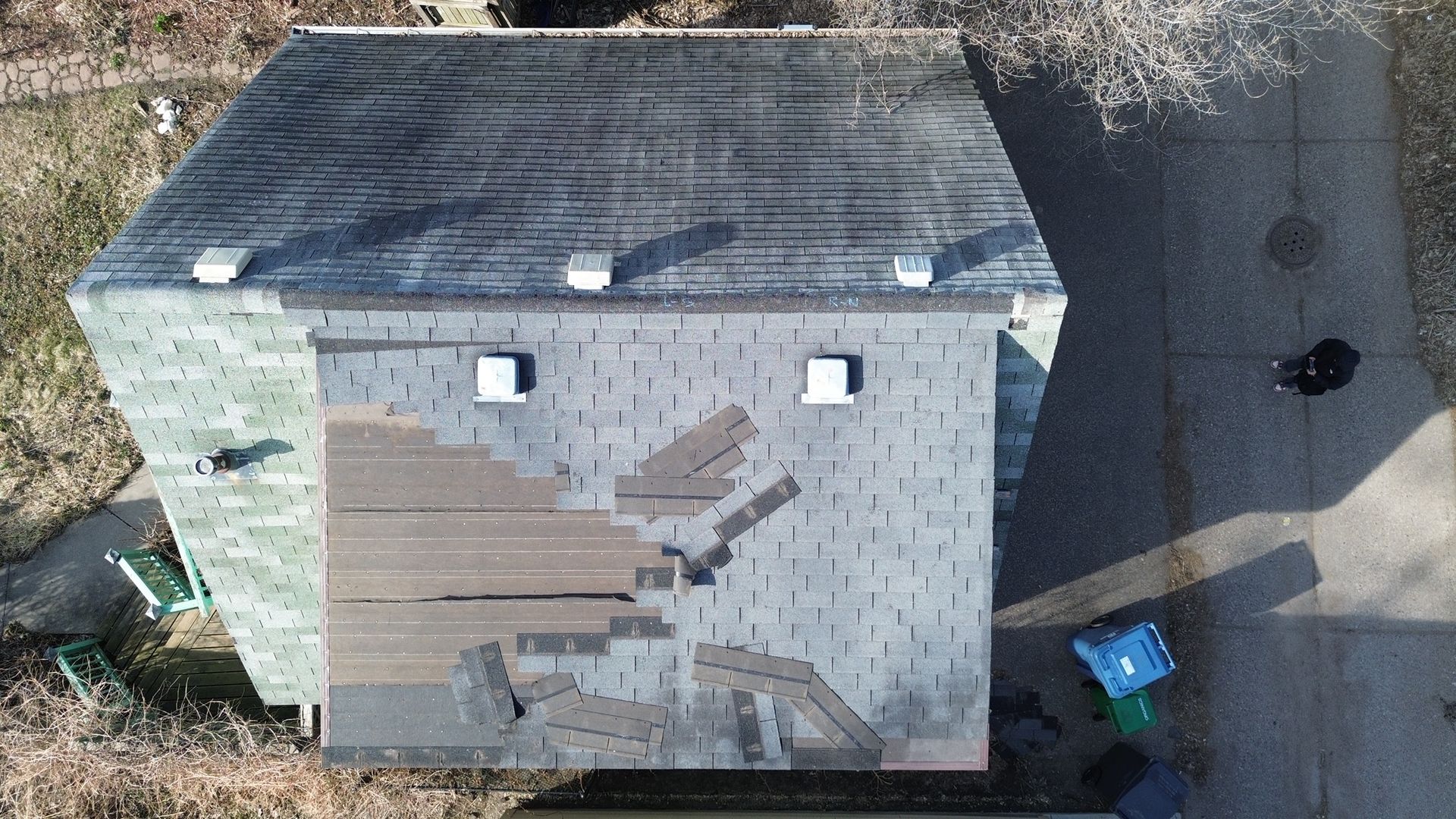
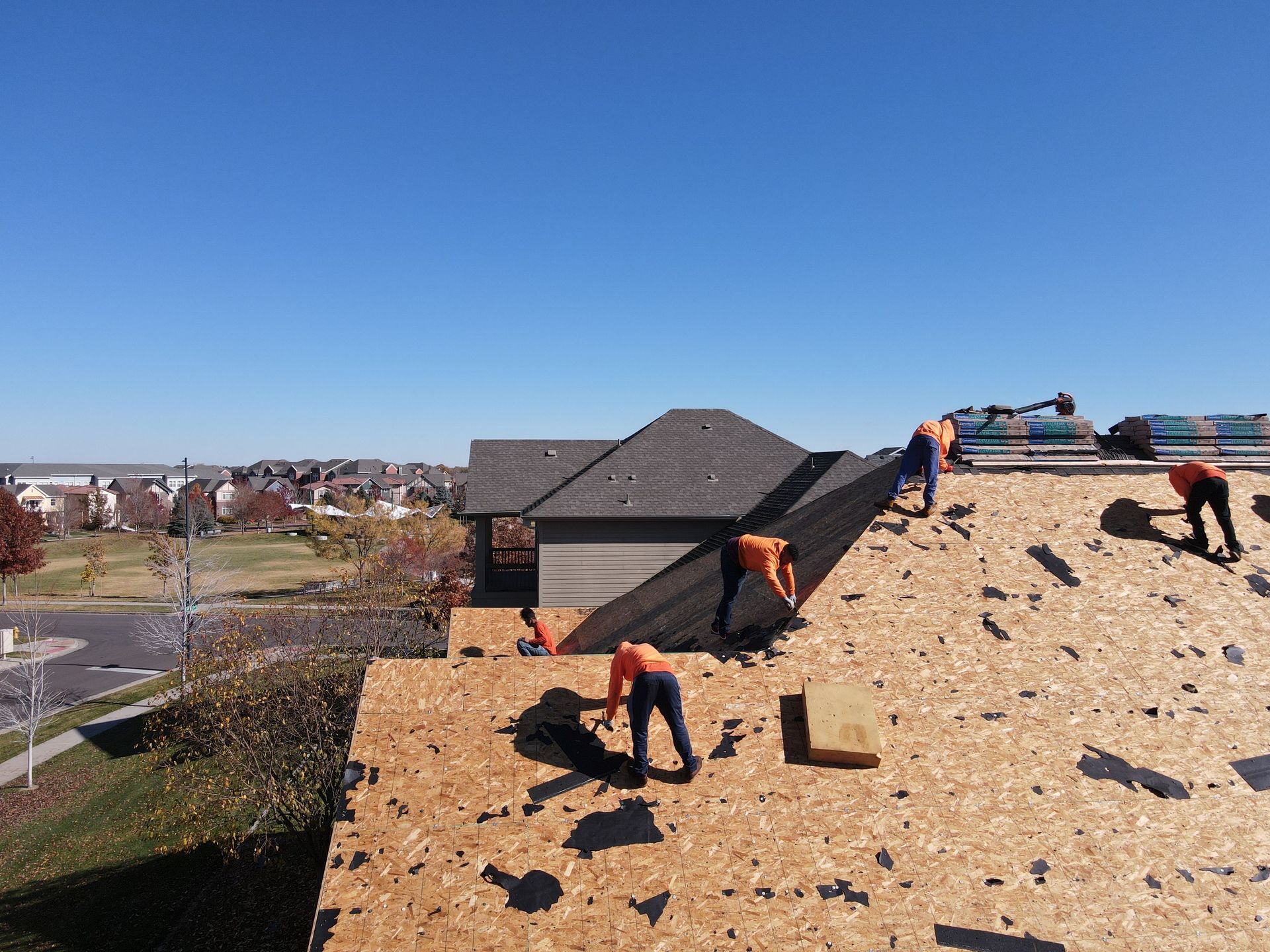
Drag to reveal the restoration. Real Colorado job, completed by Precision Exteriors Restoration.
The damage that produces a leak in March was created by a wind event in November
Direct answer: Wind damage frequently does not produce visible symptoms until months after the event. A wind event breaks seal strip bonds with no immediate leak, then a heavy rain event months later finds dozens of compromised entry points at once. If the insurance filing window has closed, the claim is lost.
A shingle that has lifted and reseated has broken the seal strip bond, and it will lift again at progressively lower wind speeds until a leak appears with no clear cause.
A close range inspection by a licensed contractor after any significant wind event is worth scheduling even when the roof appears undamaged from the street.
Most Colorado homeowner policies require storm damage claims to be filed within one year of the event; some specify two. Acting promptly protects the claim.
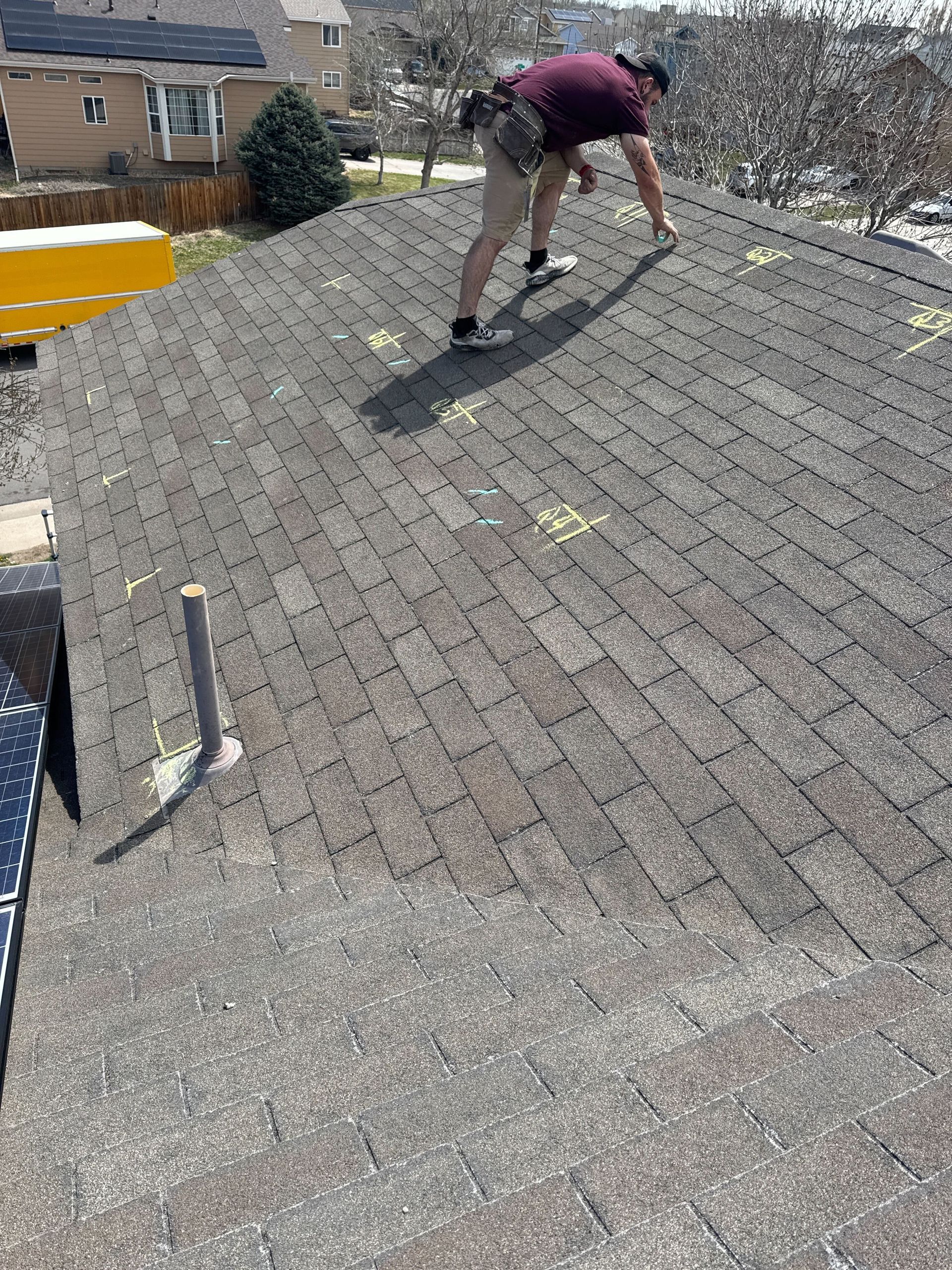 Close range wind inspection, Denver metro
Your wind damage inspection and claim process
Direct answer: Precision Exteriors handles wind damage roof repair Denver claims from free inspection through final walkthrough: NOAA wind speed verification, same day tarping of active leaks, full photo documentation, direct insurance claim management, and a 10 year workmanship warranty on the completed restoration.
Free inspection and NOAA wind verification
Same day tarping of active leaks
Photo documentation and scope
Insurance claim and adjuster meeting
Restoration, walkthrough, and warranty
What your free wind damage inspection includes
No cost, no pressure. Here is exactly what you receive.
- Close range evaluation of shingles, ridge cap, and flashing
- NOAA wind speed verification for your address and event date
- Full photo documentation for the insurance claim
- Same day emergency tarping of any active leak
- Siding, gutter, and window damage assessment
- Honest repair versus replace recommendation, no surprises
Denver wind facts every homeowner should know
Denver's wind environment, Chinook downslope events, thunderstorm outflows, and sustained Front Range winds, creates damage conditions that are less visible than hail but equally significant for the long term performance of your home's exterior systems.
Rated 4.6 stars by Denver neighbors
Real, verified Google reviews from Denver area homeowners. We are proud of an honest 4.6 stars rating built one roof at a time. Read our reviews.
"The Precision team was great and provided me with great customer service and results. Special thanks to Anthony for helping me through the insurance process in making sure the details were covered."
"They showed up on time, they knew their stuff, they did the work, and they did it well."
The Precision Warranty
Bumper to bumper coverage, in writing
Every qualifying wind damage restoration is backed by the Precision Warranty, a 10 year workmanship warranty. Combined with the enhanced manufacturer warranty our Owens Corning Preferred and CertainTeed Shingle Master Installer certifications unlock, you get bumper to bumper protection on labor and materials.
10 Year Workmanship Warranty
The Precision Warranty covers the quality of our installation for a full decade, in writing, separate from and in addition to manufacturer warranties.
Certified Installer Manufacturer Warranty
As an Owens Corning Preferred Contractor and CertainTeed Shingle Master Installer, we register Owens Corning and CertainTeed SureStart PLUS coverage on qualifying systems.
Bumper to Bumper Peace of Mind
Labor and materials covered end to end. Colorado License #0248041, BBB A+ accredited, with 3,000+ completed Front Range projects since 2016.
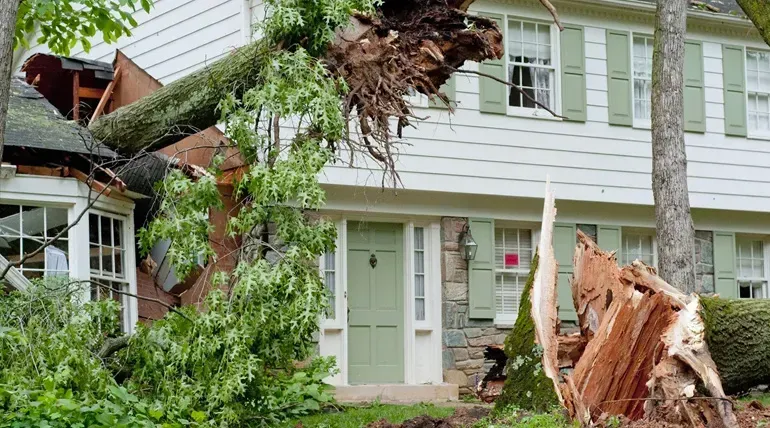 Wind response, Denver metro
Denver wind damage service area
Direct answer: Precision Exteriors Restoration provides wind damage roof repair Denver and exterior restoration across the city, including LoHi, Highlands, Sloan's Lake, Sunnyside, Berkeley, Park Hill, Washington Park, Cherry Creek, Central Park, Montbello, Green Valley Ranch, and homes near Interstate 25, Interstate 70, and the South Platte corridor.
Wind damage: frequently asked questions
Can wind damage occur without missing shingles?
Is wind damage limited to the roof?
Can wind damage cause delayed leaks?
How do I know if my roof was damaged by wind if there are no missing shingles?
What wind speeds are required for an insurance claim?
Does wind damage look different from hail damage?
Will my insurance cover wind damage?
What is the difference between Chinook wind damage and thunderstorm wind damage?
How long do I have to file a wind damage claim in Colorado?
Schedule a free wind damage inspection
Precision Exteriors Restoration has handled storm restoration across Denver and the Front Range since 2016. We document with photos, pull NOAA wind data, tarp active leaks the same day, and manage the insurance claim so you do not have to.