
The Denver roof repair process: what gets fixed, how it works, and when repair is enough
A licensed Denver roofing contractor since 2016. We diagnose the real cause before we repair, fix the failure patterns Front Range roofs actually develop, and back every repair with a written 10 year workmanship warranty.
Book your free inspection
We find the actual source of the leak, then send a written scope with photos so you know exactly what the repair involves.
Why Denver roof repair starts with diagnosis, not a tube of caulk
Direct answer: Roof repair in Denver is different from most US markets because the local climate produces specific failure patterns. More than 150 freeze-thaw cycles a year attack flashing sealants, hail bruises a single elevation of an otherwise sound roof, chinook winds lift ridge caps in directional patterns, and ice dams force water under shingles at the eave so it looks like a plumbing leak inside the house. The right repair starts by identifying which pattern caused the problem.
Precision Exteriors Restoration is a licensed Denver roofing contractor, Colorado License #0248041, and an Owens Corning Preferred Contractor providing roof repair for residential and multi-family properties across Denver and the Front Range. From the historic bungalows of Wash Park and Berkeley to the steep-pitch homes in Sloan's Lake and the newer rooflines in Stapleton and Green Valley Ranch, the same leak symptom can have very different causes. This page walks through the complete process: what triggers a repair decision, the most common Denver repair types and what each actually involves, the step by step sequence from inspection through final review, honest cost ranges, how repairs are warrantied, and where the line sits between a situation repair can solve and one that points toward replacement.
When roof repair is the right answer in Denver
Direct answer: Repair and replacement are not interchangeable. The decision hinges on three things: how extensive and how distributed the damage is, the current age and condition of the overall system, and whether the underlying cause is isolated or systemic. Repair is right when damage is localized on a roof that still has meaningful remaining service life.
Repair is typically right when
- Damage is localized to one slope or section on a roof that is otherwise sound, like a ridge cap blown off the north elevation by a chinook on a 10 year old roof.
- The failure is at a specific, identifiable component, a pipe boot, a chimney flashing joint, a valley section, rather than spread across the shingle field.
- The roof has not already been repaired multiple times at the same locations, which would point to a deeper issue than a caulk joint.
Repair is not enough when
- The damage is distributed across the shingle field, widespread mat fracture from hail or sealant bond failure across an entire windward elevation.
- The system is at or near end of service life in Colorado's UV environment, roughly 20 to 22 years for standard architectural shingles, and the repair sits on top of general deterioration.
- Multiple repairs have already been performed without resolving recurring leaks, which signals deck damage, movement, or a design deficiency.
The repairs Denver roofs actually need
Direct answer: Denver's climate produces a short list of recurring repairs. Pipe boots and flashing joints cause most active leaks here, followed by shingle and ridge cap damage from wind, ice dam intrusion at the eave, and deck repair discovered once the surface is opened up.
Pipe boot replacement
The single most common Denver leak source. High-altitude UV shortens the rubber collar's life to 12 to 18 years before it cracks. A targeted swap, often 1 to 2 hours per penetration.
Flashing repair
Chimney, step, valley, and skylight flashing fail at sealant joints worked loose by 150-plus freeze-thaw cycles a year. Often involves repointing mortar and re-seating counter flashing.
Shingle and ridge cap repair
Missing, lifted, and creased shingles, plus the wind-exposed ridge caps that chinooks lift first. We match manufacturer, product line, and color code as closely as the aged field allows.
Ice dam damage repair
Eave shingles lifted by ice loading, missing ice and water shield on older homes, and gutters pulled from fascia. We also flag the attic insulation cause so it does not recur.
Valley and skylight repair
Open metal valleys that rust or pinhole, closed-cut valleys that lift at the edge, and skylight curb corners where sealant fails first, the most common skylight leak point.
Deck repair
Discovered, not scheduled. Soft or delaminated OSB found around a long-failing pipe boot or an ice dam eave is cut out and replaced with matching sheathing before the surface goes back.
Pipe boots and flashing cause most Denver leaks
Direct answer: Pipe boot failure is the number one cause of active roof leaks in Denver, and flashing failure is second. Both are driven by the same forces, intense mile-high UV and relentless freeze-thaw cycling, that age sealants and rubber faster here than in dry or humid climates.
A failed pipe boot lets water run down the outside of the vent pipe into the assembly, often surfacing on a ceiling several feet from the pipe, which is why it gets mistaken for a plumbing problem. Chimney flashing is the most complex repair on a residential roof: step flashing at the sides, a saddle at the uphill face, and counter flashing embedded in the brick mortar that Denver's freeze-thaw works loose over time. We re-seat counter flashing, repoint the mortar joints, and replace the full assembly when the metal is past saving. For a deeper walk through siding and exterior flashing transitions, see our Denver siding repair page.
Get a free leak diagnosis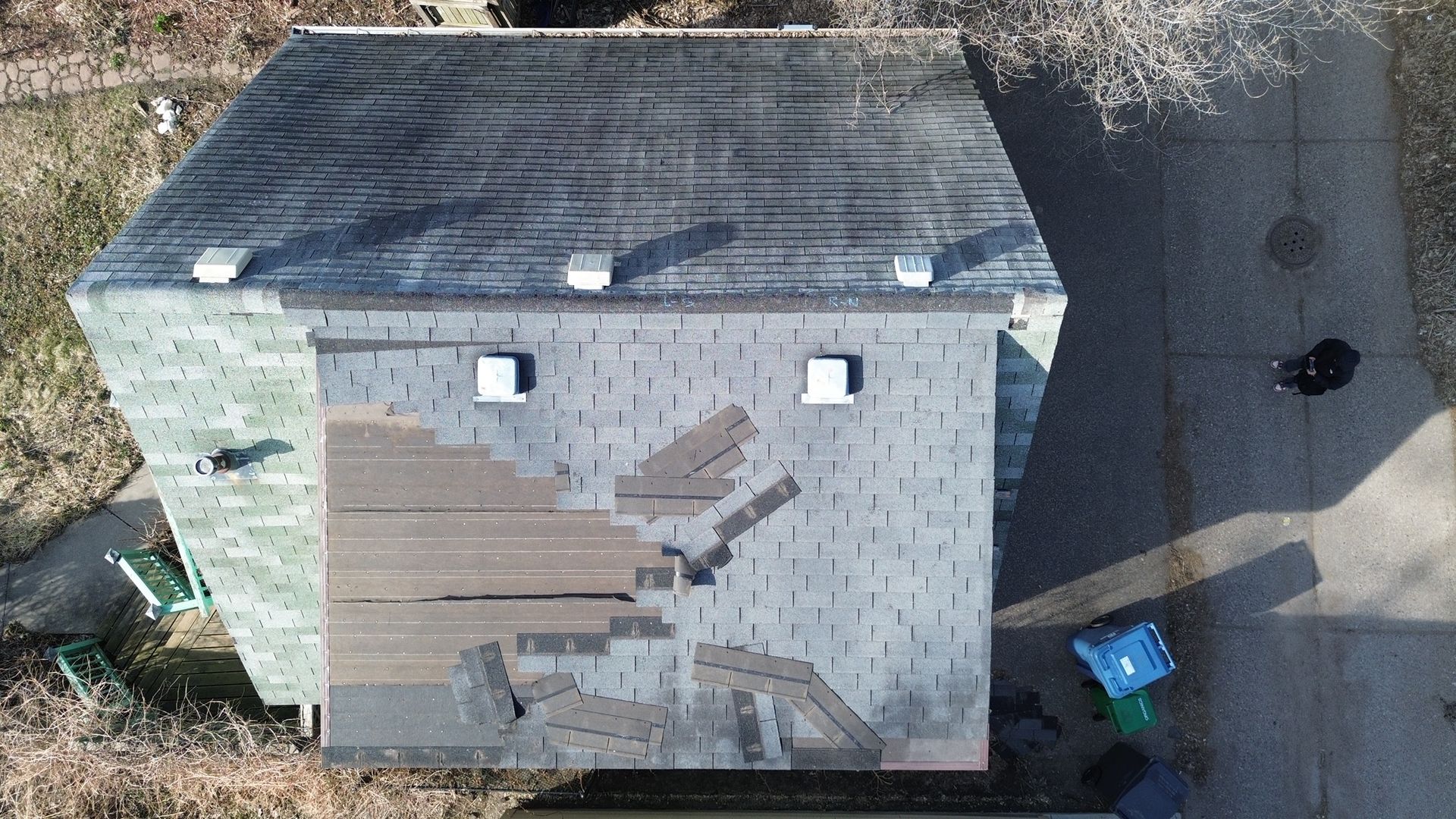 Flashing and wind damage, Denver metro
The Denver forces behind every repair
Direct answer: Denver roofs fail in predictable ways because of three local stresses: more than 150 freeze-thaw cycles a year that crack sealants, hail that bruises one elevation at a time, and chinook winds that lift ridge caps and break sealant bonds in directional patterns. Matching the repair to the cause is what makes it last.
Freeze-thaw cycles per year attack flashing sealants and caulk joints far harder than in dry or humid climates, the root driver of Denver flashing failures.
Mile-high UV shortens a pipe boot's rubber collar from 15 to 20 years down to 12 to 18, making boots the most common leak source on the Front Range.
Hail and chinook events often damage a single elevation, which is exactly the localized scenario where a targeted repair, not a replacement, is the right call.
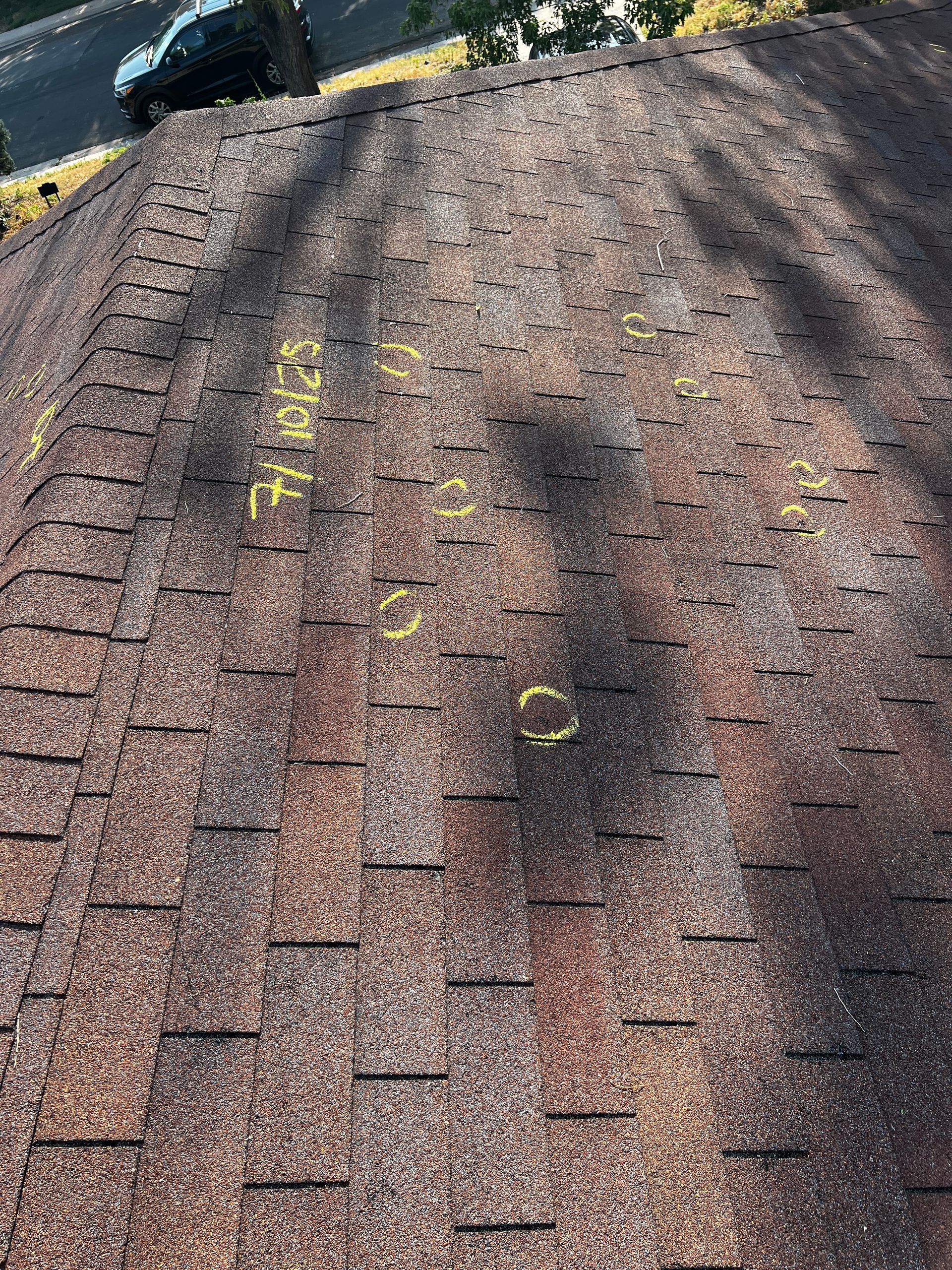 Isolated hail damage, Denver metro
Your repair, step by step
Direct answer: Our process is four clear steps: root-cause inspection, a precisely defined scope with confirmed materials, repair execution in a single visit for most jobs, and a final workmanship review documented with photos. Finding the actual entry point, not just the water stain, is the step that prevents callbacks.
Inspection and root cause
We trace the leak to its true entry point, not just the visible stain, since water travels along rafters before it drips. Documented with photos.
Scope and materials
The exact components, adjacent materials, and matched products are defined before work begins. No scope is added on the roof without a conversation first.
Repair execution
Most Denver repairs finish in one visit. Old materials are removed carefully, new ones installed in the correct sequence, and a magnetic sweep clears fasteners.
Final review and records
The repaired area is checked for proper lapping, sealing, and nailing, then documented with post-repair photos for your records and warranty file.
What your free repair inspection includes
No cost, no pressure. Here is exactly what the diagnosis covers.
- Roof-level assessment of the problem area plus adjacent sections and nearby penetrations
- Interior symptoms correlated with roof findings to pinpoint the real entry point
- Storm versus wear classification so insurance records are accurate
- Honest repair-versus-replace recommendation for your specific roof age
- Photo documentation of the cause for your records
- Clear, itemized repair scope before any work begins
How long does a roof repair take in Denver?
Direct answer: Most Denver roof repairs are completed in a single visit. A pipe boot replacement runs 1 to 2 hours per penetration, ridge cap repair 1 to 2 hours, an individual shingle section 2 to 3 hours, chimney flashing repair 3 to 5 hours, and a full chimney flashing replacement 4 to 6 hours.
Pipe boot replacement
The failed boot is removed, the penetration cleaned, and a new boot installed, often a lead-free PolyFlash boot for longer UV resistance at altitude.
Timeline: 1 to 2 hours per penetration.Chimney flashing
Re-seat counter flashing, repoint mortar joints worked loose by freeze-thaw, and replace the assembly when the metal is corroded through.
Timeline: 3 to 5 hours, full replacement 4 to 6 hours.Shingle and ridge cap
Missing and creased shingles replaced, lifted shingles reseated when the mat is sound, ridge caps replaced in kind or as a full unit.
Timeline: 1 to 3 hours depending on section size.Valley and deck
Valley repairs from targeted sealant to full metal replacement, and deck sections cut out and replaced with matching sheathing when soft OSB is found.
Timeline: valley 2 to 4 hours, deck 1 to 2 hours per sheet.What drives Denver roof repair cost?
Direct answer: Denver roof repair cost ranges from a few hundred dollars for a single pipe boot replacement to several thousand for a complete chimney flashing assembly or a significant shingle section. The repair type is the primary cost driver, followed by scope expansion at discovery, material matching, and access complexity.
Targeted component repair
A single pipe boot, an isolated flashing point, or a small shingle section on an accessible roof.
Flashing and ridge work
Chimney flashing, valley replacement, or ridge cap runs that involve multiple component types and more labor.
Complex or multi-component
Full chimney flashing assemblies, large shingle sections, or deck repair discovered once the surface is opened.
Denver storm repair scenarios, by pattern
Denver's storm environment produces repairs that follow identifiable patterns. Knowing which one applies sets expectations for scope and process before our crew ever climbs the ladder.
The Precision Warranty
Every repair, protected in writing
Repairs at Precision Exteriors Restoration carry the same written warranty discipline as our replacements, so your Denver roof stays protected long after our crew leaves.
10-Year Workmanship Warranty
Written and documented on every repair, covering defects in our installation, a repaired pipe boot, a re-flashed chimney, or a replaced ridge cap section, for a full decade.
Certified-Installer Manufacturer Backing
As an Owens Corning Preferred Contractor and CertainTeed Master Applicator, we use compatible, manufacturer-spec materials so repairs integrate correctly with your existing system.
Documentation on Every Visit
Post-repair photos and a clear scope record accompany every repair, so if a question arises six months later, the file establishes exactly what was done and when.
We take the risk off your shoulders
A repair done correctly, right diagnosis, right materials, right installation, resolves the problem and protects the home. A repair done to treat the symptom creates a callback. We do it the first way.
Root-cause first
We find the actual entry point before we touch a thing, because repairing the visible stain without finding the source is the number one reason leaks come back.
We document for your insurer
Storm-related repairs are classified separately from wear, so you have an accurate, photo-backed record for any homeowner's claim.
Honest scope, no surprises
The repair scope is defined before work begins and never expanded on the roof without a conversation first.
Rated 4.6 stars by Denver neighbors
Real, verified Google reviews from Denver-area homeowners. We are proud of an honest 4.6 stars rating built one repair and one roof at a time. Read our reviews.
"The Precision team was great and provided me with great customer service and results. Special thanks to Anthony for helping me through the insurance process in making sure the details were covered."
"Great quality work, friendly service. Fast and clean service."
"They showed up on time, they knew their stuff, they did the work, and they did it well."
"Could not give Precision Exteriors a higher recommendation. Professional, timely, and great to work with."
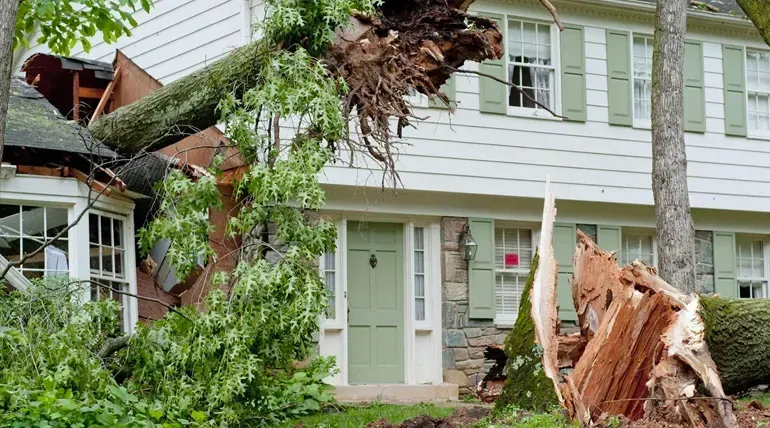 Storm and tree damage response, Denver metro
Denver and Front Range repair service area
Direct answer: Precision Exteriors Restoration repairs roofs across Denver and the Front Range, from downtown and the historic neighborhoods of Wash Park, Berkeley, and Sloan's Lake out to Aurora, Arvada, Thornton, Westminster, Lakewood, Centennial, and Castle Rock, with crews based at our 999 18th Street office downtown.
Denver roof repair process questions, answered
How long does a roof repair take in Denver?
Will a roof repair permanently stop my leak?
Can repaired shingles match my existing roof?
Is roof repair covered by homeowner's insurance in Denver?
When should I choose repair over replacement?
Do roof repairs require a permit in Denver?
What is the warranty on roof repairs from Precision Exteriors?
Why is pipe boot failure so common on Denver roofs?
Free inspection, honest scope, 10-year warranty
Precision Exteriors Restoration provides free inspections, an honest repair versus replacement recommendation, and licensed roof repair throughout Denver, backed by a written 10 year workmanship warranty. Colorado License #0248041.